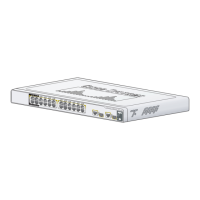
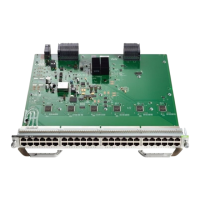
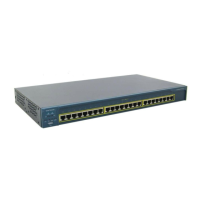
Cisco HWIC-4ESW and HWIC-D-9ESW EtherSwitch Interface Cards
How to Configure EtherSwitch HWICs
73
Book Title
Note Both stacking partner ports must have their speed and duplex parameters set to auto.
Caution If stacking is removed, stacked interfaces will go to shutdown state. Other nonstacked ports will be left
unchanged.
Configuring Fallback Bridging
This section describes how to configure fallback bridging on your switch. It contains this configuration
information:
• Understanding the Default Fallback Bridging Configuration, page 73
• Creating a Bridge Group, page 74
• Preventing the Forwarding of Dynamically Learned Stations, page 75
• Configuring the Bridge Table Aging Time, page 77
• Filtering Frames by a Specific MAC Address, page 78
• Adjusting Spanning-Tree Parameters, page 79
• Monitoring and Maintaining the Network, page 89
Understanding the Default Fallback Bridging Configuration
Table 2 shows the default fallback bridging configuration.
Table 2 Default Fallback Bridging Configuration
Feature Default Setting
Bridge groups None are defined or assigned to an interface. No
VLAN-bridge STP is defined.
Switch forwards frames for stations that it has
dynamically learned
Enabled.
Bridge table aging time for dynamic entries 300 seconds.
MAC-layer frame filtering Disabled.
Spanning tree parameters:
• Switch priority
• Interface priority
• Interface path cost
• Hello BPDU interval
• Forward-delay interval
• Maximum idle interval
• 32768
• 128
• 10 Mbps: 100
100 Mbps: 19
1000 Mbps: 4
• 2 seconds
• 20 seconds
• 30 seconds



 To Next Page
 Loading...