D1091 Rev.M August. 2016
TREATMENT TECHNIQUE – WARTS: 532 NM OR 1064 NM WITH COOLVIEW HANDPIECE
• Smoke evacuator and laser plume masks (filters to 0.1 µm) are recommended when treating.
• Warts may need to be debrided (pared down) prior to treatment.
• Do not use gel.
• Use the warmest window temperature (20
o
).
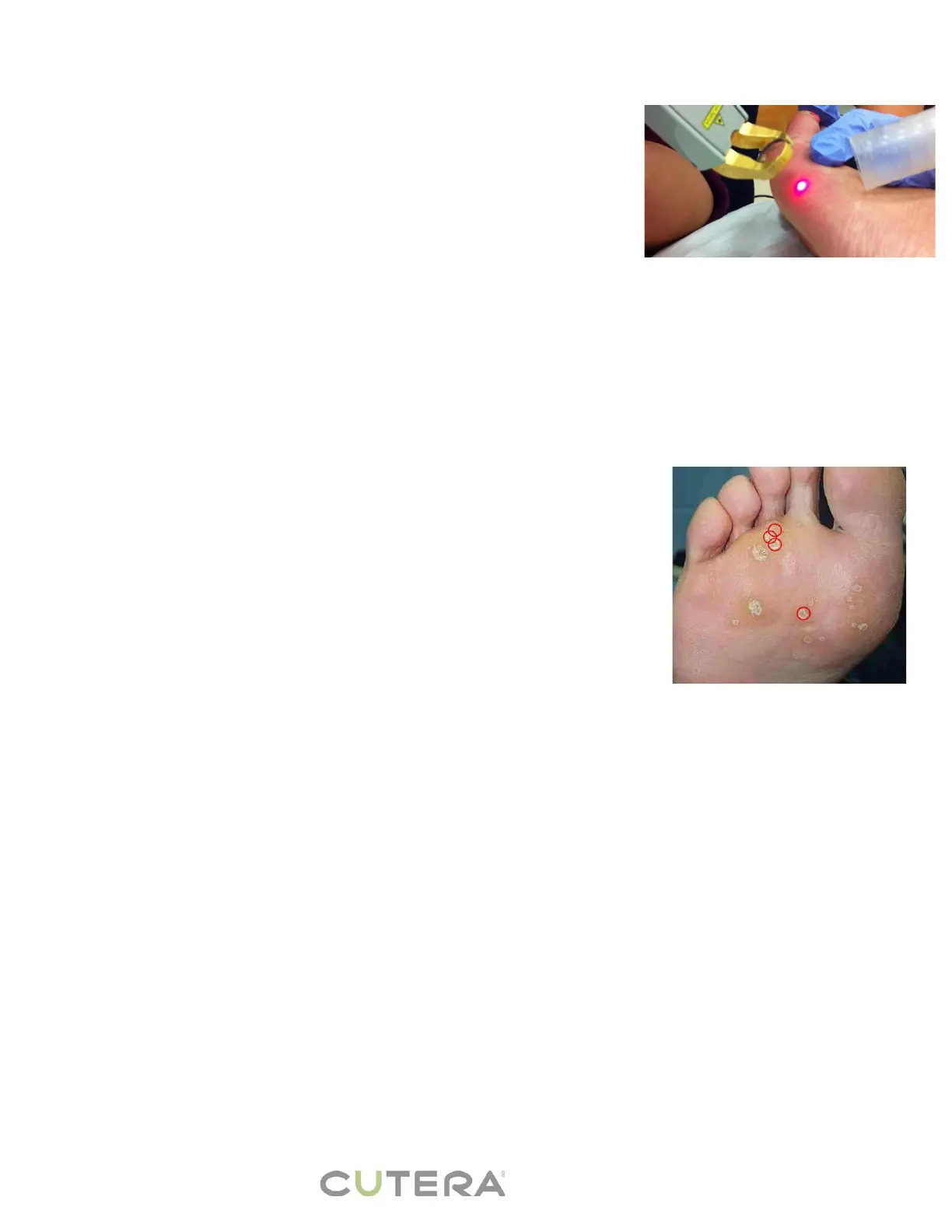
• Do not place the excel V handpiece in contact with the skin when pulsing
the wart.
o Hold the handpiece approximately 1 cm away from the wart.
o Wipe the sapphire window after each treatment.
o Cooling with the sapphire window prior and post-pulse is
recommended.
• Warts can be successfully treated with both 532 nm and 1064 nm
wavelengths.
o For smaller (superficial) warts, start with the 532 nm wavelength and evaluate response.
o Larger (deeper) warts may respond better with the 1064 nm wavelength.
• Treat within the wart border.
• The wart may spark when treated.
• Some warts may require more than one pulse.
o Do NOT stack pulses (i.e., place one pulse directly on top of another with no cooling time).
o Pause for a few seconds between pulses.
o Cool with ice/frozen gel pack in between pulses.
Individual Warts
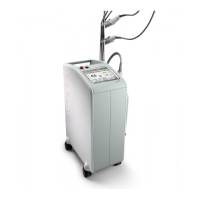
• Pulse over the wart.
• Do not treat outside the wart border.
• Cool the treatment area in between pulses.
• If the wart is smaller than the laser beam, assess the surrounding tissue
before placing additional pulses to avoid over-treatment of normal tissue.
• If the wart is larger than the laser beam:
o Use less aggressive parameters.
o Multiple treatments may be required (treat small sections over multiple
visits).
o For 532 nm treatments, place pulses with approximately 50% overlap.
o For 1064 nm treatments, place pulses with approximately 10%-50%
overlap.
lighter/smaller warts = more overlap
larger/darker warts = less overlap


 To Next Page