D1091 Rev.M August. 2016
The following information is supplemental to the excel V Operator Manual. Refer to the Operator Manual for detailed
information, including important cautions and warnings, prior to using the laser system.
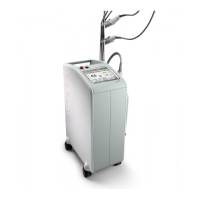
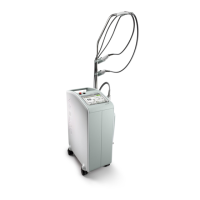
The Cutera excel V is a dual wavelength (532 nm and 1064 nm) laser system that can be used with two
interchangeable handpieces.
• The CoolView (532 nm/1064 nm) handpiece with sapphire cooling window is indicated for treatment of
benign vascular, cutaneous and pigmented lesions and mild to moderate inflammatory acne.
• The CoolView handpiece 1064 nm wavelength is also indicated for temporary and permanent hair reduction
on all skin types (Fitzpatrick I – VI), including tanned skin. Permanent hair reduction is defined as long-term,
stable reduction in hair counts observed at 6, 9 and 12 months after the end of a treatment regime.
• The genesis V (1064 nm) non-ablative skin therapy handpiece is indicated for treatment of wrinkles,
rosacea/diffuse redness, scar reduction and Poikiloderma of Civatte.
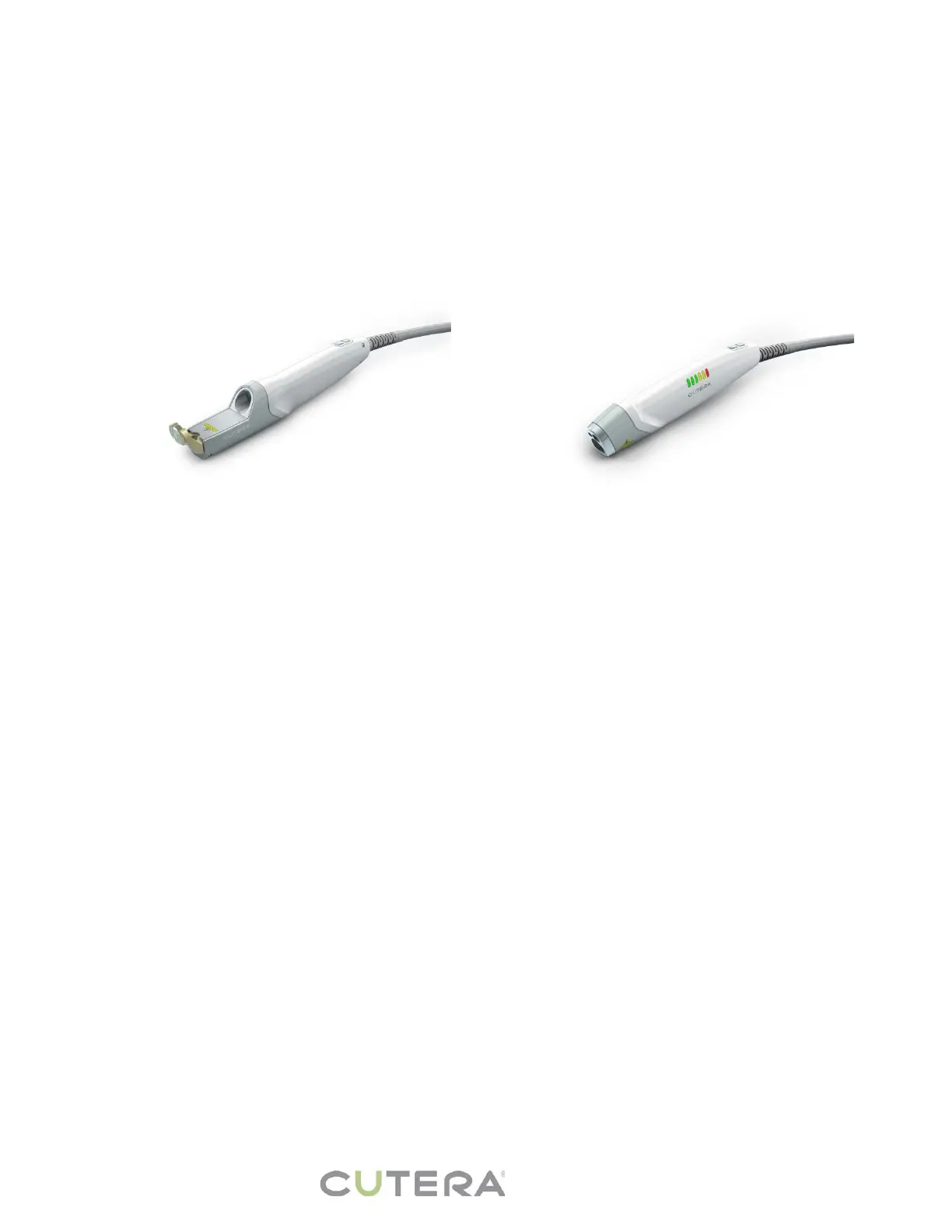
CoolView Handpiece with Chilled Sapphire Window genesis V Handpiece with Temperature Sensors
MECHANISM OF ACTION
Using the CoolView handpiece, the excel V treats benign vascular, cutaneous and pigmented lesions by selectively
targeting hemoglobin and melanin (selective photothermolysis) without causing thermal damage to the surrounding
tissue.
• For benign vascular lesion treatments, laser light is absorbed by hemoglobin in the veins, and the heat
produced causes photocoagulation. Heat is transferred to the vessel wall, which ultimately destroys the
vessels and prevents recanalization. The laser treats individual veins, but new veins may appear due to an
underlying disorder.
• For benign pigmented lesion treatments, the laser light is absorbed by superficial melanin in the lesion.
Pigmented cells are denatured, darken, rise to the surface, and flake off over a couple of weeks.
Using the genesis V handpiece, the excel V treats wrinkles and diffuse redness (non-ablative skin therapy) by
gently heating the dermis with the 1064 nm wavelength and microsecond pulses, which preferentially heat very fine
vasculature. This treatment can be performed without epidermal cooling.


 To Next Page