D1091 Rev.M August. 2016
VASCULAR TREATMENTS WITH 532 NM AND 1064 NM WAVELENGTHS
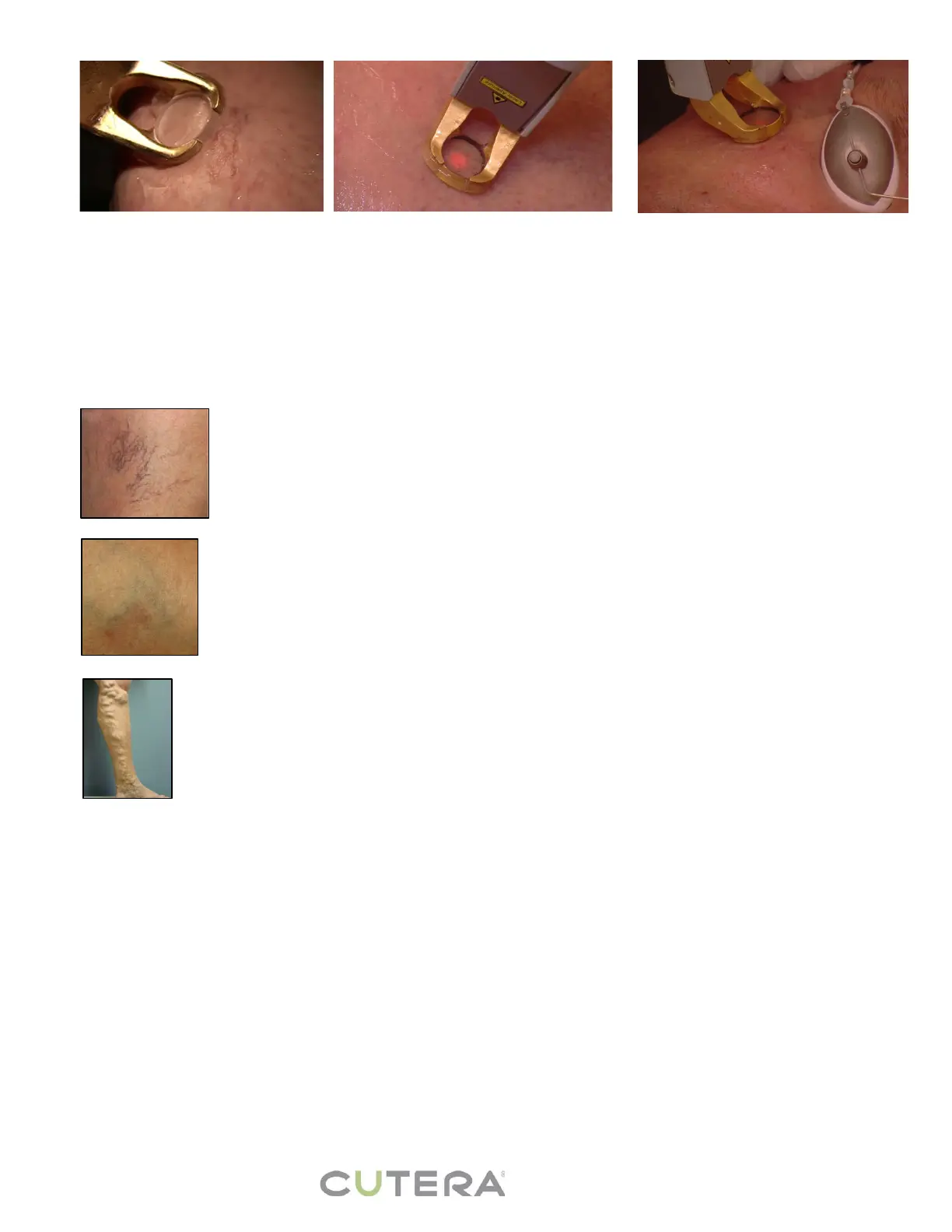
VASCULAR TREATMENT PROCESS
• The purpose of the treatment is to selectively treat the target of hemoglobin (chromophore) without causing
thermal damage to the surrounding tissue.
• Laser light is absorbed by hemoglobin in the veins and the heat produced causes photocoagulation.
• This heat is transferred to the vessel wall which affects the collagen and ultimately helps to destroy the
vessel and prevent recanalization.
• The laser treats individual veins but new veins may appear due to an underlying disorder
TYPES OF VEINS
Telangiectasia or spider veins – treat with 532 or 1064 nm wavelength
• Up to 1 mm in diameter
• Superficial, small veins; pink to purple in color
Reticular veins or “feeder veins” – treat with 1064 nm wavelength
• 1 – 3 mm in diameter
• Superficial collecting veins that are blue green
Varicose veins – usually requires surgery, not appropriate for laser therapy
• Vary in diameter
• Bulging and twisting veins of the lower extremity caused by increased venous pressure as
a result of venous incompetence
• Bulging varicose veins should be evaluated by a vascular surgeon
REFLUXING OR INCOMPETENT VEINS
• Venous reflux or incompetence is a diseased or abnormal valve that is no longer able to close when
subjected to pressure. This failure to close prevents the valve from stopping the backward flow of blood. In
response to gravity, blood pours backward (like a waterfall), overloading the vein with volume and pressure
which leads to the development of varicose veins.
• Duplex ultrasound may be ordered to diagnose possible reflux of the Greater or Lesser Saphenous Vein
which is usually treated surgically.


 To Next Page