2.2 95-87146
OPERATING MODES
The LS2000 has three operating modes: warm-
up, normal (measuring / monitoring), and
calibrate.
Warm-up
Warm-up mode is entered upon application
of 24 Vdc operating power. During warm-up,
the 0-20 mA current loop output will indicate
warm-up, the indicating LED is yellow, and
the alarm outputs are disabled. The warm-up
time typically lasts from 15 to 150 seconds,
depending upon alignment accuracy.
Normal
After warm-up mode is completed, the device
automatically enters the Normal mode, and all
analog and alarm outputs are enabled. The
LS2000 modules must be properly aligned
before normal operation is attained. See
INSTALLATION section for details.
Calibrate
After alignment is completed, zero calibration
is required. Span calibration of the LS2000
is performed at the factory; however, the user
has the option to verify proper calibration if
necessary. It is recommended that the zero
calibration procedure be performed annually.
Refer to the “Calibration” section in this manual
for details.
4-20 MA CURRENT LOOP OUTPUT
The LS2000 provides a linear current loop
output that is proportional to the detected gas
level. Fault and calibration status are also
indicated by this output.
The full-scale output corresponding to 5
LFL-meters is 20 mA. HART and MODBUS
interfaces also have the ability to calibrate (trim)
the 4 mA and 20 mA levels.
The LS2000 is equipped with output monitoring
circuitry for the current loop and will indicate
a fault when the output mA level does not
match the output set point of the device. This
monitoring (disabled by default) will indicate
a fault if the current loop is not terminated
correctly. The loop monitoring feature can be
enabled via HART or MODBUS communication.
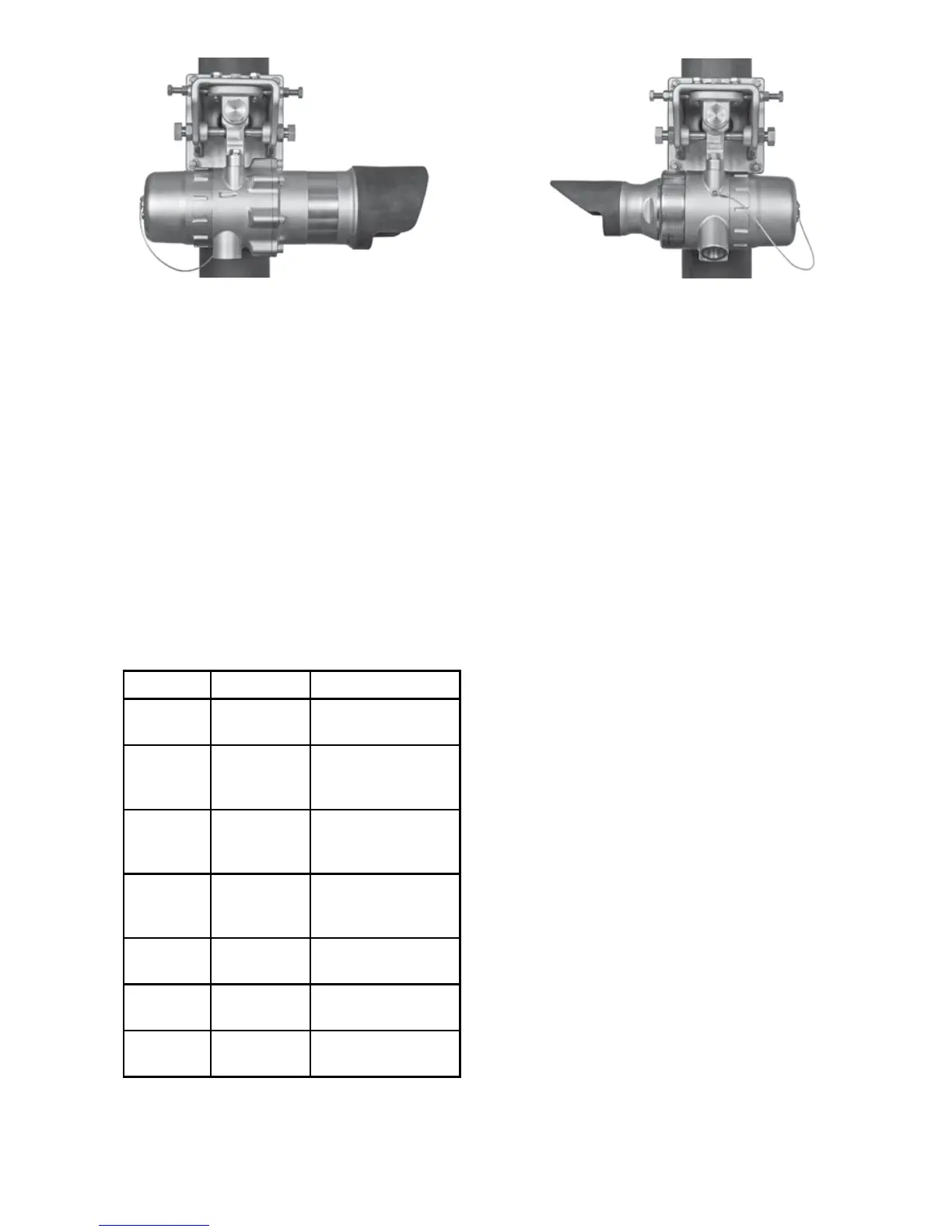
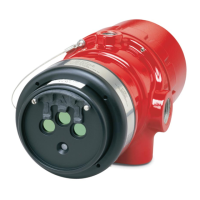
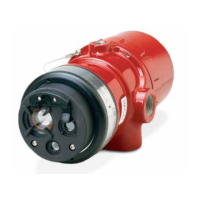
Figure 3— Identication of Transmitter and Receiver Modules
TRANSMITTER
RECEIVER
A2647
Table 3—Factory Default Settings
Default Congurable Options
Gas Type Methane
Methane, Propane,
Butane
Low Alarm
Threshold
(L F L- M)
1
0.5 to 4.5
(10% to 90%)
High Alarm
Threshold
(L F L- M)
3
0.5 to 4.5
(10% to 90%)
High & Low
Alarm Relays
(
Optional
)
Non-Latching,
De-Energized
Latching/Non-Latching,
Energized/
De-Energized
Beam Block
Delay
60 Seconds 60–3600 Seconds
Fault Mode LS2000
LS2000, Advanced,
User Defined
Heater
Mode*
Smart Mode
Smart Mode, Always
On, Always Off
*See "Heater Control" section for details.
NOTE:
The system must be configured for less than 60% of the
full scale measuring range, with consideration to the
accepted gas cloud size and concentration.




 To Next Page