3
26248 0
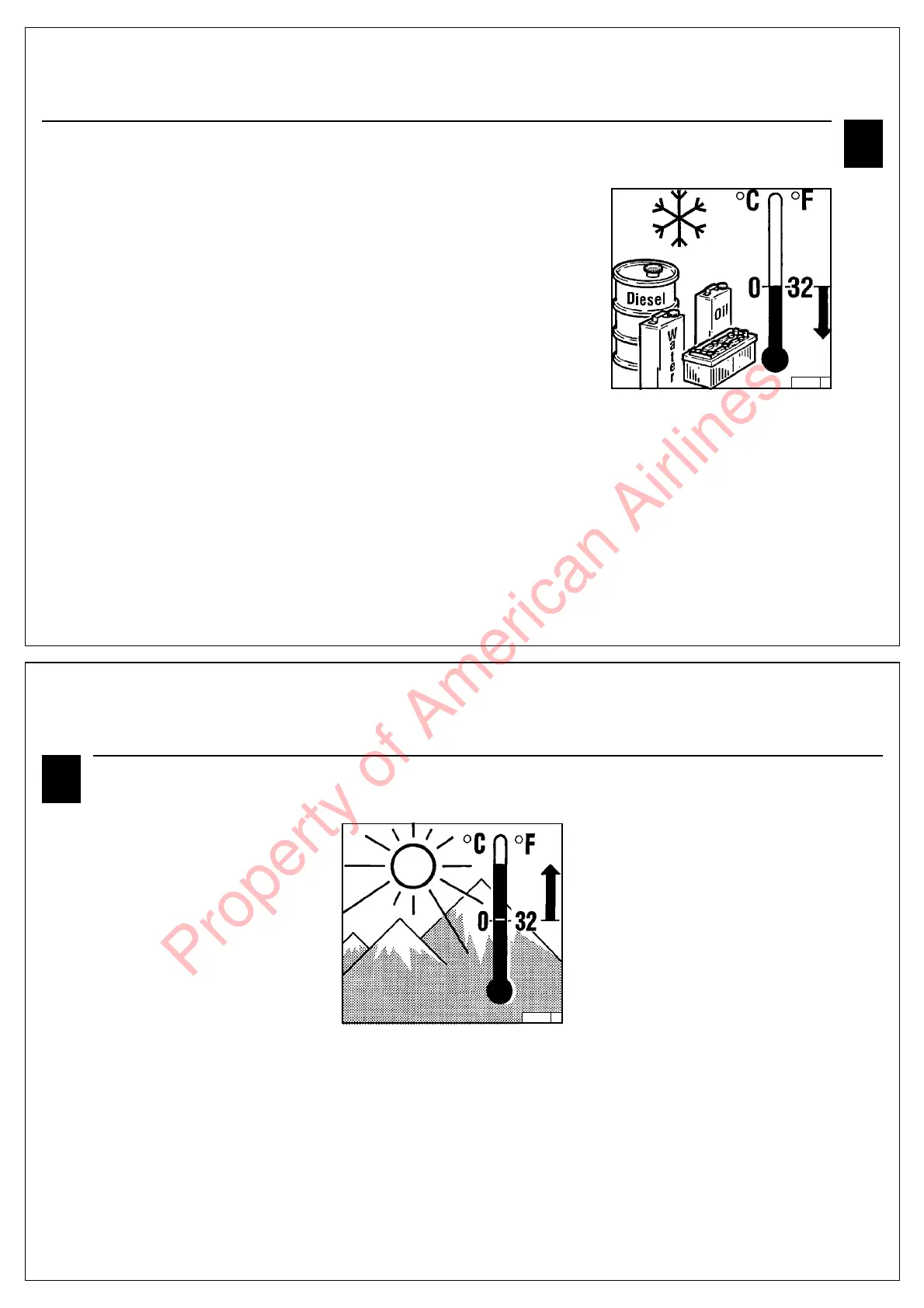
3.5.1 Winter Operation
● Lube Oil Viscosity
– Select the oil viscosity (SAE grade)
according to the ambient temperature
prevailing at the time when the engine is
started 4.1.2.
– Keep shorter periods between oil changes
when operating at temperatures below –10
°C (+14 °F), see 6.1.1.
● Diesel Fuel
– Use winter-grade diesel fuel for operation
below 0 °C (+32 °F), see 4.2.2.
● Coolant
– Set the water / antifreeze mix to suit the
lowest temperature likely to occur (max. –35
°C /
–31 °F), see 4.3.1.
● Additional Maintenance Jobs
– Drain the sludge from the fuel tank once a
week (by undoing the sludge drain plug).
– Adjust the oil filling in the oil bath air cleaner
(if fitted) to the prevailing ambient
temperature as in the case of engine oil.
– At temperatures below –20 °C (–4 °F)
lubricate the flywheel ring gear with low-
temperature grease, e.g. Bosch FT 1 V31,
from time to time through the pinion hole (if
necessary remove starter).
● Cold-Starting Aids
– At temperatures near or below freezing point
start with flame-type heater plug, see 3.2.1.
This not only lowers the starting limit
temperature, but proves also useful at tem-
peratures normally not requiring a starting
aid.
● Battery
– Cold starting requires a good state of charge
of the battery, see 6.7.1.
– The starting limit temperature can be
lowered by 4-5 °C by heating the battery up
to +20 °C (+65 °F). To do so, remove the
battery and store in a warm place.
3.5 Operating Conditions Engine Operation
3
25901 1
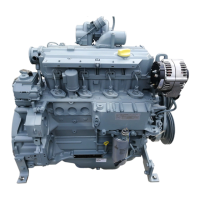
3.5.2 High Ambient Temperature,
High Altitude
● With increasing altitude and rising ambient
temperatures the density of the air. tends to
decrease, which affects the maximum power
output, the exhaust gas quality, the
temperature level and in extreme cases, the
starting behaviour. Under transient running
conditions, operation is permissible at altitudes
up to 1000 meters at ambient temperatures up
to 30 °C (86 °F)
If an engine is operated under more severe
conditions (at higher altitudes or ambient tem-
peratures) it will be necessary to reduce the
injected fuel quantity and thus engine power.
● In case of doubt concerning such engine
applications, ask your engine or equipment
supplier whether, in the interest of operational
reliabillty, service life and exhaust gas quality
(smoke!), an engine derating had been
considered necessary, or simply contact your
service representative.
Engine Operation 3.5 Operating Conditions
Property of American Airlines



 To Next Page