Maintenance Manual LS4
Issued: May 2011
Copyright DG Flugzeugbau GmbH - any copy or publishing prohibited
Manual valid with the up-to-date cover page only
11.4.4 Repair of outer and inner skin of a sandwich panel
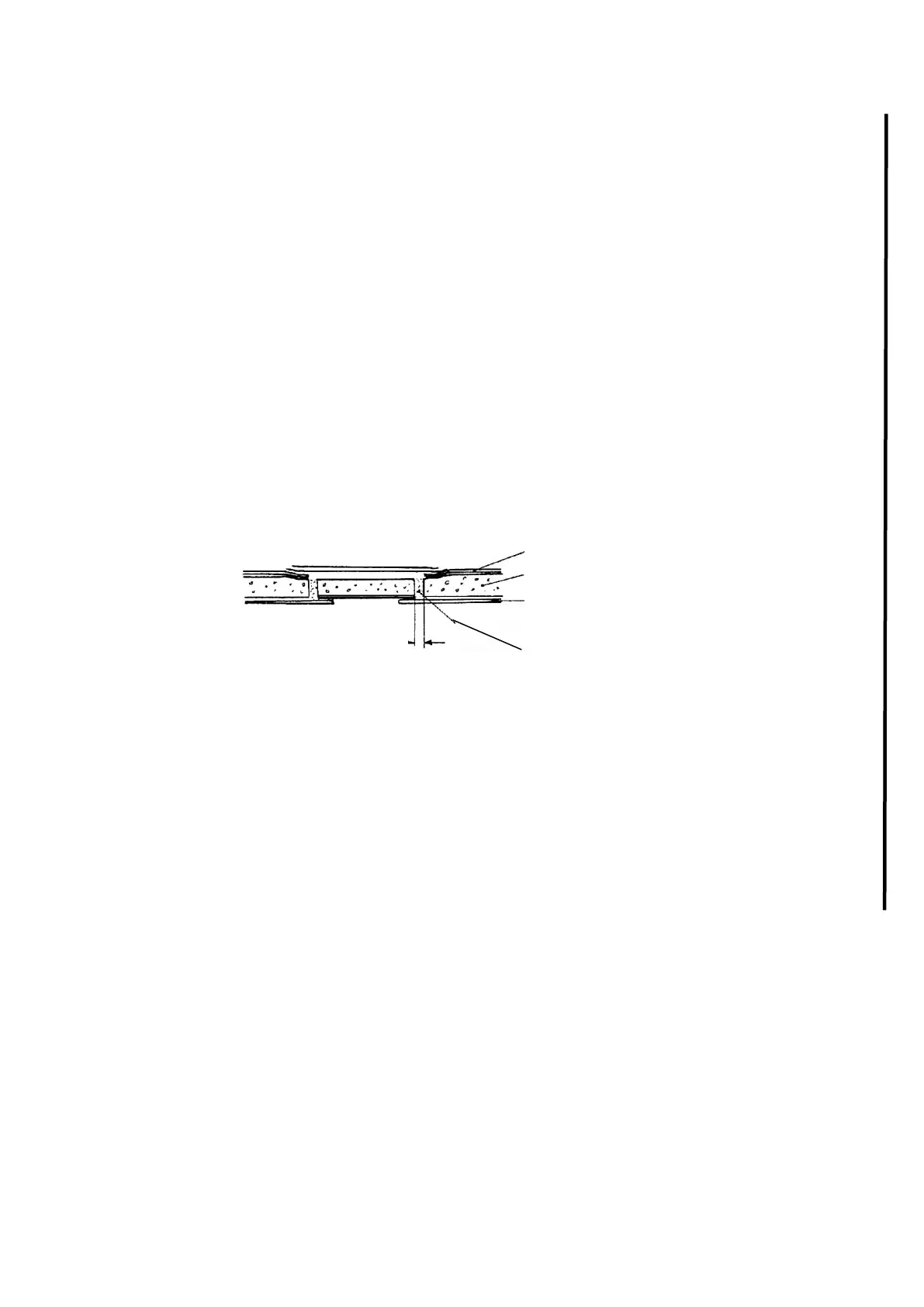
See section 11.4.3. Additionally remove as much foam as is needed so that
the entire damage to the inner skin can be seen, plus enough undamaged
inner skin as is required for overlapping. If the inner skin still holds
together, sand properly and lay up the new cloth over it. Insert a suitable cut
piece of foam, 1-2 mm (0.04 to 0.08 in.) thinner than the original, glued in
with microballoons-resin.
Should the inner skin be so damaged that the above process cannot be used,
the inner skin fabric should be applied to the foam first and left to harden
before inserting into the repair area. Microballoons-resin should once again
be used.
For lay up of the fabric to the foam, a layer of microballoons-resin should
be applied first to eliminate the formation of air bubbles.
Apply the outer layers as in section 11.4.3.
11.4.5 Repairing small dents in a sandwich panel skin (no cracks in the
gelcoat)
Small dents can usually be removed by heating up to 60° to 70° C (140° -
158°F). Use a hot air blower to heat the area of the dent. The crushed foam
will then spring back to its original form, so that the dent will hardly be
seen. Final sanding with wet sandpaper grade 600 should finish the job. In
more severe cases, one coat of gelcoat will remove all trace of the dent.
outer skin
foam
inner skin
resin thickened with
microballoons



 To Next Page