8
Pre-Installation
This example is for a G½ temperature relief valve with a
discharge pipe (D2) having 4 No. 22mm elbows and length
of 7m from the tundish to the point of discharge.
From Table 2, the maximum resistance allowed for a straight
length of 22mm copper discharge pipe (D2) from a G½ tem-
perature relief valve is 9.0m. Subtract the resistance for 4
No. 22mm elbows at 0.8m each = 3.2m.
Therefore the maximum permitted length equates to 5.8m,
which is less than the actual length of 7m, therefore calcu-
late the next largest size.
Maximum resistance allowed for a straight length of 28mm
copper discharge pipe (D2) from a G½ temperature relief
valve is: 18m.
Subtract the resistance for 4 No. 28mm elbows at 1.0m
each = 4m.
Therefore the maximum permitted length equates to 14m.
As the actual length is 7m, a 28mm (D2) copper pipe will
be satisfactory.
- Where a single common discharge pipe serves more
than one system, it should be at least one pipe size
larger than the largest individual discharge pipe (D2)
to be connected.
- The discharge pipe should not be connected to a soil
discharge stack unless the soil discharge stack is
capable of safely withstanding temperatures of the
water discharged, in which case, it should:
-Contain a mechanical seal, which allows water into the
branch pipe without allowing foul air from the drain to
be ventilated through the tundish.
- There should be a separate branch pipe with no
sanitary appliances connected to it.
5.10.2 Worked Example
5.10.3 Termination of discharge pipe
- Discharges at high level: e.g. into a metal hopper and
metal downpipe with the end of the discharge pipe
clearly visible or onto a roof capable of withstanding
high temperature discharges of water and 3m from
any plastic guttering system that would collect such
discharges.”
As the discharge would consist of high
felt and non-metallic rainwater goods may be
damaged by such discharges.
5.11 Product Disposal
This product has been manufactured from
mostly recyclable materials. At the end of the
product’s life, it should be disposed of at a Local
Authority Recycling Centre.
Materials:
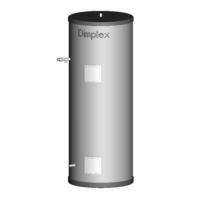
• Inner Cylinder - Stainless Steel
• Outer Cladding - HIPS/ABS (Polypropylene BE 50)
• Inlet/Outlet Pipe - Plastic (Polypropylene BE 50)
• Insulation - 50mm PU Foam (GWP =1, ODP =0)
Connections & Fasteners:
• Inlet/Oulet - stainless steel
• T&P Valve - 7 bar ½” BSP
• Immersion Heater - 1 ¼”M BSP
Safety & Control:
• Cold water inlet group - brass
• Tundish - acetal co-polymer
• T&P Valve - brass
- “The discharge pipe (D2) from the tundish should
terminate in a safe place where there is no risk to
persons in the vicinity of the discharge.”
Examples of acceptable discharge arrangements are:
- “To a trapped gully with the end of the pipe below a
- Downward discharges at low level; i.e. up to 100mm
above external surfaces such as car parks, hard
standings, grassed areas etc. are acceptable providing
that a wire cage or similar guard is positioned to
prevent contact, whilst maintaining visibility; and ,
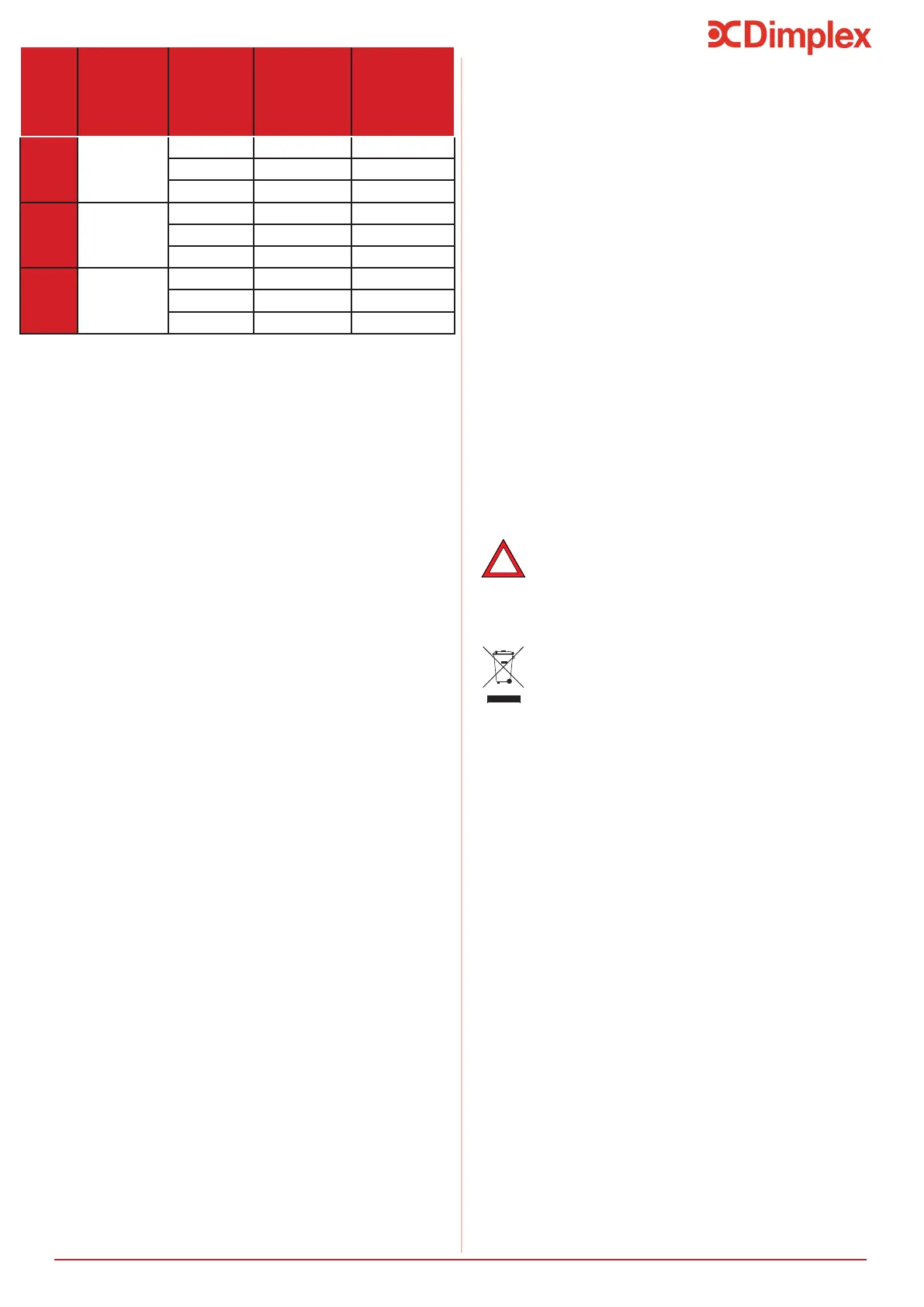
Value
outlet
size
Minimum size
of discharge
pipe before
tundish (mm)
Minimum size
of discharge
pipe after
tundish (mm)
Maximum
allowed length
of pipe after
tundish (m)
Length to be
subtracted for
each elbow or
bend
(m)
G1/2 15 22 9 0.8
28 18 1.0
35 27 1.4
G3/4 22 28 9 1.0
35 18 1.4
42 27 1.7
G1 28 35 9 1.4
42 18 1.7
54 27 2.3
- Be continuously marked with a warning that no
sanitary appliances should be connected to the
pipe.
Table 2: Discharge
- If plastic pipes are used as branch pipes carrying
discharge from a safety device, they should be either
polybutalene (PB) or cross-linked polyethylene (PE-X)
complying with national standards.


 To Next Page