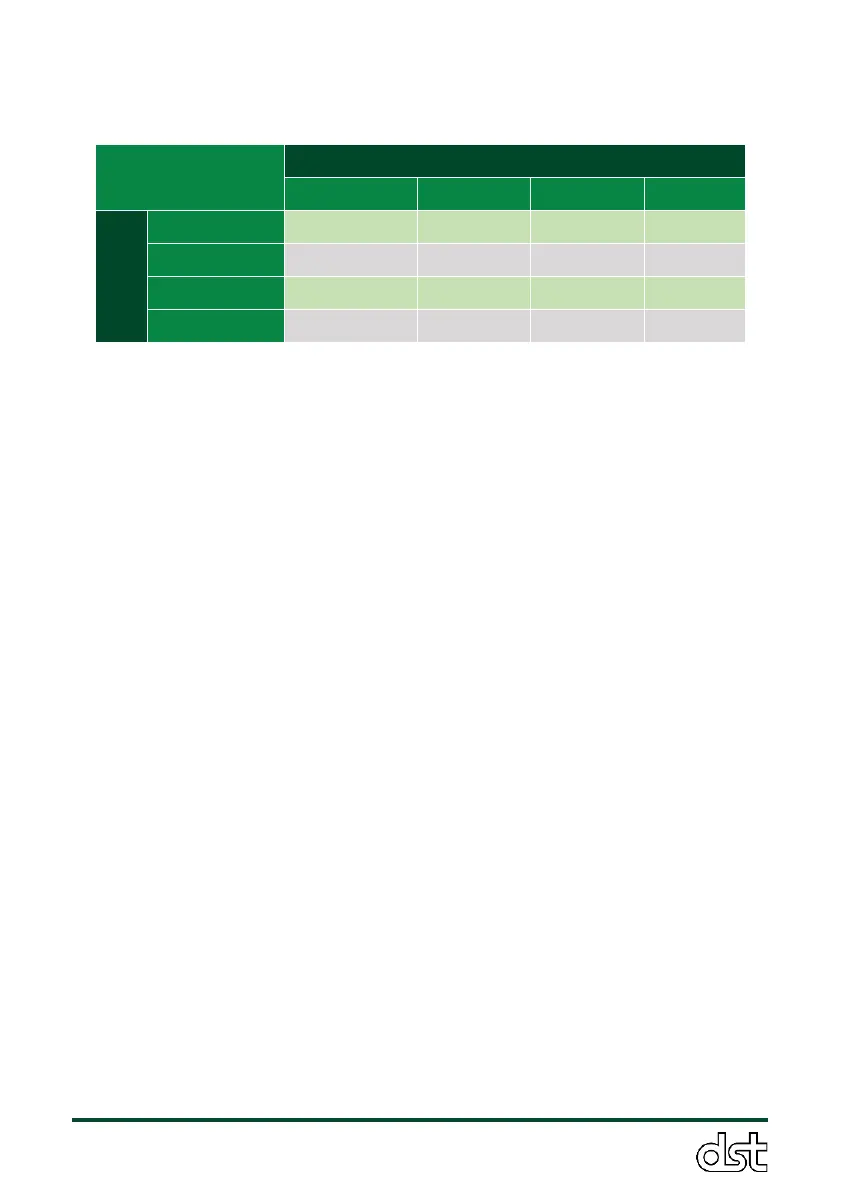
Table 7. ObservAir’s minimum flow rate setting and maximum filter life
as a function of average BC concentration and data logging period. The
ObservAir cannot provide BC concentration data with a baseline noise
< 0.05 µg/m
3
on 2-second basis, so the top left cell is empty.
• Scenario 1: BC
avg
= 7 ug/m
3
, Logging interval = 2 seconds
For this scenario, the BC baseline noise should be ≤ 0.7 µg/m
3
at 2-second
logging. Using the calculation procedure above, the minimum flow rate
setting is (0.3/0.7)*100 = 43 ccm. For these settings, the maximum filter
life is ~1.7 days. Alternatively, refer to Table 7 and see that for 2-second
measurements of 5 µg/m
3
average concentrations, the flow rate setting is
60 ccm. By interpolation, the flow rate can be set to 60*7/5 = 43 ccm.
• Scenario 2: BC
avg
= 0.35 ug/m
3
, Logging interval = 1 minute
The BC baseline noise should be from ≤ 0.035 µg/m
3
at 1-minute logging.
From Table 1, the noise is 0.05 ug/m
3
at 1-minute and 100 ccm, so the
minimum flow rate is (0.035/0.05)*100 = 70 ccm. In Table 7, a flow rate
of 100 ccm is recommended for 1-minute measurements at 5 µg/m
3
. By
interpolation, the flow rate can be set to 100*0.35/0.5 = 70 ccm. The filter
life can be calculated as 510/(0.35*70) = 20.8 days.
IMPORTANT NOTE: The above considerations do NOT apply to gas
sensing. The gas sensors’ measurement performance remains largely
constant with varying flow rate.
5.4. Operational settings for common applications



 To Next Page