22 CA 602 O602EN1
BRAKING
Normal braking
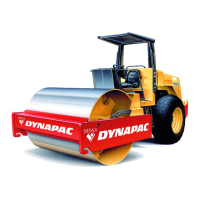
Check instruments and warning lamps to see if any
faults are indicated, switch off the lights and other
electrical functions.
Turn the starter switch (1) to position O. Lower the
instrument cover (on rollers without cab) and lock it.
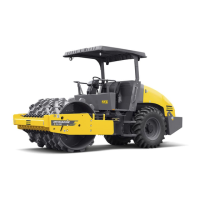
Press the switch (38) to disengage vibration.
Move the forward/reverse lever (39) to neutral to stop
the roller.
Always press the parking brake knob (37),
even for brief stops on sloping ground.
Turn the speed control back to idling, allow the engine
to idle a few minutes to cool down.
When starting up and driving a cold
machine, which implies cold hydraulic
fluid, the braking distance will be longer
than normal until the machine reaches
working temperature.
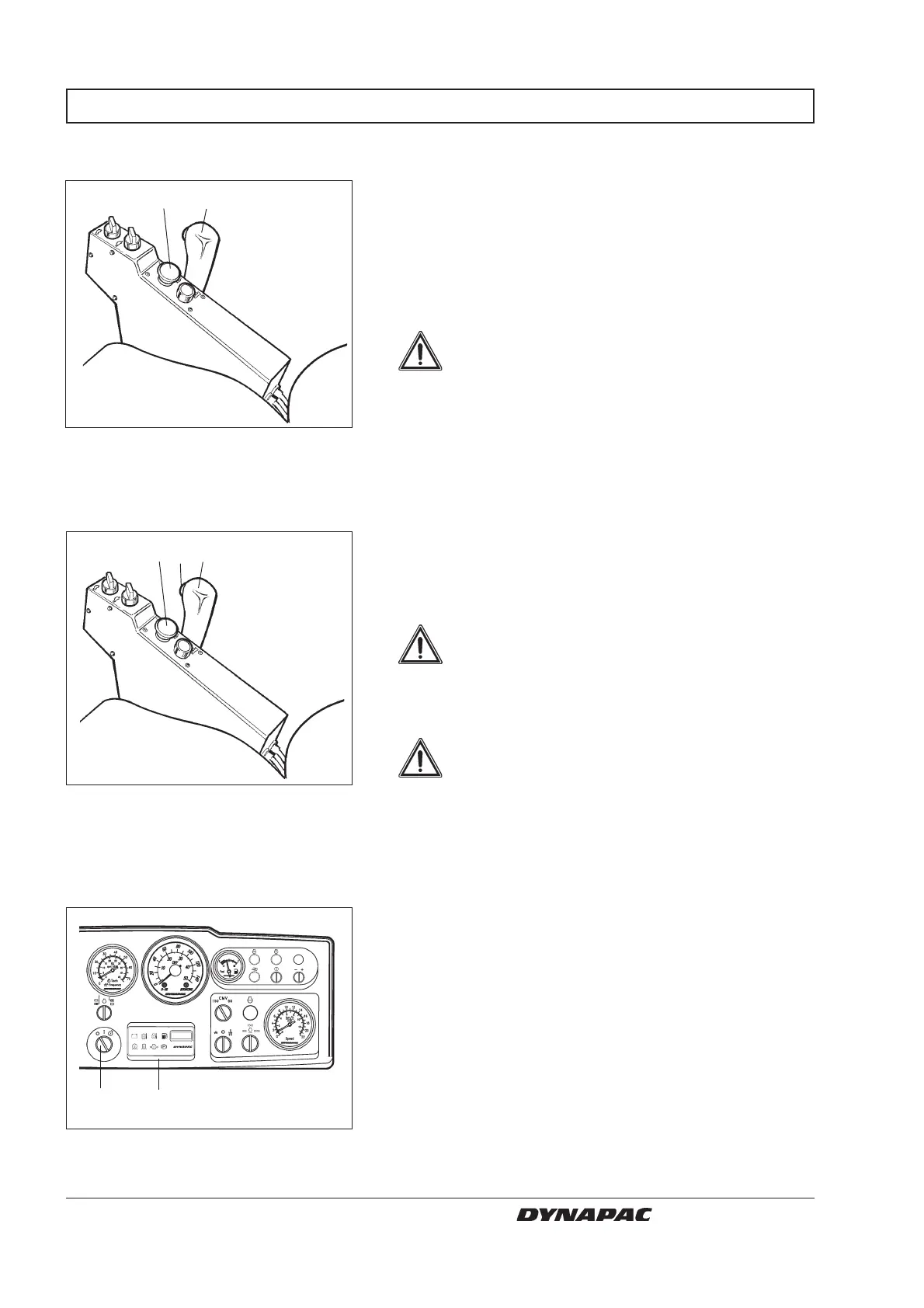
37 39
37 38 39
1 26-34
Reserve brake
Fig. 26 Control panel
37. Parking/Reserve brake knob
38. Switch, vibration ON/OFF
39. Forward/Reverse lever
Switching OFF
Fig. 25 Control panel
37. Reserve/parking brake knob
39. Forward/Reverse control
Fig. 27 Instrument panel
1. Starter switch
26-34. Warning lamp panel
Braking is normally made with the forward/reverse
lever. The hydrostatic transmission brakes the roller
when the lever is moved towards the neutral mode.
In addition, each drive motor has a multi-disc brake that
acts as reserve brake when driving, and as a parking
brake when stationary.
To brake, press the reserve/parking brake
knob (37), hold the steering wheel firmly
and be prepared for a sudden stop.
After braking, restore the forward/reverse lever to
neutral and pull up the reserve/parking brake knob.
WARNING
WARNING
WARNING



 To Next Page