Dynatron® 850plus & 550plus
BIPHASIC & RUSSIAN - General Information
74
The pulse width indicates the duration (in milliseconds or microseconds) of the output cycle
of the pulse, and the pulse rate is measured in number of pulse occurrences per second.
Between pulses, current is at zero.
A 50 percent duty cycle or less is the usual duty cycle for Russian stimulation (the duty cycle
includes one output cycle period and one zero-current period). A 50 percent duty cycle
means that the length of the pulse width must be equal to or less than the zero-current period.
The number of pulses per second affects the allowable range of pulse widths. A greater
number of pulses per second means a shorter pulse width is allowed. The Dynatron 850plus
and 550plus will not allow you to circumvent this rule.
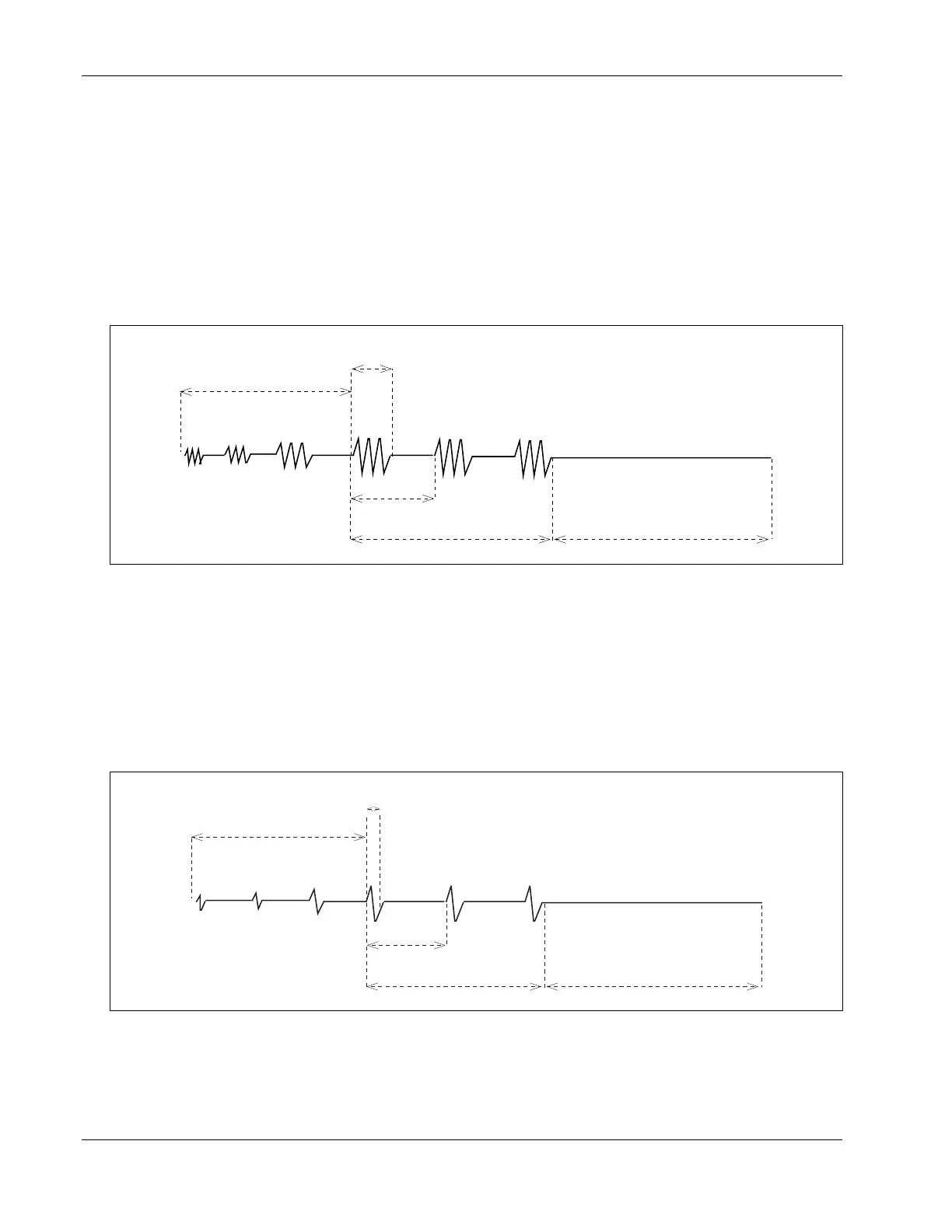
Ramp
Rate
Contraction
Width
Rest
Russian Stimulation.
If a given Russian stimulation treatment has a 50 percent duty cycle, this means the output
cycle is continuously repeating for half of the pulse duration (see “Rate” in the diagram
above) followed by a zero-current period for the other half of the pulse duration.
Biphasic stimulation differs from Russian stimulation in the pulse width and rate ranges, as
explained above. In addition, the biphasic pulse includes just ONE output cycle per pulse.
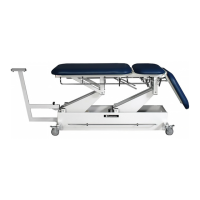
As shown in the diagram below, one pulse cycle (including one positive phase and one
negative phase) occurs, followed by a zero-current period .
Ramp
Rate
Contraction
Width (Duration)
Rest
Biphasic Stimulation.



 To Next Page