6.5 ATC adjustment
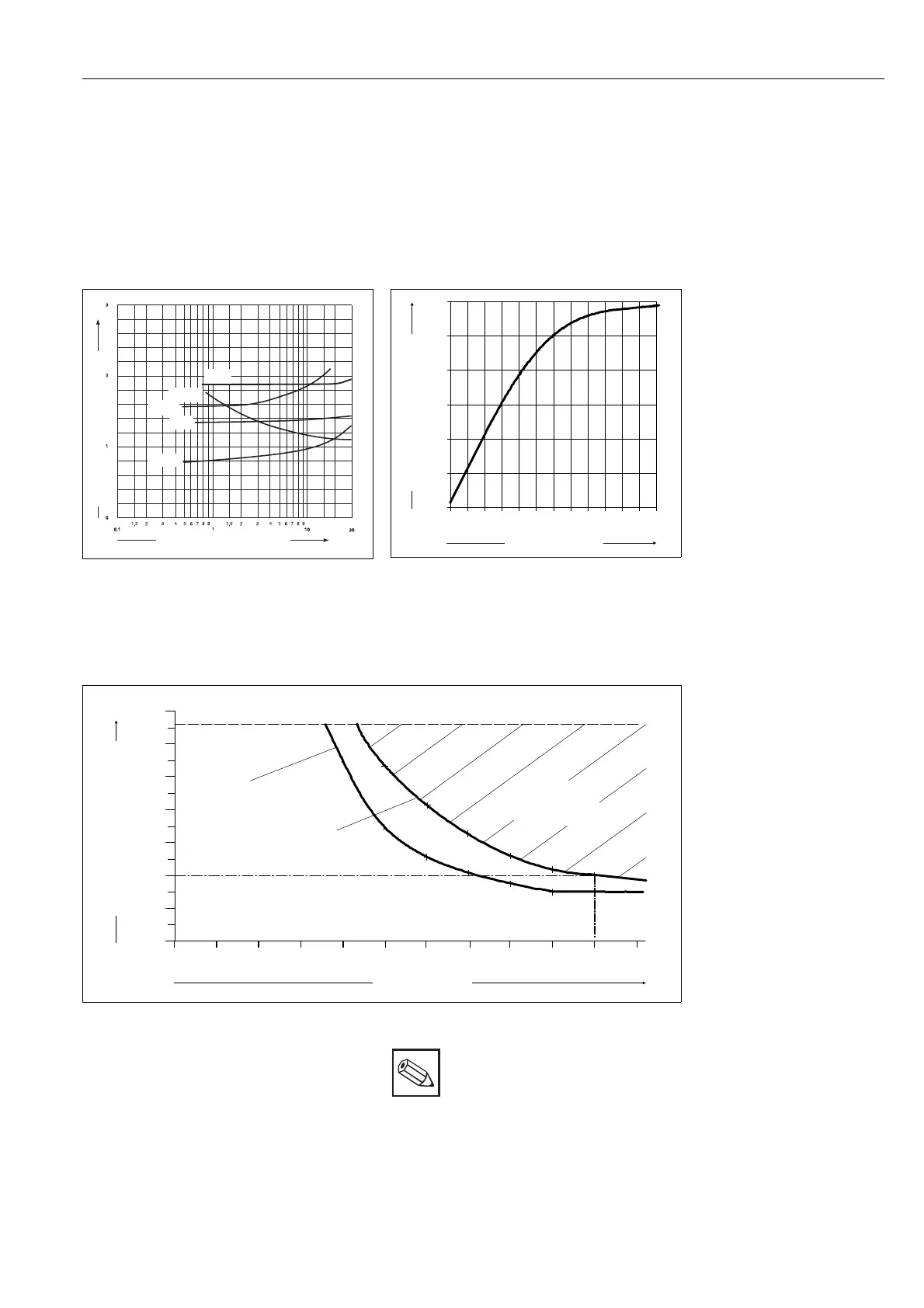
The temperature coefficient indicates the
change in conductivity per degree of
temperature change. It depends on the
chemical composition of the solution as well
as on its concentration (see fig. 6.2).
The possible working range of the instrument
within which a temperature compensation can
be performed over the instrument’s entire
measuring range is described in the following.
Saline solutions have a non-linear
temperature coefficient. The NaCl curve
is stored in the Mycom instrument.
The NaCl characteristic curve corresponds to
DIN IEC 746 for low concentrations.
Concentration [ weight-% ]
Temperature coefficient [%/K ]
SMCBAD15.EPS
NaCl
H
3
PO
4
H
2
SO
4
HCl
NaOH
Temperature coefficient [ %/K ]
Temperature [ °C ]
2.7
2.6
2.5
2.4
2.3
2.2
2.1
0 24 48 72 96 120 144
NACLCOMP.GEM
Fig. 6.2: Dependence of the
(left) temperature coefficient
over the concentration of
different electrolyte
solutions; reference
temperature 25
°
C
Fig. 6.3: Dependence of
(right) temperature coefficient
with NaCl solutions over
the temperature
Temperature [ °C ]
Temperature coefficient
α
[ % / K ]
Range:
200 mS / cm , k = 1 and
20 mS / cm , k = 0.1
All other measuring ranges.
Measuring range
exceeded.
7
–20 0 20 40 60 80 100 120 140 160 180 200
6.6
6
5
4
3
2
1
0
BA125061.GEM
Fig. 6.4: Limit curves for
temperature coefficient
values;
reference temp. 25 °C
Example:
A temperature coefficient of 2 % / K has been
selected.
The automatic temperature compensation is
effective at temperatures of up to +180 °C.
Exception:
In the 200 mS / cm, k = 1 measuring range,
the automatic temperature compensation is
effective at temperatures of up to 120 °C only.
Note:
When the compensation range is
exceeded, the display continues to
show the maximum value.
Error message 27 is issued, i.e.
,,measuring range exceeded“.
BE4LM151.CHP
mycom CLM 121/151 - CD/MM
6. Operation
31




 To Next Page