3534 ERGON BIKE ERGONOMICS
Basic Biomechanics
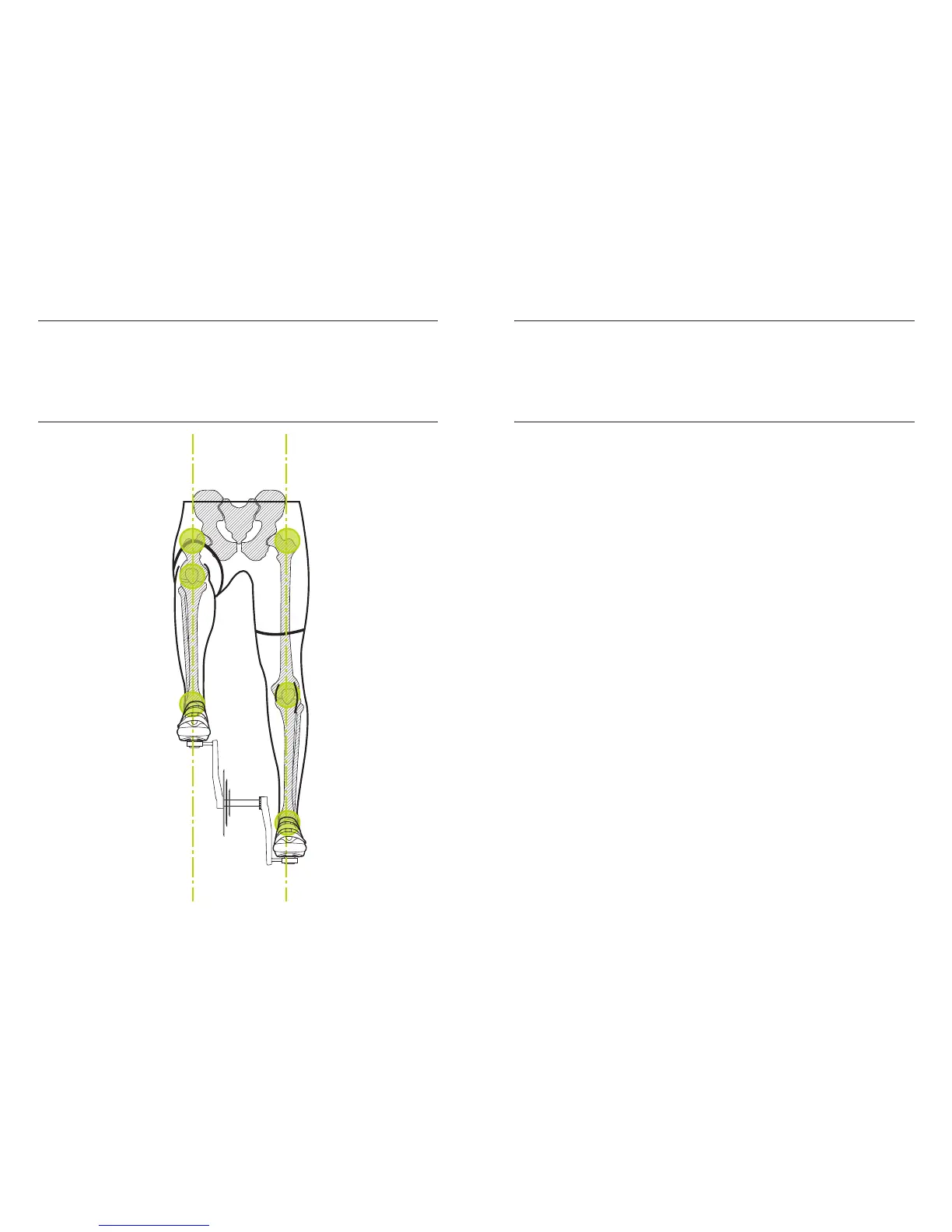
The biomechanics of the legs are complex. When riding optimal performance is
normally achieved when the leg joints follow the vertical axis. This will allow you
to perform to your maximum and will prevent the onset of aches and pains.
When riding it is advisable to move the knee exactly straight up and down
without any sideward movement. Your feet should be parallel to the ground
and the pedal axle should be under the ball of the foot.
This ideal setup is dependent on the correct installation of the cleat as
illustrated, as this determines the position of the other joints in the leg.
Additionally the position of the shoe in relation to the pedal is also important.
The following things should be observed:
– Fore / Aft position
– Q-Factor (determined as the width the feet are from each other)
– Angle of the foot (rotation)
Expert Tip:
To improve efficiency, your legs should pass closely to the frame. This will also
reduce the sideways movement of your body weight, reducing the amount of
compensating you will have to do with your core muscles, and so reduces
fatigue.
Please note that it is essential to set up your bike with the correct saddle
height.



 To Next Page