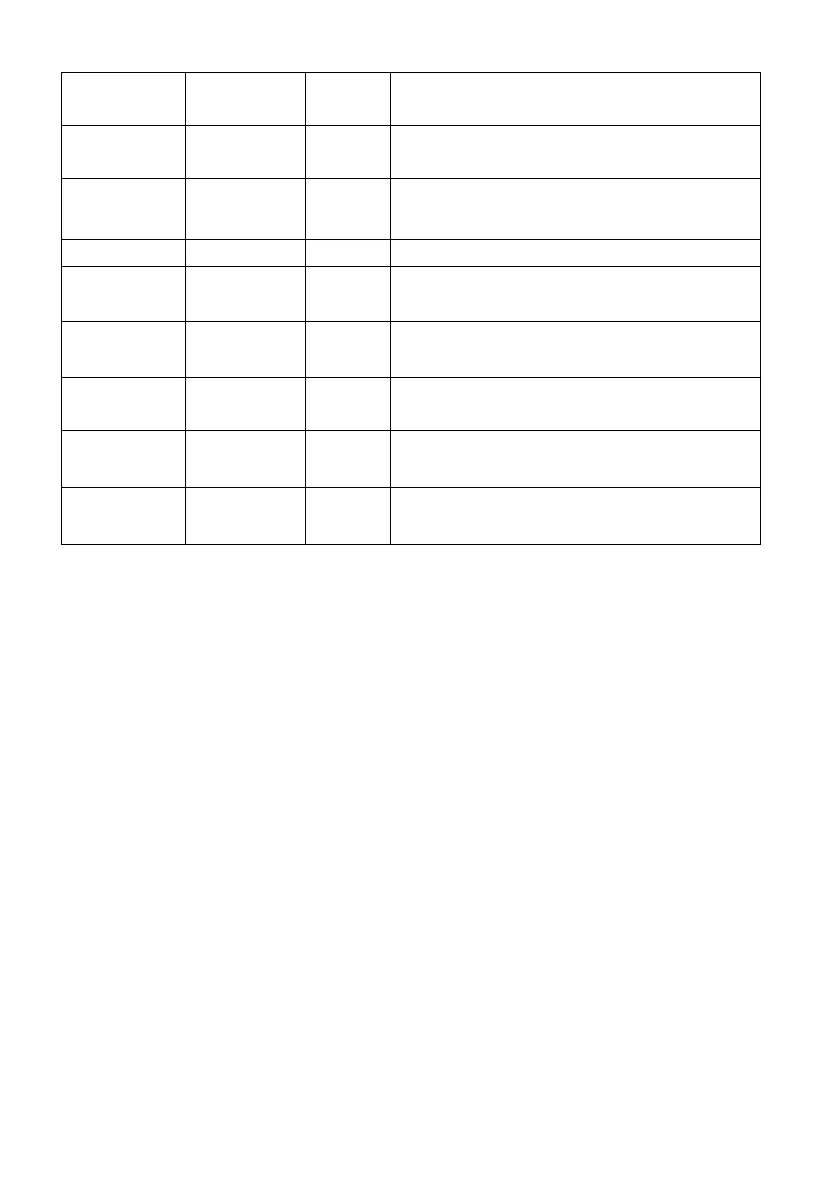
Calibrated laboratory grade solar radiation
sensor
Solar radiation conversion from lux to
w/m
2
for wavelength correction (5)
Calibrated laboratory grade wind meter (6)
Sight glass rain gauge with an aperture of
at least 4” (7)
Apply an offset if the weather station was
not operating for the entire day.
Apply an offset if the weather station was
not operating for the entire week.
Apply an offset if the weather station was
not operating for the entire month.
Apply an offset if the weather station was
not operating for the entire year.
(1) Temperature errors can occur when a sensor is placed too close to a
heat source (such as a building structure, the ground or trees).
To calibrate temperature, we recommend a mercury or red spirit
(fluid) thermometer. Bi-metal (dial) and digital thermometers (from
other weather stations) are not a good source and have their own
margin of error. Using a local weather station in your area is also a
poor source due to changes in location, timing (airport weather
stations are only updated once per hour) and possible calibration
errors (many official weather stations are not properly installed and
calibrated).
Place the sensor in a shaded, controlled environment next to the fluid
thermometer, and allow the sensor to stabilize for 3 hours. Compare
this temperature to the fluid thermometer and adjust the console to
match the fluid thermometer.
(2) Humidity is a difficult parameter to measure electronically and drifts



 To Next Page