417D/424D
Users Manual
10
Compass
The compass feature lets you know the view or direction as you
make measurements. This is useful indoors to set the building
plans in the correct direction. It is also useful to know the correct
direction when you calculate the efficiency for a solar panel. See
Table 7.
Tips:
• Make sure that the endpiece is folded in.
• When you use the compass feature, the Meter shows the
calibration message. See Compass Calibration for more
information.
• Compass arrows blink on the display if the Meter is tilted
>20 ° end to end or >10 ° side to side.
• When you turn on the compass, the Meter shows the
calibration message. See Manual Calibration for more
information.
W Caution
To prevent incorrect direction readouts, do not
use near magnets and magnetic devices.
Compass Calibration
Automatic Calibration
The compass sensor continuously collects and saves new
calibration values in 60-second intervals.
Manual Calibration
When you turn on the compass, the Meter shows the calibration
message:
1. For no, push G. The compass uses old data that can be
inaccurate.
2. For yes, push F.
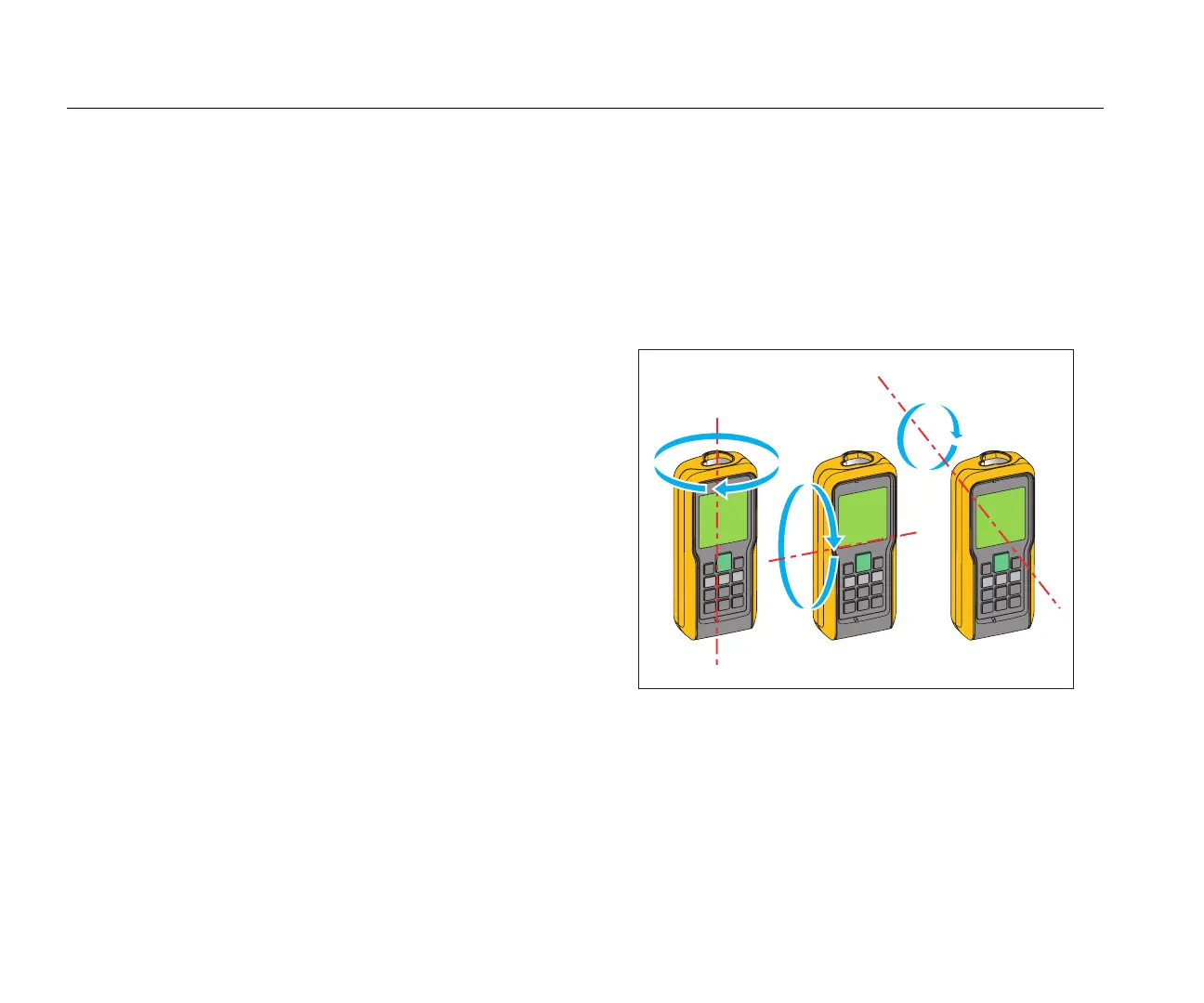
To continue with the calibration:
a. Rotate the Meter 180 ° around the Z-axis. See Figure 5.
b. Rotate the Meter 180 ° around the X-axis.
c. Rotate the Meter 180 ° around the Y-axis.
The Meter counts from 1 to 12 during calibration.
shows on the display when the calibration is
complete.
Figure 5. Manual Calibration
Magnetic Declination
The difference between the north geographic pole and the north
magnetic pole is known as magnetic declination, or more plainly,
declination. The angle of declination is different at different
locations on the earth. The geographic and magnetic poles are
aligned so declination is minimal. From some locations, the angle
between the two poles can be fairly large.
Table 9 is a list of the current angles of declination by location.


 To Next Page