Maintenance | 37
Required supplies
Isopropyl alcohol
Non-reactive nitrile gloves
Non-abrasive wipes
Rubber bulb air blower
To clean the release texture:
1. Put on a new, clean pair of nitrile gloves.
2. Grip the top of a non-abrasive wipe with a gloved hand. Soak the bottom half of the wipe
with clean isopropyl alcohol.
3.
Drag the isopropyl alcohol soaked wipe slowly across the surface of the LPU. It should take
20–30 seconds to traverse the width of the LPU.
°
Do not contact the release texture with your hand or apply pressure to the wipe.
°
For debris and resin near the edge of the LPU, always drag the wipe towards the edge
of the LPU to avoid spreading the contaminant.
4. Wait for the isopropyl alcohol on the release texture to dry.
5. Repeat this process several times until the contaminant has been removed.
6.7 Maintaining the resin tank
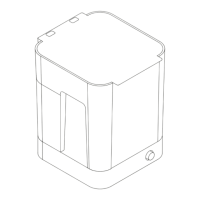
The resin tank is the primary container for holding resin after it is dispensed from the resin
cartridge. Resin is cured onto the build platform when the light from the backlight passes
through the bottom of the resin tank. Be sure to handle and maintain the resin tank properly
between each print. For detailed guidance and visual assistance, visit support.formlabs.com.
Skin irritant: Resin and solvent may cause skin irritation or an allergic skin reaction.
Wear gloves when handling liquid resin, resin-coated surfaces, or solvent. Wash skin
with plenty of soap and water.
Spill hazard: Resin may spill over the tank walls if the resin tank tilts more than 5–10
degrees. Hold the resin tank level with two hands. To inspect and clean the resin
tank’s underside, empty the resin tank and/or take care to avoid spilling resin outside
the resin tank.
Sharp and metal tools can damage the resin tank and aect print quality, leading to
print failures and/or a resin spill. Do not use sharp or metal tools like the removal tool
or flush cutters to inspect or clean the resin tank.
6.7.1 Inspecting the resin tank
For the best results, inspect resin tanks regularly and, if necessary, clean them. Dirty optical
surfaces and damage to the resin tank may cause print failures.
WARNING
NOTICE
NOTICE



 To Next Page