Section 3 Mechanical Installation & Lightning Protection
20 FT722 & FT742 (RS485) – FF & PM Sensors – User Manual
3.1.4 Lightning, Surge & EMI Protection
It is important to install the sensor with appropriate protection against lightning and other sources of
electromagnetic interference in order to maximise its chance of survival and continued operation during and after
exposure.
Protection against direct lightning effects
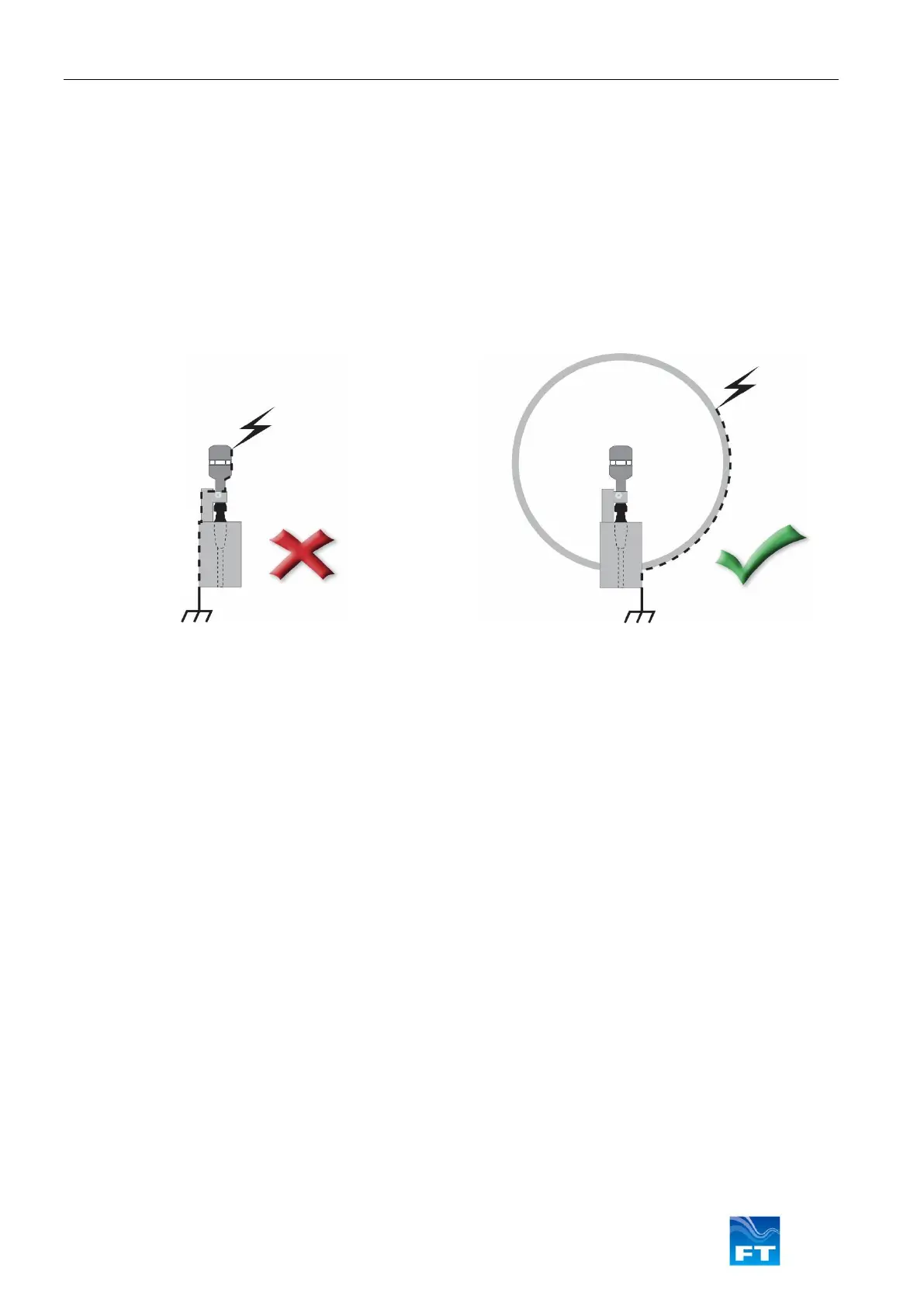
The sensor installation must be designed in such a way that a protection zone is created around the sensor so
that its body can never be subjected to a direct lightning strike.
Figure 10: Direct lightning strike
Figure 11: Indirect lightning strike
This level of protection is achievable through the use of conductive structural parts known as “lightning
interceptors”. These help to create the protection zone and to divert the majority of the lightning current away to
ground.
The lightning interceptor must have a direct connection to ground through metal parts with a minimum cross-
sectional area of 50mm
2
(see Figure 13). The length of any grounding wire or strap must be kept to a minimum.
This will help to provide the lowest possible impedance path to the ground reference.
The recommended clearance distance between the sensor and the lightning interceptor should be 30x the
diameter of the interceptor material, but never less than 20cm (due to aerodynamic factors and an increased risk
of lightning flashover).


 To Next Page