42 MDS™ Master Station MDS 05-6399A01, Rev. F
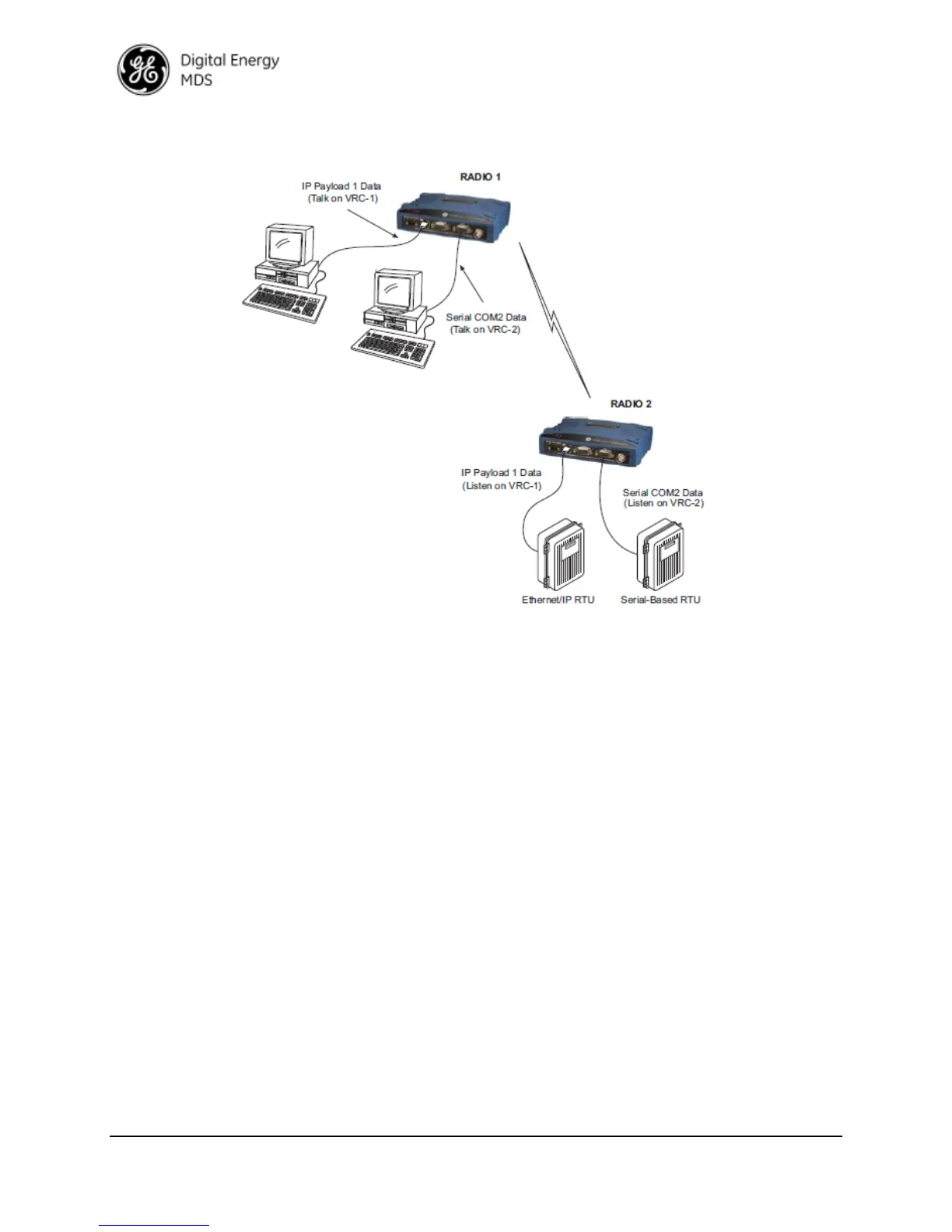
Any combination of the three VRC numbers may be entered in the selection fields. Figure 5-2.
Virtual Radio Channel (VRC) Concept illustrates the relationship between the VRC settings and
the routing of data between units.
Figure 5-2. Virtual Radio Channel (VRC) Concept
Understanding the use of Media Access Control (MAC)
An important feature of the transceiver is Media Access Control (MAC). The radio’s MAC is
specifically designed for use with narrow bandwidth, half duplex radio networks such as those
commonly used in licensed telemetry systems. When the MAC is enabled, it provides efficient
support of multiple data traffic models including multiple hosts, synchronous and asynchronous
polls, and report-by-exception (push traffic). MAC ensures that every transceiver in the network
has an equal probability of gaining access to the radio channel when it has data to send.
Coordination of Channel Access
The main objective of the MAC is to coordinate channel access for all radios in the network,
preventing data “collisions” that can occur with simultaneous transmissions from radios on the
same RF channel. With MAC operation, a single radio is configured as an Access Point (AP) and
other units are designated as Remotes. The AP serves as the controller of the RF network.
Remotes request permission from the AP to use the RF channel before sending payload data,
thus avoiding collisions of data, and creating a highly reliable wireless network. The MAC is
responsible for allocating which unit gets access to the broadcast medium (the RF channel),
when, and for how long.
Data Validation
Additionally, the MAC validates all messages and purges corrupted data from the system.
Successful delivery of data is ensured through the use of retries and acknowledgements. Minimal


 To Next Page
 Loading...