T X 4 5 0 0 I N S T R U C T I O N M A N U A L PA G E 3
ACCESSORIES SUPPLIED
TX4500
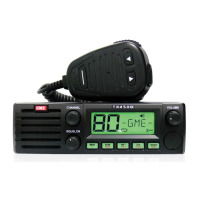
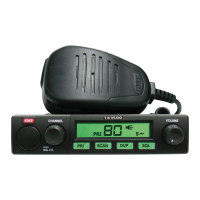
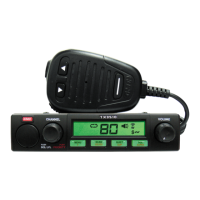
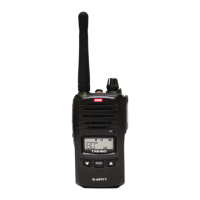
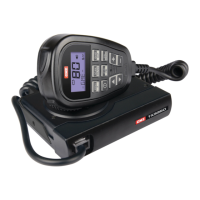
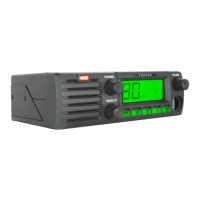
TX4500 radio
DIN mounting kit
Instruction manual
Microphone
Microphone clip
DC lead
Screw pack
INTRODUCTION
Your GME TX4500 80 channel radio is Australian
designed and built and is the most advanced UHF
Citizen Band radio available. Combining the very
latest in electronic hardware with the most up-to-date
computer aided design and manufacturing techniques
has resulted in a mobile radio with outstanding
specifications and performance.
The TX4500’s DIN sized case allows convenient
installation into a dashboard or console and its strong
die-cast aluminium chassis makes it the most robust
radio of its kind. With just three rotary controls and five
touch keys, the TX4500’s extensive features are easy
to operate.
IMPORTANT INFORMATION
CONCERNING UHF CB RADIO
The use of the Citizen Band radio service is licensed
in Australia by the ACMA Radio communications
(Citizens Band Radio Stations) Class Licence and
in New Zealand by the Ministry of Economic
Development New Zealand (MED). A General User
Radio Licence for Citizens Band radio and operation
is subject to conditions contained in those licences.
The class licence for users and equipment operating
in the CB/PRS 477 MHz band has been amended.
This radio meets the new 80 channel standard.
In simple terms the same amount of spectrum is
available; however,
radio transceivers can now
operate in a narrower bandwidth and hence use less
spectrum. These radios are generally referred to as
narrowband or 12.5 kHz radios. By using 12.5 kHz
channel spacing instead of 25 kHz, the 40 channels
originally allocated can now be expanded to 80
channels thereby doubling the channel capacity and
relieving congestion in the UHF CB/PRS band.
Original 40 channel wideband Radios will continue
to operate on the original 40 channels, however they
will not be able to converse on the newer channels
41 – 80. The newer narrowband radios will be able to
converse with all older 40 channel wideband radios
on all channels 1 to 40 as well as the newer channels
allocated from 41 to 80.
The mixing of narrowband and wideband radios in
the same spectrum can cause some possible
operating issues of interference and varying levels of
received volume.
POSSIBLE ISSUES
When a new narrowband radio receives a transmission
from an older wideband radio the speech may sound
loud and distorted – simply adjust your radio volume for
best performance.
When an older wideband radio receives a signal from a
new narrowband radio, the speech may sound quiet –
simply adjust your radio volume for best performance.
Depending on how close your receiving radio is to
another transmitting radio, there can be interference
from the transmitting radio if it is using a channel
adjacent to the channel you are listening to. Simply try
going up or down a few channels from the currently
selected channel.
The above situations are not a fault of the radio but
a symptom of operating wideband and narrowband
radios in the same bandwidth. This possible interference
will decrease over time as the population of wideband
radios ages and decreases.
Further information and updates are available from
the Australian Communications and Media Authority
(ACMA) at www.acma.gov.au and the Ministry of
Economic Development (MED), Radio Spectrum
Management at: www.rsm.govt.nz
EMERGENCY CHANNELS
The ACMA has allocated channels 5/35 for emergency
use only. Channel 5 is the primary Simplex Emergency
Channel. Where a Channel 5 repeater is available, you
should select Duplex on CH 5.
NOTE: Channel 35 is the input channel for the Channel
5 repeater therefore Channel 35 should also not be
used for anything other than emergency transmissions.


 To Next Page