-24-
Model G0938 (Mfd. Since 03/21)
Teeth Per Inch Width Thickness SPM Workpiece Material
10 TPI 0.110" 0.020" 1200–1500 General purpose cutting. Hard and soft woods
between
3
⁄16"–2". Also good for plastics, paper, felt,
and bone.
15 TPI 0.110" 0.020" 700–1200 Thin wood and plastic between
3
⁄32" –
1
⁄2".
18 TPI 0.095" 0.010" 500–700 Tight radius cutting in thin hard and soft woods
between
3
⁄32"–
1
⁄8". Also good for thin pieces of bone,
ivory, plastics and veneer.
Blade Selection
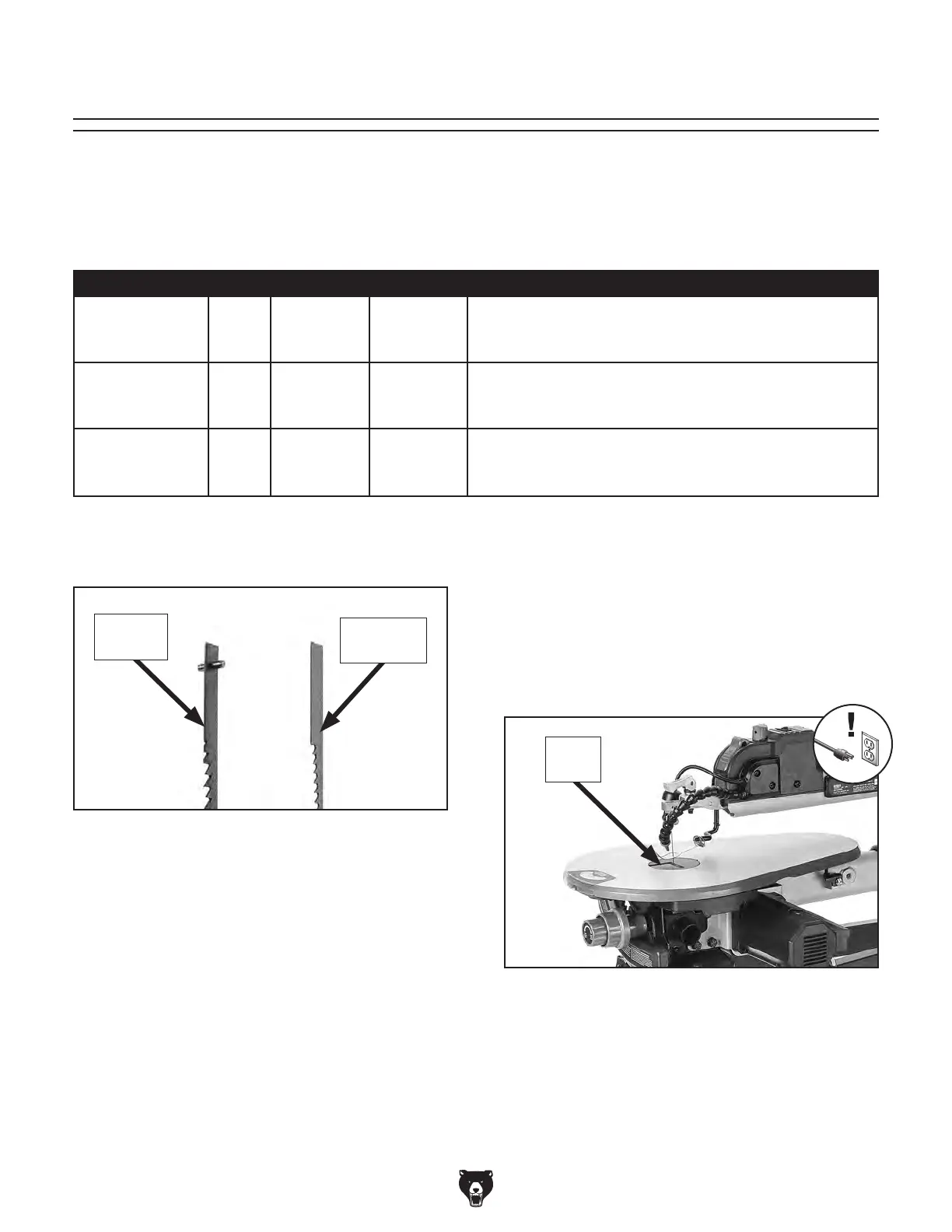
Scroll saw blades are classified as either "pin-end" (mounting pins in the ends of the blade) or "plain end"
(no pins), as shown in Figure 21. The Model G0938 comes with one pin-end blade and one plain-end blade,
but the scroll saw is designed to accept any 5" (124mm) blade for cutting a wide variety of materials.
The typical format for blade identification is:
Figure 21. Pin-end and plain-end blade
comparison.
Plain-End
Blade
Removing/Installing
Plain-End Blade
Tool Needed Qty
Hex Wrench 4mm .............................................. 1
For fine, accurate, or intricate work on
3
⁄4" (19mm)
or thinner workpieces, plain-end blades are sug-
gested. Thinner kerfs are also possible with finer
blades.
Figure 22. Location of table insert.
Table
Insert
Note: There may be other numbers or letters that have meaning for a particular type of blade. Always refer
to the manufacturer's technical data for a complete explanation when choosing a scroll saw blade.
Pin-End
Blade
1. DISCONNECT MACHINE FROM POWER!
2. Remove table insert by pushing it up from
under table (see Figure 22).
Removing Plain-End Blade


 To Next Page