USE ONLY GENUINE REPLACEMENT PARTS 33
WATER CHEMISTRY:
WARNING: WATER CHEMISTRY Failure to maintain proper water chemistry may cause premature heat
exchanger damage or failure
The heat exchanger in your pool heater is made from the highest quality of copper and nickel (Cupronickel) materials. This premium
material and the exacting processes used to manufacture the heat exchanger is state of the art in pool heater design and
manufacture. However, it remains vital that the heat exchanger be protected from damaging or corrosive chemicals, insufficient
water flow or improperly balanced water chemistry. Heat exchanger damage or failure resulting from improper flow, improperly
balanced pool water or the improper addition of sanitizer into the water is NOT covered under the terms of the warranty. The
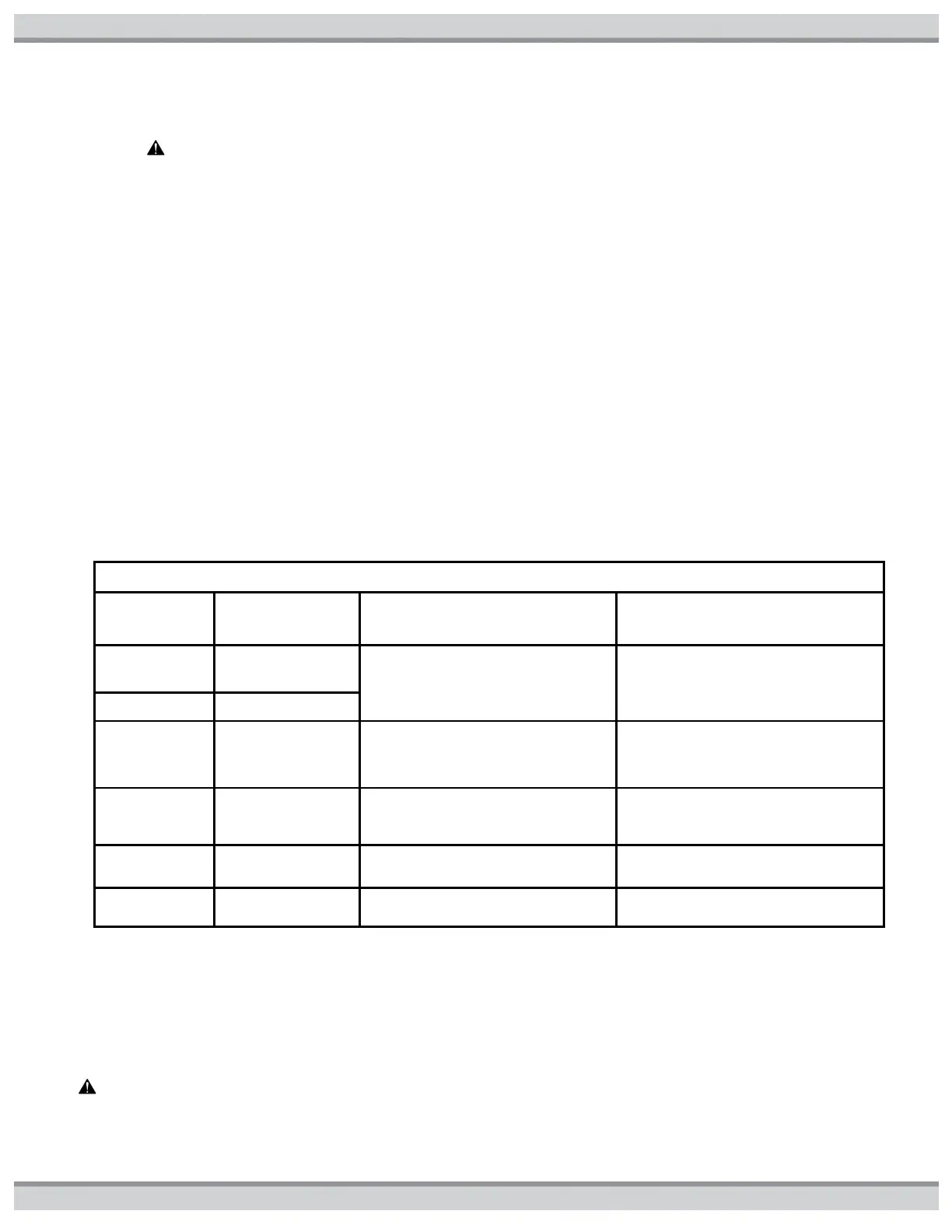
following factors are critical to heat exchanger protection. Follow the guidelines in Table15 to help prevent pre-mature damage to or
failure of your heater and heat exchanger.
1. WATER FLOW THROUGH HEATER: Water must be flowing through the heater at the minimum rated flow rate during
operation. Check that the pump is operating and the system is filled with water and purged of all air prior to starting the heater.
The minimum flow rates are listed in the specifications section. Some installations may require an adjustment to the water
pressure switch for proper low-flow protection. Test your system and if necessary, adjust the water pressure switch as described
in WATER TESTING SECTION OF MANUAL.
2. WATER CHEMISTRY: The chemistry balance and mineral content of swimming pool and spa water changes rapidly due to the
addition of sanitizing chemicals, user loads, exposed rain, runoff, and the amount of sun - to name a few. Improper chemistry
(see Table15) balance and mineral content can cause scaling and deposits to form on pool walls, in the filtration system, in the
heat exchanger tubes, and additionally can promote corrosive action to all metals in the water path. Changing spa water
regularly and maintaining the correct chemical balance in your pool/spa will keep the pool/spa safe and sanitary and will help
heat exchanger longevity. Use a 4-way pool/spa water test kit to check your water frequently (at least weekly). Use the following
guidelines to help maintain proper water chemistry:
hazy water, algae growth,
bacteria causing infections
swimmer irritation, bleaching of
clothes/hair, corrosive to heat
exchanger
corrosive to heat exchanger,
swimmer irritation
cloudy water, scaling of heat
exchanger, reduced sanitizer
effectiveness
corrosive to heat exchanger,
large fluctuations in pH
scaling of heat exchanger
corrosive to heat exchanger
scaling of heat exchanger
poor salt chlorinator performance
corrosive to heat exchanger
3. SKIMMER CHLORINATION: Placing chlorine or bromine Tablets directly into the skimmer may result in high chemical
concentrations flowing through the heater. DO NOT place chlorine or bromine Tablets in the skimmer.
4. CHLORINATOR INSTALLATION: Chlorinators must be installed downstream of the heater, and a check valve must be installed
between the heater and chlorinator to prevent high chemical concentrations from back flowing into the heater. Make sure your
piping arrangement meets the chlorinator installation requirements shown on page 26.
5. BYPASS VALVE: Bypass heater until water chemistry is properly balanced, so that corrosive and potentially damaging water
will not flow through the heater and therefore the heat exchanger. Close the bypass valve once the water is properly balanced.
WARNING: BYPASS. Failure to close the bypass valve when attempting to operate the heater will result in extensive
damage to the heat exchanger
Ensure water flow through the heater is restored before operating the heater. A bypass feature is also advantageous for service
needs and for the ability to remove the heater from the water path when not heating.


 To Next Page
 Loading...