I A P 2 0 2 3 . 0 0 1 - A F M / I R I S T E X A N I I P A G E | 63
FOR SIMULATION USE ONLY – NOT A TRAINING AID
CANOPY
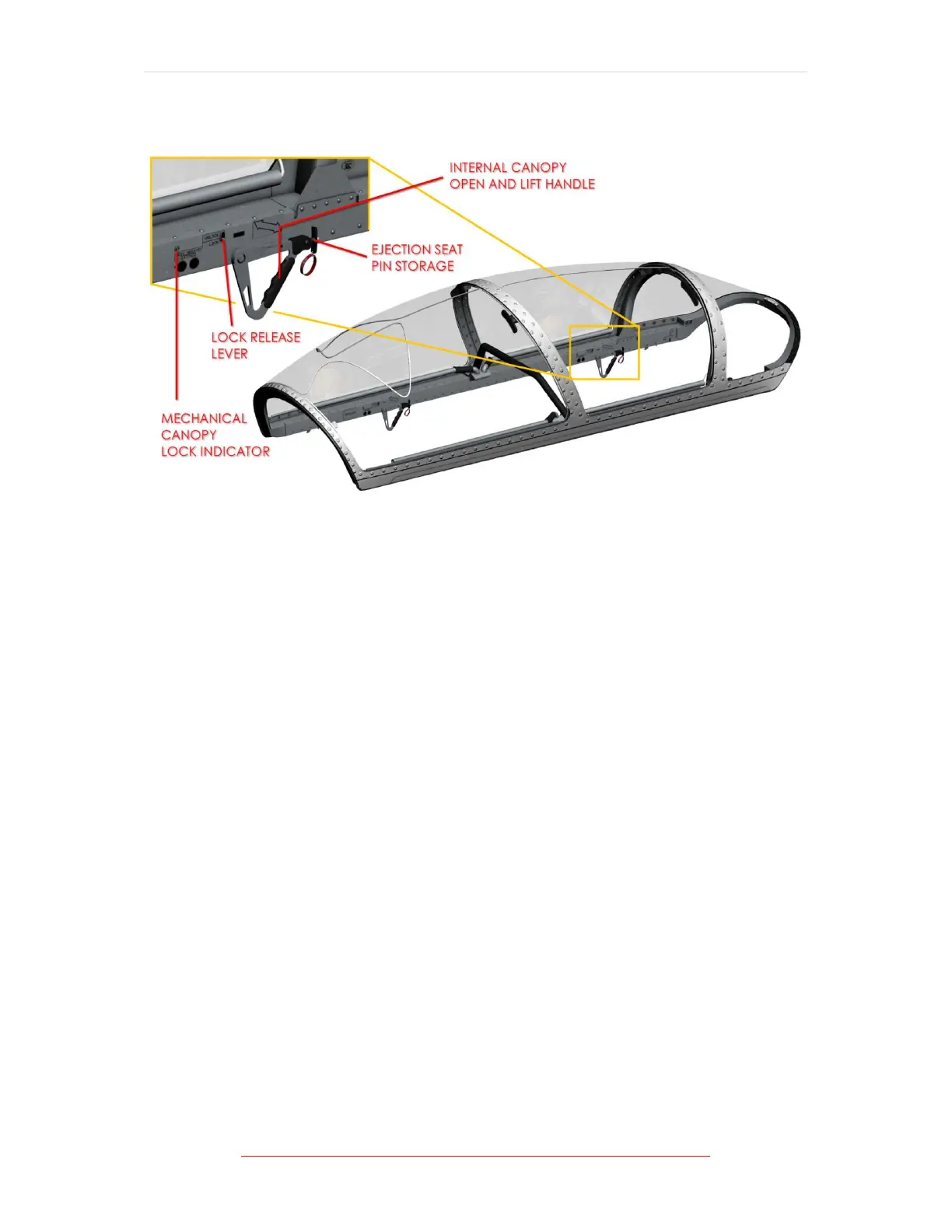
Figure 1-20 Canopy Open/Close
The lockable canopy, which includes the windscreen, is side opening. For bird strike
protection, the windscreen and front transparency are thicker than the rear
transparency. The windscreen is designed to withstand a 4-pound bird strike at
airspeeds up to 270 knots without canopy penetration.
Oil filled spring struts permit opening and closing without power assist from either
cockpit. The latch mechanism drives five over entering hooks through a continuous
drive rod.
An electrical sensing system which consists of four micro switches, three of which
are part of the latch mechanism, and a single canopy sill switch at the forward edge
of the canopy, verifies the locked and latched condition. A red CANOPY warning
illuminates on the EICAS display when the canopy latch mechanism and micro
switches do not indicate the canopy is in the closed and locked position.
For defog and ventilation, warm air is routed through tubes along the sides of the
canopy and distributed through a series of flow control holes.
The aircraft key set can be used to lock and unlock the ground egress doors,
baggage compartment door, and canopy. A canopy prop strut is located on the left
canopy rail, near the forward internal canopy handle, to provide limited cockpit
ventilation when the aircraft is parked.
The canopy prop strut pivots down and engages a stop clip on the left longeron,
leaving the canopy open approximately 4 inches. To release the prop strut, lift the
prop strut up and rotate the prop strut up to the STOWED position.


 To Next Page