37
OPERATION
DIFFERENTIAL LOCK
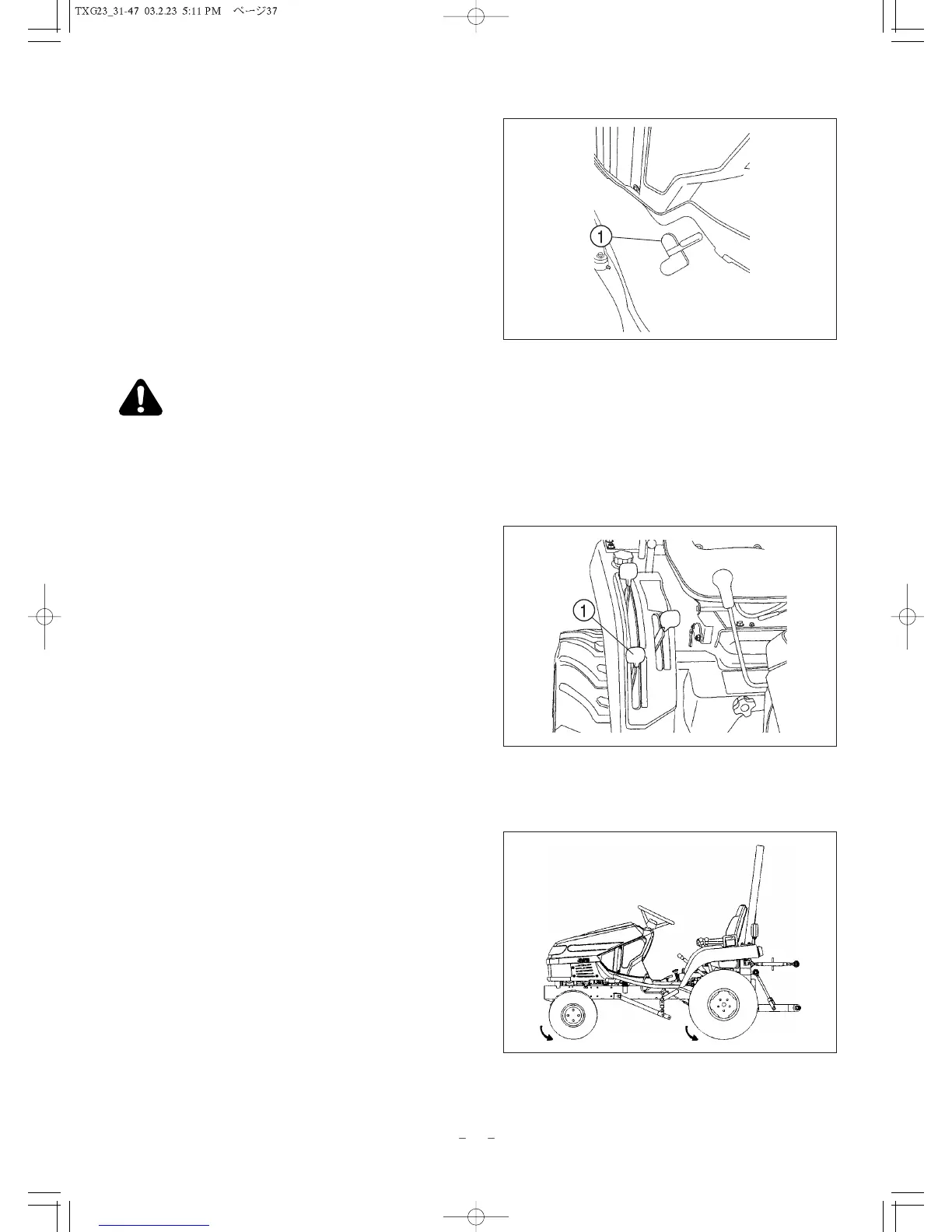
FIG. 36: Differential lock pedal, 1, should only be de-
pressed when required as steering ability is greatly
reduced.
To engage differential lock, allow rear wheel movement to
stop. Depress lock pedal.
To disengage differential lock, release differential lock
pedal. Lock pedal should normally return to the "off" posi-
tion;
NOTE: On occasion, differential lock pedal may remain,
engaged due to torque difference exerted by rear
wheels, in this case, depress the HST pedal while
Tractor's slowly in motion to release the pedal.
CAUTION: DO NOT use differential lock on
hard surfaces or when transporting unit. DO
NOT, engage with rear wheel(s) spinning as
severe damage may result.
FOUR-WHEEL DRIVE (4WD model)
FIG. 37: Four-wheel drive models have a mechanically
driven front axle. Engagement and disengagement of
front drive axle is controlled by lever, 1, on right side of
tractor.
IMPORTANT: Prior to engaging or disengaging 4WD,
Tractor stopped.
FIG. 38: When front axle is engaged, ground speed of
front tires will very from ground speed of rear tires. This is
to assist steering when four-wheel drive is selected.
For this reason, front axle must be disengaged when
Tractor is transported of operated on a hard, dry surface.
Failure to do so will result in rapid wear of front drive tires
and possible driveline damage.
IMPORTANT: Always disengage front drive axle when
operating in, conditions with minimal wheel
slippage (DRY OR HARD SURFACES). If
tire replacement is neccessary, identical
replacements must be installed to maintain
correct front/rear axle ratio.
FIG. 36
FIG. 37
FIG. 38


 To Next Page