
 To Next Page
T
tknightAug 1, 2025
What to do if my KEP Desktop internal fuse is broken?
- MmaynardchristopherAug 1, 2025
First, check or replace the internal fuse of your KEP Desktop. If the fuse is okay, then factory service is required.

What to do if my KEP Desktop internal fuse is broken?
First, check or replace the internal fuse of your KEP Desktop. If the fuse is okay, then factory service is required.
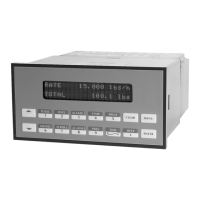
Details the ES749 Flow Computer's features, display, inputs, and software.
Technical specifications including environmental, display, keypad, enclosure, and power.
Recommendations for locating and installing the unit in a suitable environment.
Illustrations and dimensions for standard, bezel kit, wall, and explosion-proof mounting.
Measurement and calculation of steam mass flow, including inputs, outputs, and illustration.
Measurement and calculation of steam heat flow, including inputs, outputs, and illustration.
Measurement and calculation of steam net heat flow for heat exchangers.
Calculation of heat extracted by a heat exchanger from heat carrying liquids.
Measurement and calculation of corrected volume flow for gases.
Monitoring mass flow and total of gas, including calculations and outputs.
Calculating energy released by combustion of gaseous fuels.
Monitoring corrected volume flow and total for any liquid.
Monitoring mass flow and total of any liquid.
Calculating energy released by combustion of liquid fuels.
Calculating energy stored in condensate with respect to water.
Calculating energy extracted by a heat exchanger from heat carrying liquids.
Calculating energy stored in steam and returned condensate water.
Lists the pin assignments for the unit's relay and I/O connections.
Illustrates common input signal wiring for flow, pressure, and temperature sensors.
Examples of wiring configurations for hazardous area installations using barriers.
Overview of front panel keys and their functions in operate mode.
Basic instrument operation, input/output types, and display capabilities.
Details on how to use and manage access codes for unit security.
Describes how relays can be assigned to various functions like alarms or pulse outputs.
Configuration of the isolated pulse output for totalizers or other devices.
Assignment and selection of analog outputs for process parameters.
Explains how function keys are used to view different process variables.
Using the RS-232 port for programming, printers, and modem communication.
Details on operating the flow computer via the RS-485 serial port.
Information on the prompt that appears when making significant setup changes.
Explains the key usage and cautions for programming the unit via the front panel.
Step-by-step guide for quick initial configuration, covering fluid type, flowmeter, and input signals.
Reference to appendix for detailed menu structure and descriptions.
Configuration of access codes, unit identification, date/time, and flow equations.
Customizing display settings, including scroll lists and decimal point precision.
Setting units for time base, heat, mass, volume, density, and pressure.
Defining fluid properties like type, density, viscosity, and Z-factors.
Configuring flowmeter type, input signals, K-factor, and DP factor calculations.
Configuring auxiliary inputs for temperature, pressure, density, and steam trap monitoring.
Setting up pulse output type, value, width, and simulation frequency.
Configuring analog current outputs, including scale values and time constants.
Assigning functions to relays, setting alarm modes, limits, and hysteresis.
Configuring RS-232/RS-485 communication parameters, print lists, and modem settings.
Setting up RS-485 network communication parameters like protocol and device ID.
Performing self-checks, calibration, and viewing error logs or software/hardware versions.
Overview of the ES749's internal calculations for compensated flow.
Details on using square law flowmeters and entering necessary calibration data.
Covers various flow equations including input computation, pressure, temperature, density, and special flowmeter equations.
Explains the calculation and entry of the DP Factor for various flow conditions.
Details the general purpose and uses of the ES749's RS-232 port.
Using PC software for rapid configuration of the ES749 via the RS-232 port.
Using the RS-232 port for transaction printing, data logging, and maintenance reports.
Diagram showing the pinout configuration for the ES749 RS-232 port.
Describes the purpose and functions of the ES749's RS-485 serial port.
Information on the RS-485 card utilizing Modbus RTU protocol.
Using RS-485 for PC communication via Modbus RTU commands.
Diagrams showing the pinout for RS-485 ports (DB-9M and Terminal Block).
Specifies the hardware and software requirements for the setup program.
Details the required serial cable and connectors for PC connection.
Instructions for installing the setup software on older Windows versions.
Overview of the setup software's interface, tabs, and basic usage.
Describes the functions of the File tab for managing templates and reports.
Details the sections within the Setup tab for configuring system parameters.
Explains how to view selected data groups and error logs on the PC.
Covers miscellaneous functions like tools, actions, and options within the setup software.
Describes the four types of errors indicated by the ES749 Flow Computer.
A flowchart to help identify faults and possible causes.
Lists error messages, their causes, and recommended remedies.
Shows the menu navigation path for operator access to setup parameters.
Shows the menu navigation path for supervisor/service access to advanced parameters.
Explains the Modbus RTU protocol used for RS-485 communication.
Describes the Modbus RTU mode and its advantages for data throughput.
Lists the Modbus function codes supported by the Flow Computer.
Mapping of ES749 data points to Modbus registers and coils for communication.
Details on the usage of individual coils for status and control in Modbus communication.
 General