PAGE 3
INTRODUCTION
LDG pioneered the automatic, wide-range switched-L tuner in 1995. From its laboratories in
St. Leonard, Maryland, LDG continues to define the state of the art in this field with innovative
automatic tuners and related products for every amateur need.
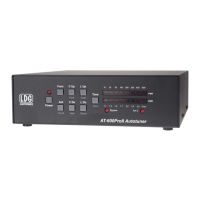
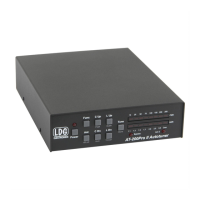
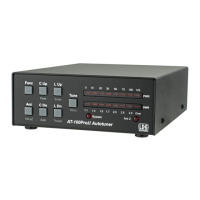
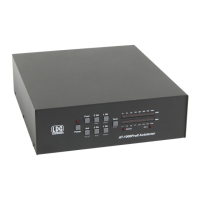
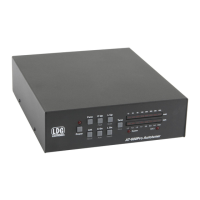
Congratulations on selecting the LDG Electronics AT-600Pro 600-watt automatic tuner. The
AT-600Pro provides fully- and semi-automatic antenna tuning across the entire HF spectrum
plus 6 meters, at power levels up to 600 watts (250W on 6m). It will tune dipoles, verticals,
Yagis, or virtually any coax-fed antenna. It will match an amazing range of antennas and
impedances, far greater than some tuners you may have considered, including the built-in tuners
on many transceivers.
The AT-600Pro is designed to handle 600 watts of output power, and is ideal for use with
small outboard linear amplifiers rated up to 600 watts, or even newer high power transceivers.
JUMPSTART, OR “REAL HAMS DON’T READ MANUALS!”
Ok, but at least read this one section before operating the AT-600Pro:
Connect a 50-ohm coax jumper cable from the antenna jack on your amplifier to the TX jack on the
back of the AT-600Pro.
Connect your antenna’s 50-ohm coax feedline to the ANT 1 jack on the rear of the AT-600Pro.
Connect the supplied DC coax cable to the jack marked 12 VDC. Connect this cable to a DC source
between 11 and 16 volts DC, 500 mA. The jack center tip is positive.
Power up the transceiver, and select the desired operating frequency and mode.
Bypass the amplifier.
Begin transmitting, any mode
1
.
When the tuning cycle completes, activate the amplifier, and you’re ready to operate!
1 In SSB mode, simply speak into the microphone while transmitting. Tuning may be performed at up to 125 watts of input power, provided that the transceiver
employs a “roll-back” circuit to protect it from high SWR. For transceivers without roll-back circuits, power should be limited to 25 watts when tuning, to avoid
damage to the transmitter or tuner.


 To Next Page