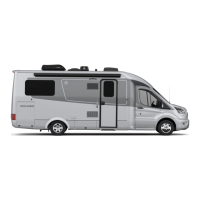
Unity Motorhome
2
Emergency Equipment Checklist
The following list describes the minimum
amount of emergency equipment required, but
additional items may be appropriate for your
specic personal needs
1. First aid kit
2 ergency ares
3 To ol box and tool s
Plastic bucket
5 To w rope or chai n
Wheel blocks or jacks
7. Water hose
8. Electrical cord extension
9 Fire extinguisher
Final Checks
1. Secure all objects in the vehicle. Tie, latch,
or lock all loose objects as appropriate.
nsecured obects can become dangerous
projectiles in a sudden maneuver or
accident.
2 Securely close and lock all doors to
minimize the chance of a door coming
open in an accident.
3 Adjust all rearview mirrors to provide the
best rearward visibility.
Set the driver’s seat to provide the desired
leg to pedal spacing for your personal
comfort.
5 Fasten seatbelts, position low on the torso,
and ensure they are snug. All passengers
must be in a seat that is equipped with a
seatbelt. All pregnant riders should be in
a seat equipped with a shoulder strap for
maximum safety.
Warning
Caution
Strap sall children into a rearacing car
seat. Refer to Child Restraints section.
7. Do NOT carry any passengers unless they
are in a seat that is equipped with a seatbelt
and the seatbelt is properly fastened.
Maximum Occupancy
The belted seating positions in your motorhome
may be different than the stated sleeping
capacity. This is referred to as the Occupant
and Cargo Carrying Capacity (OCCC) in the
U.S.A. or the Cargo Carrying Capacity (CCC)
in Canada.
Triple E uses belted seating positions to
determine the OCCC or CCC. You may use
all the belted seating positions available in
your motorhome, provided you stay within the
GWR listed on your vehicle certication lael
ll occupants must be in seats euipped
with lap or shoulder harness seatbelts with
the seatbelt fastened when the motorhome
is in motion. Small children must alwas be
placed in a certied child restraint sstem
and secured with a seatbelt.
Vehicle Operation


 To Next Page