43
LOGOSOL F2+
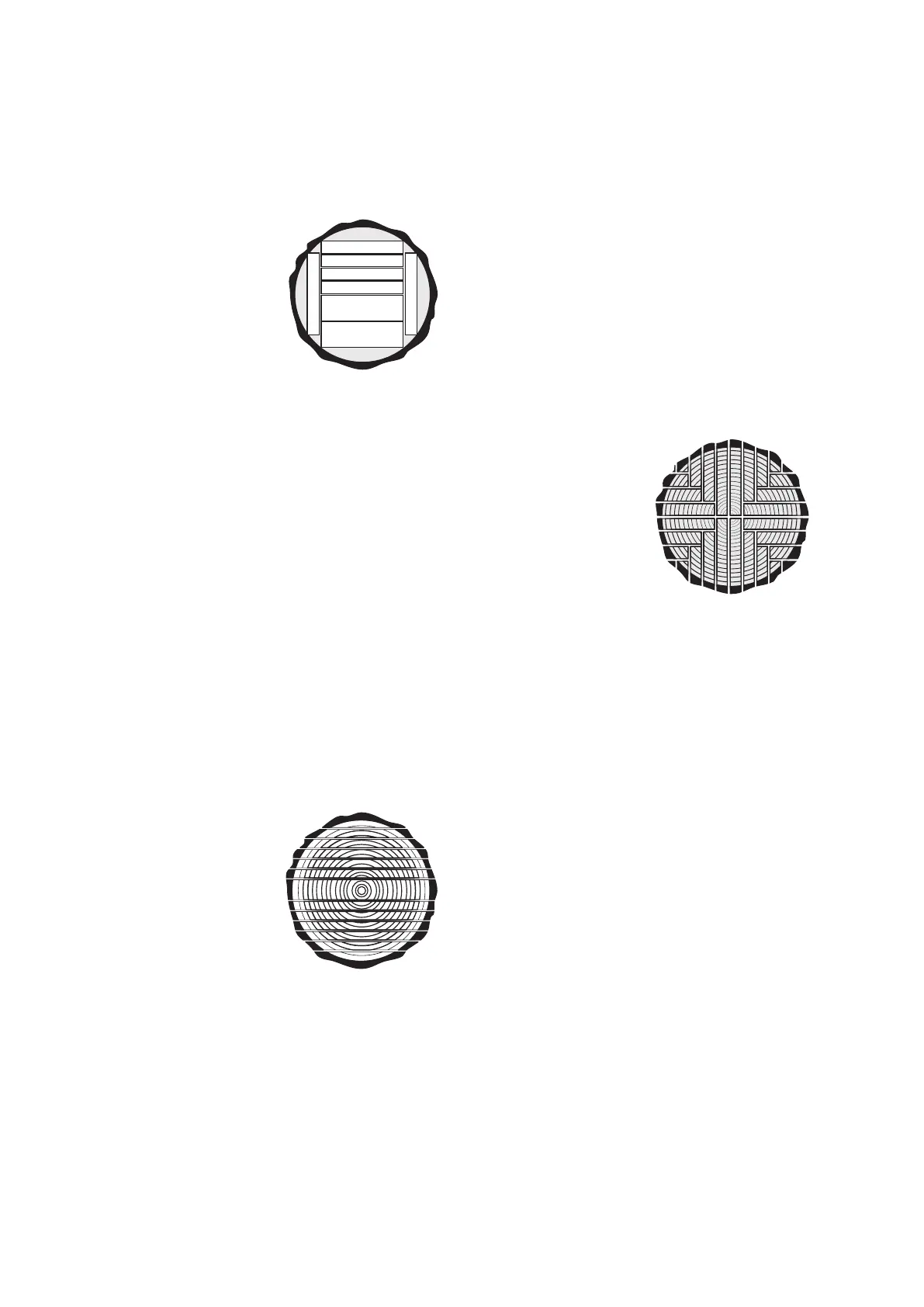
At the start, it can be a good
idea to draw lines on the log
ends showing what you are
planning to cut out from
the log. Use a broad tip
marker pen to make the line
correspond with the kerf.
Keep in mind that:
• when an unsawn surface of the log faces down,
the log bed where the top end of the log rests
is to be set higher than the one on the root end
side.
• The beds are set to the same height when a
sawn surface faces down.
• Compensate for the kerf (1 click equals 1/4’’)
when the board is cut above the guide bar.
• Do not compensate for the kerf when the board
is cut under the guide bar.
• The last board must not be thinner than 2’’.
• Make sure that you do not cut into the log
clamps.
Through-and-through
sawing
Sometimes, it can be better
to slice up the log into
waney-edged boards. This
way you can get a little more
out of every log. However,
this method takes a bit more
time. When cutting ne joinery
timber, it can be a good idea to edge only one side
before drying the timber. The last edging is not
made until you know what the board is to be used
for. This is to be able to make use of as much as
possible of the timber.
When you are going to slice up a log, it is best if you
rst cut off a thin slab and then turn that side down
to make the log rest on a at surface on at least one
of the log beds. This prevents the log from moving
between the cuts and you will have nice and even
boards.
Rotate the log when you have come close to the
centre of the log. Calculate at what height you
should start sawing.
Remember to compensate with 1/4’’ for every cut.
Quarter sawing
Quarter sawing provides
you with the nest timber.
You get optimum grain
direction in every board,
which is a big advantage
when the wood is intended
for cabinetmaking e.g. The
downside is that it takes time,
it is difcult, and you get several different board
widths. Quarter sawing should not be applied when
cutting small logs.
Start by cutting the log in half at its centre. Then you
cut through the middle of the halves to get quarters.
When cutting the boards, you turn the cant after
each cut. Sometimes, it can be easier to cut from
below. This way the height of the log beds can be
left unchanged.
Does this seem difcult?
We are many here at LOGOSOL that have long
experience in sawing. If you, as a new sawmill
owner, have any question, you are warmly welcome
to call us. We are happy to provide you with useful
tips and advice.
SAWING: TIPS AND ADVICE


 To Next Page