5. Function
5.1. Functions list
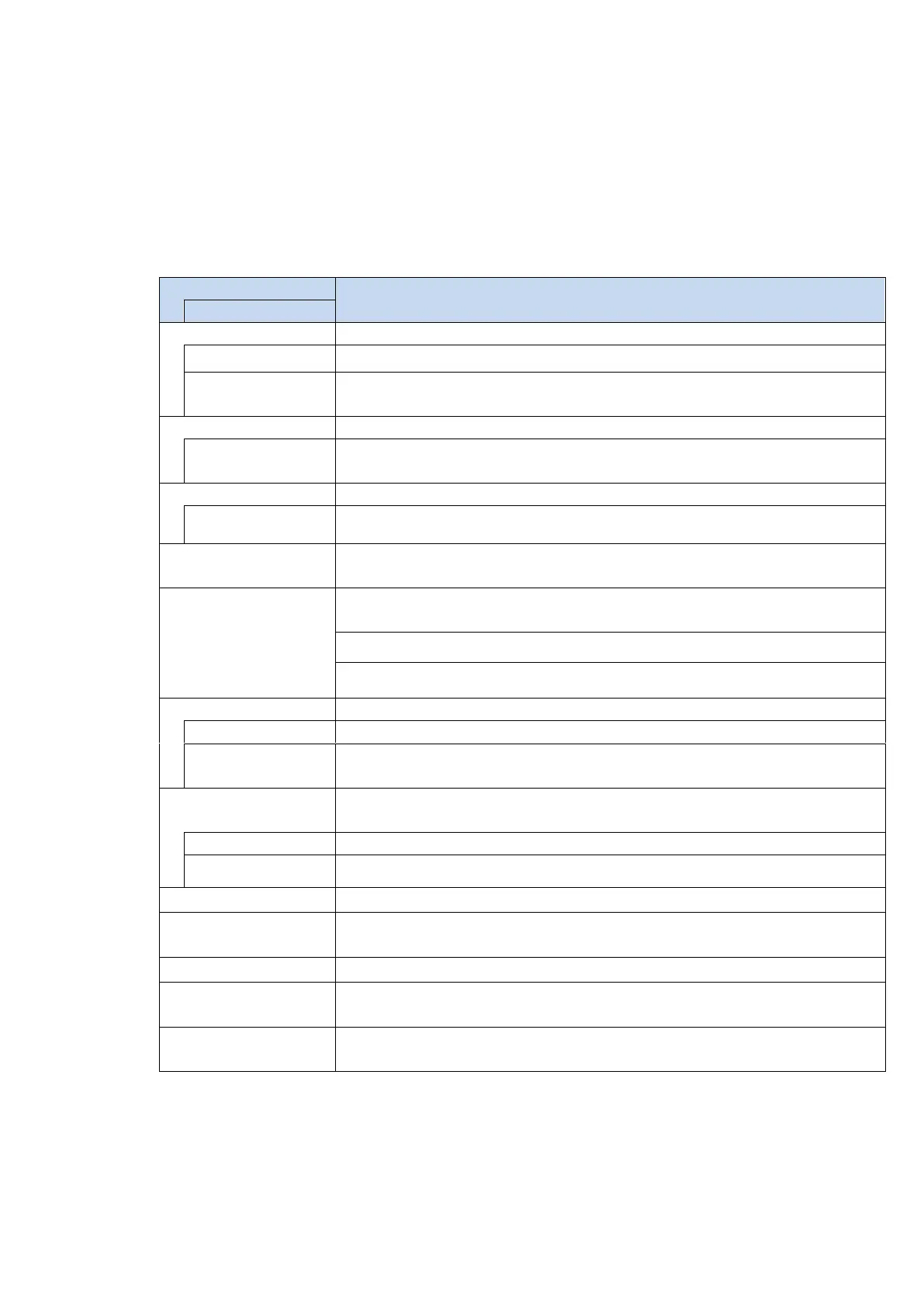
MG80-EI can be expanded to 255 units via EtherNet/IP network (total 4080axes)
Number of
connectable modules
Counter module MG80-CM:From 1 to 16units (Measuring unit 1 to 16 axes)
I/O module LZ80-K1/K2:Max. 2units
Measuring unit
Input resolution
0.1μm/0.5μm/1μm/2μm/5μm/10μm
7-digit fixed length with sign and decimal point
(Top zero suppress)
Stores the maximum value, minimum value, and peak-to-peak(max-min) values of each
frame.
Hold updating peak value during pause period.
Starts recalculation of the peak value with start command or I/O input.
Current(real) value, maximum value, minimum value, peak to peak value of each axis
Addition and
subtraction function
Current(real) value, maximum value, minimum value, peak to peak value of 2-axis added
or subtracted.
A measurement data in frame* compared with the thresholds, and output areal
information in a number.
Reset count value to zero
Geometrical point on measuring device with signal output.
Combine with Master preset function for an absolute mode.
Overwrite the current frame value to the Preset value by command.
A preset value with relative position from the reference point memorized.
When restarting, Master preset value will be called.
A function can be assigned to each terminal of the I/O module.
Input and ouput will be performed accordingly.
※ “Frame” is a original term for data transfer in Explicit communication. It
can be arranged to carry measurement or calculated value of the any
selected units. Details are explained in next page (5.2).


 To Next Page