11
Gas & Appliance Safety
Gas Cerficaon
Your Caravan has been supplied gas tested and certified. Any additions or alterations to the gas
system must be performed by an authorized person and will require re-certification and testing.
Also note any alterations may affect your warranty on both the system and appliances.
General Safety
• Your Caravan may have several gas safety labels affixed throughout containing important
information. All instructions are to be followed and the labels shall not be removed for any reason.
• Make sure to close appliance valves before opening the cylinder valves.
• Where readily accessible, check connections at the appliances, regulator, hoses and cylinders
periodically for leaks with soapy water (or an equivalent) – this should be done every time a cylinder
is changed or at least annually.
CAUTION – the ammonia present in some soaps and detergents can react with brass fings and
cause such fings to crack aer a short period of me. Therefore, cauon should be exercised when
using soap soluons on brass fings and all connecons should be rinsed thoroughly with fresh water
as soon as possible aer the applicaon of the soap soluon.
•
Never use a match or flame when checking leaks.
• Never use cooking appliances for comfort heating.
• In the event of a fire, immediately close cylinder valve if safe to do so.
• Appliances must not be altered without the authorisation of the manufacturer.
• In the event of an accidental gas leak, close cylinder valve and ventilate the area using a safe
method until the air is clear.
• Flexible hoses are used between the LP Gas Cylinder and regulator as well as between your slide-
out kitchen cooker (if fitted) and the gas bayonet. These flexible hoses are easily accessible and
shall be inspected regularly by a competent person.
Gas Cylinder Safety
• LP Gas cylinders have a 10-year lifespan between inspection and re-certification. Always use gas
cy
linders that
are within their compliance date.
•
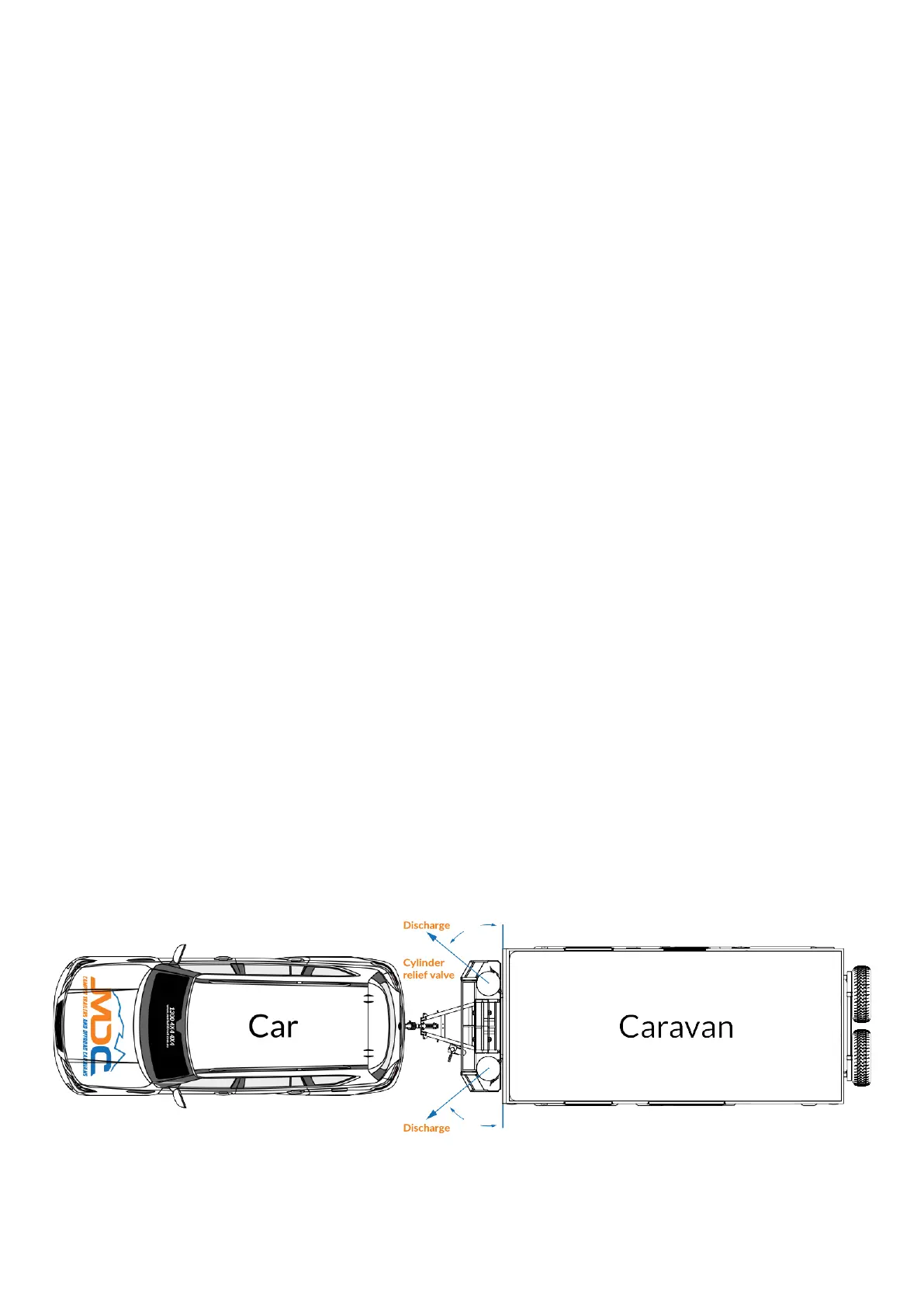
For drawbar mounted cylinders (if applicable), orient the cylinder relief valves of both cylinders
discharge away from both the trailer and towing vehicle as shown.
• For gas cylinders stored in a dedicated LP Gas Locker ensure the locker is kept closed at all times
unless changing or operating the cylinders.
• Close cylinder valves when appliances are not in use or while refuelling is in progress.
• Ensure cylinder valves are closed to prevent the unintended release of gas from a cylinder.



 To Next Page