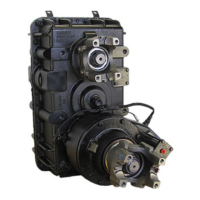
The Meritor MTC-3206-FV (TC-237) is a two-speed transfer case designed for use in all-wheel drive vehicles. Its primary function is to provide drive to the front wheels and can be used in any configuration of rear-driven axles. The front drive axle can be engaged at any vehicle speed, provided the rear wheels are not spinning; however, the vehicle must be stationary before the shift can be made between high and low ranges, otherwise serious damage may occur. The shifting between ranges and the engagement of front drive and power take-off clutches are accomplished by air-operated cylinders.
This transfer case is a two-speed, three-shaft, constant-mesh design, featuring a declutch for the front axle and underdrive engagement. Meritor transfer cases offer optimum mobility, excellent durability, and fit for multiple applications, including medium- and heavy-duty trucks for off- and on-highway applications, agricultural machinery, mining equipment, and defense applications. It is designed for remote- and direct-mounted use in a range of main transmissions. Meritor's transfer cases are produced under serial conditions, even for prototype batches.
Technical Specifications:
- Speed (rpm): 3500
- Input Torque (lbs-ft): 6000
- Input (HP): 300
- Ratios - High: 1:1
- Ratios - Low: 2.22:1
- Gear Type: Helical - High Range, Spur - Low Range
- Shaft Sizes:
- Input & Rear Front Output: 1.95", 38 Involute Spline, 2.25 - 10 Parallel Spline
- Shaft Spacing (Drop): 12" to Rear Output, 12" to Front Output
- Weight (lbs): 350
- Material: Aluminum
- Front Output Center Distances (in) - Down: 12.00
- Rear Output Center Distances (in) - Down: 12.00
- Bearings: Tapered Roller
- Splash: Standard
- Pressurized: Optional
- Speeds: Two
- Air Shifted: Optional
- Integral Air Range Shift (mechanical optional): Optional
- PTO: Optional
- 50/50 Differential: Optional
Usage Features:
- Front Axle Declutch: Engaging the declutch when the vehicle is stationary or operating at constant low speed, below 10 mph or 4 km/h. Operating the vehicle at speeds less than 25 mph (40 km/h) when part-time 4x4 or 6x6 operation is engaged is off-road.
- High-Low Shifting: Shifting the transfer case into low from high gear or from high to low gear when the vehicle is stationary. Apply the parking brake with the transmission in Neutral, automatic transmission only. Engagement can be confirmed by hearing the fork move internally when the shift is commanded, noticing improved vehicle performance, or observing the optional indicator light in the cab. If the clutch does not fully engage, turn the steering wheel in one direction and rock the vehicle back and forth until engagement occurs.
- Full-Torque Power Take-Off (PTO): Engaging the full-torque power take-off (PTO) when the transfer case prop shafts are turning can cause damage to the transfer case. Engaging or disengaging the PTO when the vehicle is stationary, the transmission is in Neutral, and the transfer case prop shafts are not turning. The PTO can be operated in High/Low/Neutral range. When operating the PTO in Neutral range, do not exceed 2,000 rpm. Control the transmission shift range and engine rpm to ensure this limit is not exceeded.
- Breather Location: The breather assembly is located on the front case and should be cleaned whenever the oil is changed.
Maintenance Features:
- Lubrication System: The lubrication system is critical for performance. Regular inspection of oil for metal shavings, dirt, and consistency is recommended. Magnets should be checked for metal shavings, and the sump screen for material that may restrict oil flow. Seals should be inspected for nicks and tears. The oil pump should be checked for easy rotation and signs of heat/discoloration. The oil line, input shaft, and oil pump splines should be inspected for damage. The relief valve spring and bushing should be in good condition.
- Oil Change Intervals: Oil change intervals vary by vehicle type, operating duty cycle, and application. Meritor suggests a periodic lab analysis of the lubricant to determine contamination based on specific operating conditions.
- On-Highway: Initial change at 3,000-5,000 miles (4,800-8,000 km), ongoing at 10,000-15,000 miles (16,000-24,000 km).
- Off-Highway: Initial change at 40 hours, ongoing at 500-750 hours.
- With every oil change, the shift cylinder air lines and valves should be inspected for leaks and possible malfunctioning.
- Lubricant Type: Avoid mixing different oil types. When switching from mineral to synthetic oil, the transfer case must be purged to avoid foam build-up.
- On-Highway Vehicles: Heavy-Duty Engine Oil (SAE 50 above +10°F, SAE 30 below +10°F), Mineral Gear Oil (SAE 90 above +10°F, SAE 80 below +10°F).
- Off-Highway & Mining Vehicles: Heavy-Duty Engine Oil (SAE 50 above +10°F, SAE 30 below +10°F).
- For extreme cold weather (below 0°F), use SAE 20W heavy-duty engine oil meeting MIL-L-2104B specifications.
- Checking Oil Level: Oil checking should be done immediately following vehicle operation when the oil is warm. The oil level should be even with the bottom of the oil fill plug opening.
- Draining Oil: Draining should be done immediately following vehicle operation when the oil is warm. Remove the magnetic oil drain plug and clean it. The unit should be thoroughly flushed with clean flushing oil before refilling.
- Operating Temperature: The operating temperature should not exceed 250°F (120°C). Excessive operation at higher temperatures can lead to rapid oil breakdown and shorten transfer case life.
- Parts Inspection: All parts should be carefully inspected for wear and stress before assembly. Bearings, gears, shafts, housing, PTO components, and shifting components should be checked for cracks, wear, damage, and proper function. All bearings with disassembly loads through the rollers and races must be discarded and replaced. Oil seals and o-rings must be replaced with new parts.

 Need help?
 General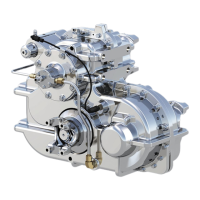


 To Next Page