Copyright Meritor, Inc., 2021
MM-2034 / Issued 02-21
Page 47 Printed in USA
9 Lubrication & Maintenance
Lubrication
Hazard Alert Messages
Read and observe all hazard alert messages in this publication. They
provide information that can help prevent serious personal injury,
damage to components, or both.
WARNING
To prevent eye injury, always wear eye protection when perform-
ing vehicle maintenance or service.
With any product containing gears, lubrication is possibly the most
important component affecting the product life cycle. It is critical to use
the correct lubricant, follow oil change intervals, and check the oil level
regularly.
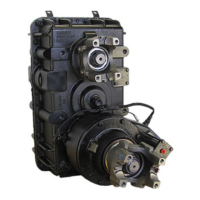
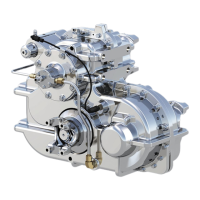
The transfer case is lubricated by an oil pump which is located on the
intermediate shaft. All bearings are lubricated by splash and force-feed
lubrication.
Lubricant Capacity
The transfer case lubricant capacity is 6.5 qts (6.2L).
The oil is to be maintained at the level of the fi ll plug at all times.
Oil Change Intervals
The oil change interval varies depending on the type of vehicle, operat-
ing duty cycle, and application.
The recommended oil change and inspection periods are based on the
average use and operating conditions that the unit may encounter. It is
suggested that the individual owner make a periodic lab analysis of the
lubricant to determine contamination based on the unit’s specifi c oper-
ating conditions. With this data, the oil change and inspection periods
can be better determined.
Under normal operating conditions:
LUBRICANT LEVEL CHECK
On-Highway - Every 1,000 miles (1,610 km)
Off-Highway - Every 40 hours
ON-HIGHWAY*
Initial - 3,000-5,000 miles (4,800 - 8,000 km)
On-going - Every 10,000-15,000 miles (16,000-24,000 km)
OFF-HIGHWAY*
Initial - 40 hours
On-going - Every 500-750 hours
* With every oil change, the shift cylinder air lines and valves should
be inspected for leaks and possible malfunctioning. Low pressure
conditions can cause partial clutch engagement which may result in
premature wear or damage.
Checking the Air Pressure Circuit
When the oil is changed, Meritor recommends checking the air pres-
sure circuit for transfer case shifting cylinders. This includes:
• Checking tightness of air cylinders for high/low shifting, front
wheel drive/differential lock shifting, as well as tightness of
pressure lines.
• Checking air pressure lines generally for chafe marks and
replacing if necessary.
• Checking function of indicator lights and switches.
Lubricant Type
Avoid mixing different oil types, even if from the same brand name, to
avoid compatibility issues that can cause seal materials to deteriorate.
Failure to use the required lubricant may affect performance and
warranty coverage.
When switching from a mineral oil to synthetic oil, the transfer case
has to be purged to avoid foam build-up between the two oil types
resulting in improper lubrication and component damage.
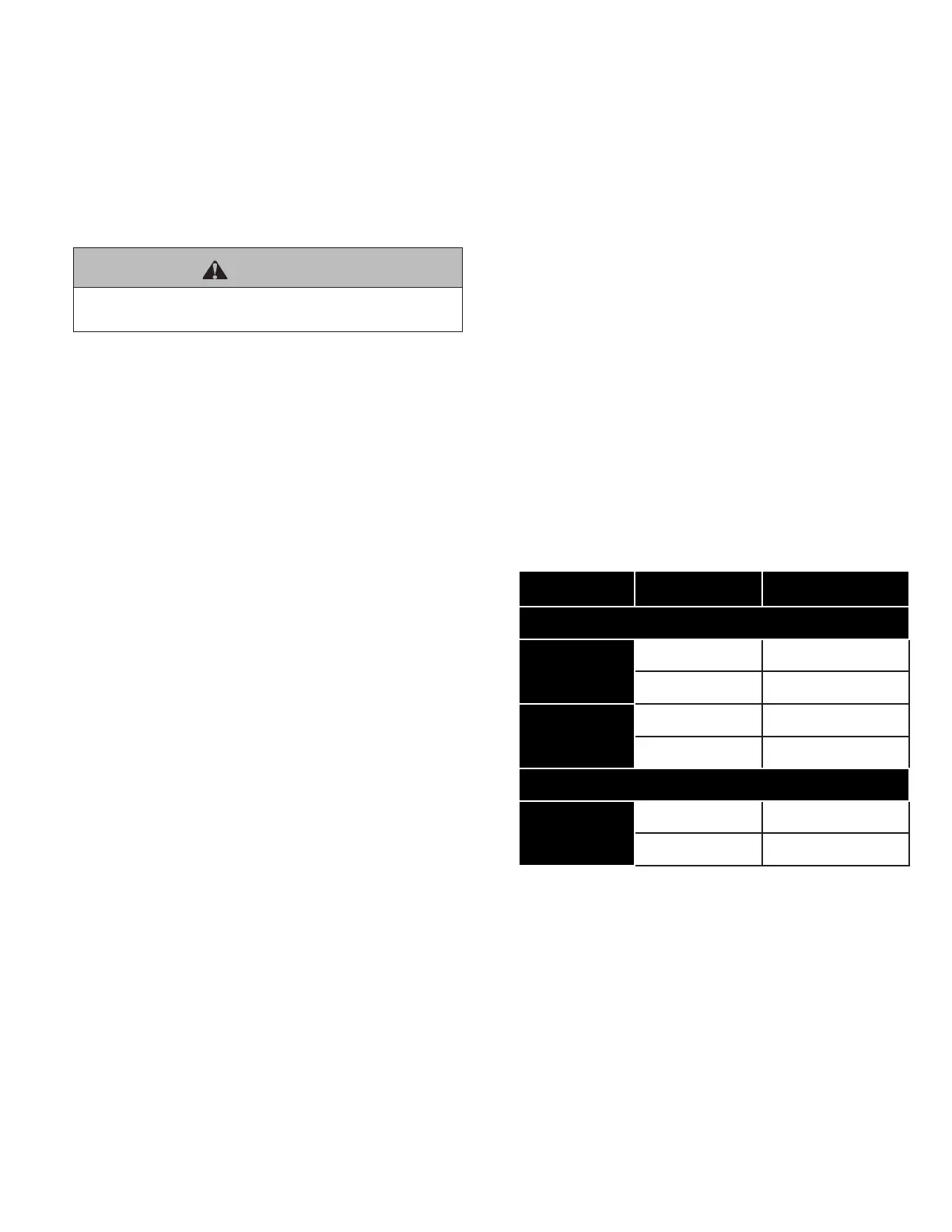
Type Temperature Grade
On-Highway Vehicles
Heavy-Duty
Engine Oil*
Above +10
o
F SAE 50
Below +10
o
F SAE 30
Mineral Gear
Oil**
Above +10
o
F
SAE 90
Below +10
o
F SAE 80
Off-Highway & Mining Vehicles
Heavy-Duty
Engine Oil*
Above +10
o
F SAE 50
Below +10
o
F SAE 30
*Specify heavy-duty type meeting MIL-L- 2104B specifi cations.
**Must be inhibited against corrosion, oxidation, and foam.
NOTES:
• For extreme cold weather where temperature is consistently
below 0° F, use SAE 20W heavy-duty engine oil meeting MIL-L-
2104B specifi cations.
• Extreme pressure oils are no longer recommended for use.
Under certain operating conditions, these oils might form carbon
deposits on gears, shafts, and bearings resulting in component
damage.



 To Next Page