SAFETY
When working above the floor level, use a safety belt to protect yourself from a fall
should you get an electric shock!
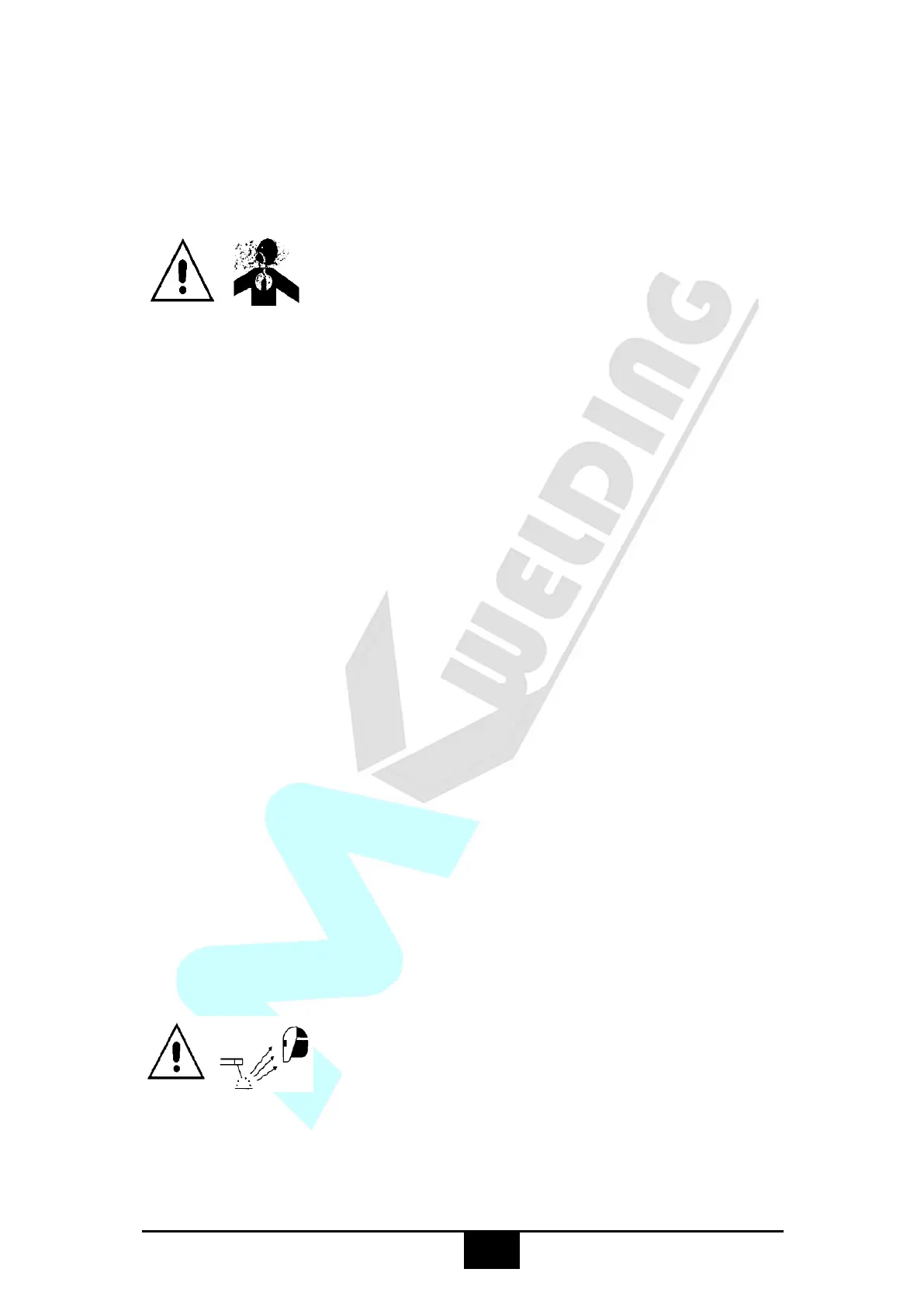
FUMES AND GASES CAN BE DANGEROUS.
Smoke and gas generated whilst welding or cutting can be harmful to people’s health.
Welding produces fumes and gases. Breathing these fumes and gases can be hazardous
to your health.
Do not breathe the smoke and gas generated whilst welding or cutting, keep your
head out of the fumes. Use enough ventilation and/or exhaust at the arc to keep fumes
and gases away from the breathing zone. When welding with electrodes which require
special ventilation such as stainless or hard facing or on lead or cadmium plated steel
and other metals or coatings which produce highly toxic fumes, keep exposure as low
as possible and below the Threshold Limit Values using local exhaust or mechanical
ventilation. In confined spaces or in some circumstances, outdoors, a respirator may be
required. Additional precautions are also required when welding on galvanized steel.
Do not weld in locations near chlorinated hydrocarbon vapors coming from
degreasing, cleaning or spraying operations. The heat and rays of the arc can react with
solvent vapors to form phosgene, a highly toxic gas, and other irritating products.
Shielded gases used for arc welding can displace air and cause injury or death. Always
use enough ventilation, especially in confined areas, to insure breathing air is safe.
Read and understand the manufacturer’s instructions for this equipment and the
consumables to be used, including the material safety data sheet and follow your
employer’s safety practices.
ARC RAYS: Harmful to people’s eyes and skin.
Arc rays from the welding process produce intense visible and invisible ultraviolet and
infrared rays that can burn eyes and skin.


 To Next Page