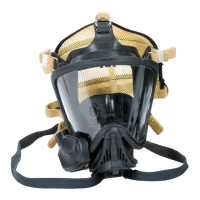
This document is an operating manual for the MSA TransAire 5 & 10 Minute Escape Hood Respirators. It provides comprehensive information on the device's function, technical specifications, usage, and maintenance.
Function Description
The MSA TransAire Escape Hood Respirators are designed as escape devices for use in hazardous atmospheres, including those immediately dangerous to life or health (IDLH). An IDLH atmosphere is defined as conditions that pose an immediate threat to life or health or conditions that are likely to have adverse cumulative or delayed effects on health.
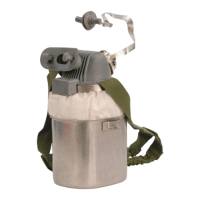
The TransAire apparatus consists of a carrier containing a loose-fitting hood, a flow-control regulator and hose assembly, and an air cylinder and valve assembly. The hood is designed to be a reservoir of breathing air. It is not designed to provide splash protection or withstand exposure to direct flame or high heat.
Unlike self-contained breathing apparatus (SCBA), the TransAire respirators provide a constant flow of air from the cylinder to the hood until the cylinder is empty. They do not feature an audible alarm to warn the user when the cylinder is nearly empty, and the hood is loose-fitting, as opposed to the tight-fitting pressure-demand facepieces of SCBAs.
The apparatus can be worn on the chest, hip, or waist, and may be carried into or stored in an area that may be potentially hazardous.
Important Technical Specifications
The manual details two models:
Both respirators are NIOSH approved for escape from IDLH atmospheres. The air used in the cylinder must meet the requirements of the Compressed Gas Association Specification G-7.1 for quality verification level (grade) D air or equivalent specifications. The cylinder shall meet applicable DOT specifications.
Usage Features
The manual outlines the donning procedures for the TransAire escape hood, emphasizing three ways to wear the cylinder: chest-mounted, hip-mounted, or waist-mounted.
Donning the Cylinder and Carrier:
- Chest-Mounted: Check that the strap hook is attached to the bottom D-ring. Adjust the carrier strap to fit comfortably over your head, then slip the strap over your head so it rests on the back of your neck.
- Hip-Mounted: Adjust the carrier strap to be fully extended. Attach the strap hook to the D-ring. Slip one arm into the strap, place it over your head, and rest it on your shoulder.
- Waist-Mounted (using optional shoulder strap): Attach the shoulder strap to the top D-rings. Remove the carrier strap from the D-ring and adjust it to its full length. Don the shoulder strap and pull the adjusting strap for a snug, comfortable fit. Attach the carrier strap hook to the D-ring and adjust the strap to your waist size.
Donning the Apparatus Hood:
- Open the cylinder valve all the way.
- Pull the hook-and-loop strip and pull the pouch cover out away from the carrier. Grasp the hood from the pouch and listen for the sound of air rushing inside the hood.
- Stretch the neck band with both hands and pull the hood over your head so that the regulator hose is at the front.
- Make sure there is nothing (such as clothing or hair) between the neck band and your neck to prevent a good seal.
- Exit to a safe atmosphere immediately!
Removing the TransAire Escape Hood:
- Stretch the neck band with both hands and pull the hood up over your head.
- Close the cylinder valve.
- Remove the shoulder strap (and waist strap if used).
- For hip-mounted, adjust the carrier strap to be fully extended, attach the strap hook to the D-ring, and slip one arm into the strap, placing it over your head and resting it on your shoulder.
- For waist-mounted, attach the shoulder strap to the top D-rings, remove the carrier strap from the D-ring and adjust it to its full length, then don the shoulder strap and pull the adjusting strap for a snug, comfortable fit.
Maintenance Features
The manual provides detailed instructions for maintaining the escape hood, including cleaning, disinfecting, component inspection, and reassembly. OSHA regulations (29 CFR, Part 1910.134) require users to establish a maintenance program that includes these steps.
Cleaning and Disinfecting:
- Ensure the cylinder valve is fully closed.
- Remove excess contaminant from the apparatus.
- Unscrew the hose nut and pull the hose fitting out of the hood inlet.
- Remove the muffler from the hood.
- Unscrew and remove the pressure regulator from the cylinder valve.
- Untie the retaining cord to open the cylinder carrier and remove the air cylinder.
- Add one ounce (29.6 ml) of Confidence Plus Germicidal Cleaner or a mild cleaning solution to a gallon (3.8 L) of warm water (maximum temperature 110°F/43°C).
- Submerge the hood and carrier in the cleaning solution and scrub gently until clean.
- Rinse the hood and carrier thoroughly in warm water (maximum temperature 110°F/43°C) and air dry. Inadequate rinsing can cause skin irritation from the germicidal cleaner. Do not accelerate drying with heat sources above 110°F (43°C) as this can deform or damage parts. The plastic hood can scratch if rubbed with coarse, dry cloth or paper towels.
- Use a damp cloth or soft sponge saturated with Confidence Plus Germicidal Cleaner to clean the muffler, muffler cover, diffuser, hood hose, pressure regulator, cylinder valve, and air cylinder.
- After drying, reinstall the muffler, diffuser, and muffler cover in the hood. Ensure the muffler cover is installed and pointed up at approximately 45 degrees left or right of center.
Component Inspection (After Cleaning and Disinfecting):
- General Warning: Do not inspect the apparatus before it is decontaminated, cleaned, and disinfected if there is a risk of exposure to hazardous contaminants. If the apparatus shows damage, deterioration, or any listed conditions, remove it from service and return it to an MSA trained and certified repair technician. Never substitute, modify, add, or omit parts; use only exact replacement parts specified by MSA.
- Hood Inspection:
- Check that the strap hook is attached to the bottom D-ring.
- Ensure clear visibility through the hood.
- Check the elastic neck band for breaks; it must spring back easily when stretched and released.
- Inspect the hood inlet: no broken or missing parts, intact cover, and diffuser and muffler in place.
- Regulator and Hose Inspection:
- Look for cuts, cracks, or other damage.
- Ensure clear visibility through the hood (repeated check).
- Check the elastic neck band for breaks; it must spring back easily (repeated check).
- Carrier (and Optional Shoulder Strap) Inspection:
- Look for tears, cuts, and abrasions.
- Check straps and strap hardware.
- All D-rings and strap hooks must be present and undamaged.
- The adjusting buckle must slide easily, allowing full strap adjustment.
- Cylinder Valve Inspection:
- Look for broken or bent parts on the handwheel and pressure gauge.
- Open and close the valve to ensure proper function.
- Inspect the pressure gauge: lens not cracked or broken, gauge face visible without distortion, and gauge needle operates.
- Cylinder Inspection: Inspect the cylinder at least monthly or before each use to ensure it is FULL (2216 or 3000 psi on the pressure gauge).
Hood Packing Instructions for TransAire Apparatus:
- Lay the hood flat and fold in thirds lengthwise.
- Fold the top third of the hood over.
- Put the hood inlet assembly outside of the hood.
- Place the hood into the pouch on the carrier by first inserting the tube, then the folded hood. Leave the hood inlet assembly exposed.
- For waist-mounted, attach the shoulder strap to the top D-rings, remove the carrier strap from the D-ring and adjust it to its full length, then don the shoulder strap and pull the adjusting strap for a snug, comfortable fit. Attach the carrier strap hook to the D-ring and adjust the strap to your waist size.
Reassembling the Escape Hood:
- Check for an O-ring in the regulator inlet. Thread the pressure regulator onto the cylinder valve and tighten with a suitable wrench.
- Place a full air cylinder in the carrier and tie the opening closed around the cylinder neck.
- Check for an O-ring on the hood hose nipple.
- Thread the hose nut on the hood inlet and hand-tighten only.
- Install the hood hose and hood in the pocket. Close the hook-and-loop strip.
- Place the apparatus in its storage location, ready for use.

 Need help?
 General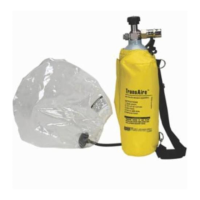

 To Next Page