EasyManua.ls Logo

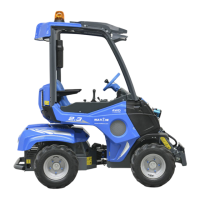
MultiOne M1 1.1 - User Manual

Default Icon
54 pages
Print Icon
To Next Page IconTo Next Page
Loading...
INSTRUCTION
MANUAL
1
SERIES
SELF-MOVING COMPACT WHEEL
LOADER, EQUIPPED WITH
MULTIPURPOSE QUICK COUPLER
MultiOne s.r.l -Translation of the original instructions - COD. CM170001EN- r.03 - EN

Table of Contents

Questions and Answers

  • K
    Krystal JamesJul 25, 2025
    Why MultiOne Compact Loader engine does not crank?
    • K
      Kristen BoydJul 25, 2025
      The engine might not crank due to several reasons. It could be a discharged battery or low battery voltage, in which case you should check and charge the battery. Another cause could be a blown fuse, so check the fuses, and if the fuse blows again, find out the cause and contact service. Also, check the battery cables and posts for poor connections or disconnections; clean and retighten if necessary.
  • A
    Austin CarterAug 4, 2025
    What to do if MultiOne Compact Loader engine cranks but does not start?
    • D
      Daniel HaleAug 4, 2025
      If the engine cranks but doesn't start, there could be a few reasons. You might have no fuel or the wrong type of fuel, so drain the tank and fill it with the correct type. Also, drain any water from the fuel filter and prime the fuel system. Another possibility is that the engine isn't getting fuel due to a clogged fuel filter or fuel line. Ensure the fuel hoses and fuel filter are clean and not frozen, replace the fuel filter, and clean the fuel lines. Finally, a discharged or damaged battery can also cause this issue, so charge or replace the battery if needed.
  • L
    Leslie GibsonAug 14, 2025
    What to do if MultiOne Compact Loader does not move after releasing the parking brake?
    • A
      Andrea RiggsAug 15, 2025
      The loader might not move, even after releasing the parking brake, due to low hydraulic charge pressure. Contact service for a pressure check.

Summary

1 DOCUMENT IDENTIFICATION

1.1 Manual Designation and Identification

Details the official name and identification data of the manual.

1.3 Glossary and Abbreviations

Defines key terms and common abbreviations used in the manual.

1.5 Consultation Notes

Explains the meaning of text formatting and warning symbols.

1.6 Authorized Operators

Identifies authorized operators and their roles.

1.7 Warranty

Outlines warranty conditions and territorial jurisdiction.

2 MACHINE IDENTIFICATION

2.1 CE Accordance Statement

Contains the CE conformity statement and relevant directives.

3 IMPORTANT INFORMATION ABOUT SAFETY

3.1 General Safety Instructions

Provides essential safety rules for machine operation.

3.2 Residual Risks

Details potential risks remaining after safety measures.

3.3 Transport and Lifting Safety

Describes safe procedures for transporting and lifting the machine.

3.4 Maintenance Safety

Provides safety guidelines for maintenance operations.

4 DESCRIPTION OF THE MACHINE

4.1 Main Parts and Functions

Identifies and explains the function of major machine components.

4.3 Control Panel

Details the layout and functions of the control panel.

4.4 Safety and Protection Devices

Lists and describes the safety features of the machine.

4.6 Technical Data

Provides technical specifications and operating limits.

4.7 Load Diagram

Shows the machine's load capacity at different boom positions.

4.9 Misuse and 4.10 Safety Signs

Details prohibited actions and explains safety signs.

4.12 Personal Protective Equipment

Specifies the compulsory personal protective equipment (PPE).

5 TRANSPORT AND HANDLING

5.1 Transport

Describes the procedures for transporting the machine.

5.2 Lifting

Explains safe methods for lifting the machine.

5.3 Handling

Details how to move and operate the machine during handling.

5.4 Storage

Provides instructions for storing the machine when not in use.

6 ASSEMBLY AND INSTALLATION

6.1 Assembly

Confirms the machine is ready for use without installation.

6.2 Options

Guides on checking and installing optional equipment.

6.3 Attachments

Information on available attachments and their compatibility.

7 PRE-START INSPECTION

7.1 Pre-start inspection

Lists essential checks before the first machine start.

8 OPERATION

8.1 Adjustments and Pre-Start Checks

Details seat adjustments and essential checks before ignition.

8.3 Normal Operation and Starting

Covers boarding, posture, starting, and handling.

8.3.3 Handling and Attachment Procedures

Explains machine handling and attachment connection/disassembly.

8.3.7 Shut Down and Refuelling

Details safe shutdown, parking brake, and refuelling procedures.

8.4 Exceptional Situations

Covers instability, hydraulic issues, loss of control, and towing.

8.4.6 Jump Start

Guide for starting the machine using a booster battery.

9 MAINTENANCE

9.1-9.3 Safety and Access Procedures

Covers safety, status, boom block, and engine cover access.

9.4 Engine Cover and 9.5 Ordinary Maintenance

Details engine cover access and daily/weekly maintenance tasks.

9.6 Scheduled Maintenance

Outlines maintenance based on operating hours or time intervals.

9.7 Machine Maintenance Interventions

Details cleaning, tyre pressure, battery, and structural checks.

9.7.5-9.7.8 Hydraulic and Greasing Procedures

Covers hydraulic oil level, filter, oil change, and greasing points.

9.8 Engine Maintenance

Covers checking engine oil and air filter.

10 SPARE PARTS

9.9 Troubleshooting

Lists common problems and their solutions.

10.1 Filter Codes

Provides part numbers for filter replacements.

11 ANNEX

11.1 Tyre Pressure

Details tyre specifications and recommended pressures.

11.2 General Warranty Rules

Defines warranty duration and basic repair policies.

11.2.3 Warranty Exclusions and Expiration

Lists warranty exclusions and conditions for expiration.

MultiOne M1 1.1 Specifications

General IconGeneral
BrandMultiOne
ModelM1 1.1
CategoryCompact Loader
LanguageEnglish

Related product manuals