Guide to Operation
59
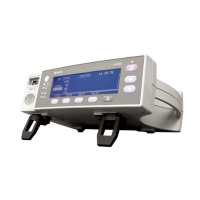
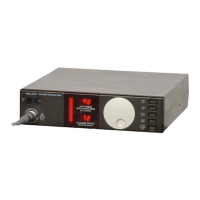
Because the N-200 is patient isolated, the monitor and
powerbase communicate through a bidirectional optical link
that is established whenever the monitor and powerbase are
connected and AC power is supplied. Saturation, pulse rate,
pulse waveform, and monitor and alarm status data are
transmitted from the monitor to the powerbase where they are
translated into analog or digital outputs. ECG input as well as
status requests are transmitted from the powerbase to the
monitor.
Disconnecting the Powerbase from the Monitor
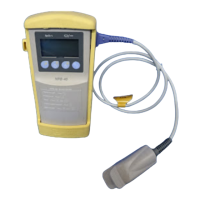
The monitor can be disconnected from the powerbase for
portable use. To do so, place the instrument on a flat, stable
surface and firmly push the latches on each side of the monitor,
which allows the units to be separated. The analog, digital, and
fiber-optic outputs, and ECG/defib sync inputs (from the
external monitor) are not available when the powerbase is
detached from the monitor or when AC power is not supplied.
To reconnect the units, place them on a flat, stable surface, and
position them so that the groove on the powerbase is aligned
with the rib on the monitor. Push the powerbase straight in
until the latches on the monitor engage.
Battery Operation
If AC power is lost or the interface/powerbase is disconnected,
the N-200 operates on its internal battery (typically 90 minutes
for a new, fully charged battery). When the battery level is too
low to power the instrument reliably, an internal switch turns
off the N-200 automatically.
The battery recharges whenever the instrument is plugged into
AC power. A minimum of 14 hours is required to fully recharge
the battery.
If C-LOCK ECG synchronization is used when the N-200 is
operating on battery power, the ECG signal must be supplied
directly from the patient through an ECG cable attached to the
C-13-200 or C-20-200 patient module. When using battery
power, a signal from a bedside ECG monitor cannot be used.


 To Next Page