V
1
Oil-Immersion Observation
The “Oil” mark on the side of an objective indicates that it is an oil-immersion type objective.
(The oil-immersion objective also has a black band around the barrel end.) An oil-immersion
objective is used with the immersion oil applied between the front of the objective and the
coverglass.
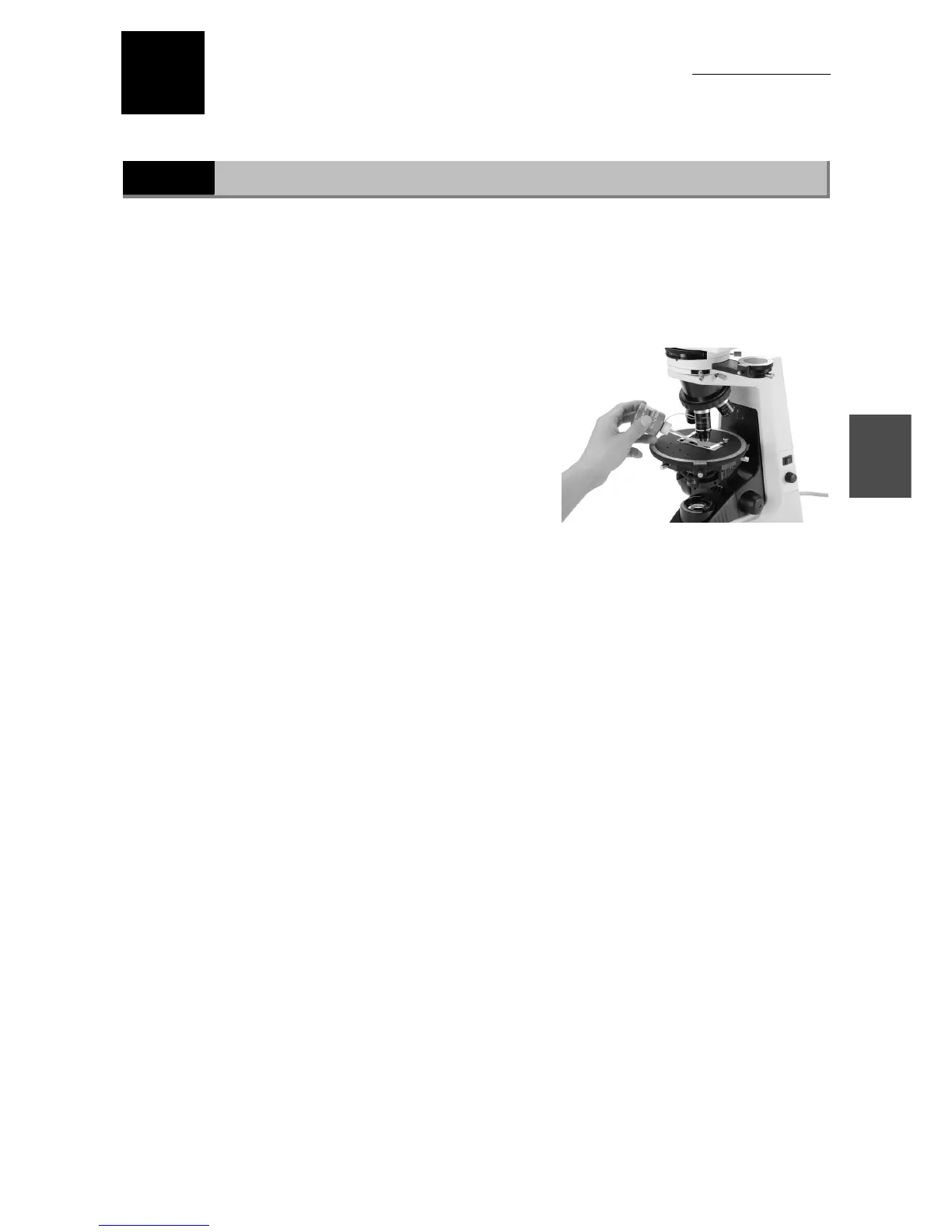
z Example of Oil-Immersion
Rotate the revolving nosepiece to move the
objective out of position. Add a drop of oil to
the specimen. Slowly rotate the revolving
nosepiece to bring the objective back into
position.
z Eliminate Air Bubbles
Make sure that air bubbles are not trapped during oil application. Air bubbles degrade the
image. To see if any air bubbles are trapped in the oil, remove one eyepiece, or put the
Bertrand lens in the optical path, and fully open the aperture diaphragm. Then check the
objective pupil (a bright round part).
Do any of the following to eliminate air bubbles:
• Rotate the revolving nosepiece to move the objective back and forth.
• Add another drop of oil.
• Wipe off the oil and apply again.
z Handling of the Immersion Oil
Use a minimum quantity of oil. If too much oil is applied, surplus oil could flow out onto the
stage and the condenser and degrade performance.
After completing oil-immersion observation, be sure to clean the objective, condenser, and
any other parts that may be stained by oil. Any oil residue left on the lenses of oil-immersion
type objectives or adhesion of oils on the front lens of dry type objectives will degrade image
quality.
Use petroleum benzine to wipe off oil and finish with absolute alcohol (ethyl or methyl
alcohol). If petroleum benzine is not available, use methyl alcohol instead. In that case, wipe
off the oil several times (generally 3 or 4 times) as the detergency of methyl alcohol is
weaker than petroleum benzine.





 To Next Page