EasyManua.ls Logo

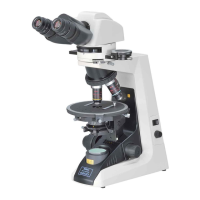
Nikon Eclipse 50i POL - User Manual

Nikon Eclipse 50i POL
73 pages
Print Icon
To Next Page IconTo Next Page
Loading...
Polarizing Microscope
ECLIPSE 50i POL
Instructions
M362E 05.8.NF.1

Table of Contents

Questions and Answers

  • D
    Danielle WelchAug 20, 2025
    Why is the viewfield of my Nikon Eclipse 50i POL invisible?
    • E
      Emily GloverAug 20, 2025
      If the viewfield of your Nikon Microscope is invisible, vignetted, or uneven in brightness, make sure all parts like the nosepiece, condenser, filters, and lamp are correctly attached. Ensure movable parts such as the optical path select lever, nosepiece, and filter slider are in their click-stop positions. Focus and center the condenser, and open the field diaphragm just outside the viewfield. Clean any dirt or dust from the lens or optical elements, and ensure the Bertrand lens is out of the optical path. Fully move the top lens of the P swing-out condenser and correctly position the P-CL, P-CS, or P-CQ plate.
  • N
    ncarsonAug 22, 2025
    How to reduce eye strain when using Nikon Eclipse 50i POL?
    • C
      Casey LopezAug 22, 2025
      If you experience eye strain while viewing through your Nikon Microscope, adjust the interpupillary distance and perform the diopter adjustment. Also, adjust the brightness using the brightness control knob or ND filters to a comfortable level.
  • B
    Brandon RodriguezAug 25, 2025
    Why is the image quality of my Nikon Eclipse 50i POL Microscope poor?
    • K
      Karen KochAug 25, 2025
      If the image quality of your Nikon Microscope is poor, with too much or too little contrast, or poor resolution, start by cleaning any dirt or dust from the lens or other optical elements, including the container. Adjust the objective correction ring to match the thickness of the container’s bottom plate. Focus and center the condenser. Ensure you are using a cover glass suitable for the objective, with a thickness of 0.17 mm if specified. If using an oil immersion objective, apply Nikon Immersion Oil, removing any bubbles present. Finally, ensure there is no immersion oil on the tip of a dry type objective.
  • J
    Juan VincentAug 26, 2025
    How to fix a double image in my Nikon Microscope?
    • R
      Ryan HenryAug 27, 2025
      If the image from your Nikon Microscope does not resolve into a single image when viewing through the binocular eyepiece, adjust the interpupillary distance and perform the diopter adjustment.
  • R
    Robert BaileyAug 28, 2025
    How to remove dust from the viewfield of Nikon Microscope?
    • E
      Evan PhelpsAug 28, 2025
      If you see dirt or dust in the viewfield of your Nikon Microscope, clean the lens and other optical elements, including the container, to remove any contaminants. Additionally, focus and center the condenser to ensure optimal image clarity.
  • M
    Miguel FarmerAug 30, 2025
    Why can't I focus my Nikon Microscope with high-power objectives?
    • M
      Misty EverettAug 30, 2025
      If focusing is not possible with high-power objectives on your Nikon Microscope, ensure the specimen is placed correctly on the stage with the cover glass facing up. Also, verify that you are using the specified type of cover glass with a thickness of 0.17 mm.
  • L
    Laura MurrayAug 31, 2025
    How to dim the image on a Nikon Eclipse 50i POL?
    • K
      Kim MartinAug 31, 2025
      If the image in your Nikon Microscope is too bright, place an ND filter into the optical path. Alternatively, decrease the lamp voltage using the brightness control knob.
  • S
    Sandra VegaSep 2, 2025
    Why is my Nikon Microscope image too dark?
    • G
      gutierrezmicheleSep 2, 2025
      If the brightness of your Nikon Microscope is insufficient, ensure the condenser aperture diaphragm is set to 70 to 80% of the numerical aperture of the objective. Focus and center the condenser. Also, verify that the optical path selection knob is set to the 100% eyepiece position.
  • B
    Brian StevensSep 4, 2025
    What to do if Nikon Eclipse 50i POL objective hits the specimen?
    • C
      Connie WillisSep 4, 2025
      If the objective on your Nikon Microscope strikes the specimen when changing from a low-power to a high-power objective, make sure the specimen is correctly placed on the stage with the cover glass facing up, and that the cover glass is the specified type with a thickness of 0.17 mm. Also, perform the diopter adjustment.
  • M
    Matthew MatthewsSep 6, 2025
    Why is my Nikon Eclipse 50i POL Microscope image yellow?
    • S
      Stephen HansonSep 6, 2025
      If the image from your Nikon Microscope is tinged yellow, increase the lamp voltage using the brightness control knob or push the preset switch. Also, ensure an NCB filter is placed in the optical path.

Summary

Preface

WARNING and CAUTION Symbols

Explains warning and caution symbols for safety.

Safety Precautions

Intended Product Use

Defines the primary applications and intended environments for the microscope.

Cautions about the power cord

Details safety guidelines for using the power cord and electrical connections.

Cautions about heat from the light source

Warns about hot components and safe handling practices around the light source.

Hazardous specimen

Advises on handling hazardous specimens and decontamination procedures.

Notes on handling the product

Microscopy

Diascopic Bright-field Microscopy

Provides step-by-step instructions for performing bright-field microscopy.

Orthoscopic Observation

Explains the procedure for orthoscopic observation, a key method for polarizing microscopes.

Conoscopic Observation

Details the steps for performing conoscopic observation using the Bertrand lens.

Episcopic Microscopy (with the Epi Illuminator Option)

Guides on performing microscopy using the epi illuminator.

Individual Operations

Polarization Microscopy

Covers the operation of polarizers and analyzers for polarization microscopy.

Replacing Consumables

Replacing the lamp

Provides detailed instructions and safety precautions for replacing microscope lamps.

Troubleshooting

Optical System

Lists common problems related to the optical system and their solutions.

Specifications

Nikon Eclipse 50i POL Specifications

General IconGeneral
Microscope TypePolarizing Microscope
Optical SystemCFI60 optical system
Eyepiece10x (Field number 22)
Objective TurretQuintuple (5-position)
NosepieceQuintuple (5-position)
StageRotating stage with vernier scale (360° rotation)
Focusing MechanismCoaxial coarse and fine focus knobs
CondenserSwing-out type condenser
PolarizerBuilt-in polarizer, rotatable
Bertrand LensSwing-in Bertrand lens
IlluminationTransmitted light
Power SupplyAC 100-240V, 50/60Hz

Related product manuals