17
Pushing Machine/Parking Brake
In the event the eForce Burnisher needs to be
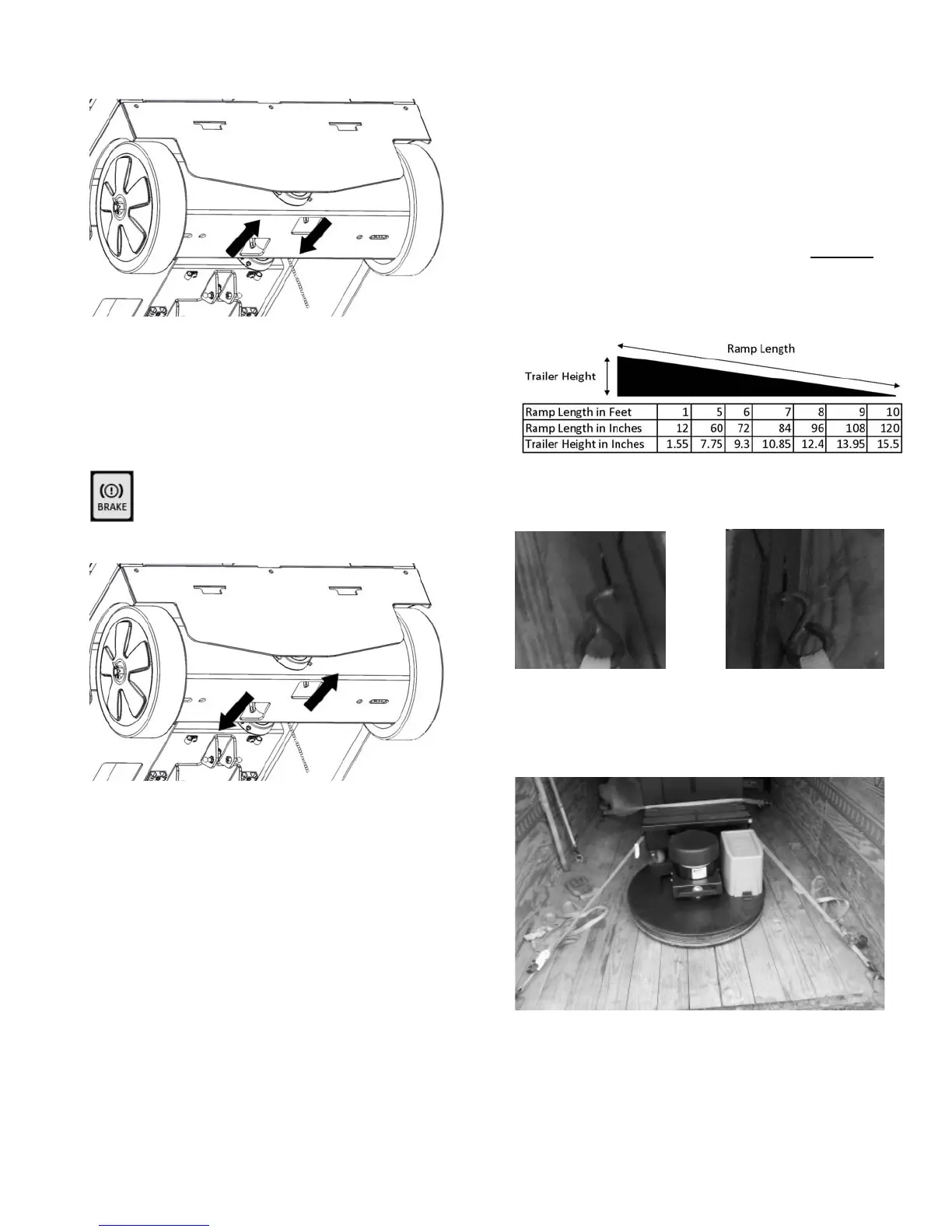
pushed, the brakes need to be released. At the rear
of the machine, reach under the drive motor mount
and find two openings. In the left opening, reach
inside and pull the lever back. In the right opening,
push the lever forward. Now the machine can be
pushed.
If the operator tries to drive the machine with
the brakes disengaged the machine will not
move. The brake icon will appear in the pad
motor section of the main screen along with a
3A code in the service box.
To engage the brakes, push the lever forward in the
left opening, pull the lever back in the right opening.
Turn the machine off then back on the clear the
service code. The machine is now ready for use.
Storing Machine
The following steps should be taken when storing the
machine for extended periods of time.
Park the machine on a flat level surface.
Park the machine in a cool, dry area. Do not
expose to rain. Store indoors.
Raise the burnishing head into the pad change
position.
Remove the batteries, or charge them every three
months.
Transporting the Machine
When transporting the machine by use of trailer or
truck, carefully follow the loading and tie
down
procedures:
Raise the burnishing head to the transport position
and secure the strap. Caution: Be sure the pad
motor is in the off position before moving the
machine. The pad motor can run in this position.
Load the machine using a ramp that can support
the weight of the machine and operator. Caution:
Do not attempt to climb a ramp or incline that
exceeds a 13% (7.41 degrees) grade level. A
winch must be used when incline exceeds a 13%
grade level.
Once loaded, turn off the key switch.
Block the rear wheels front and back.
Secure the front and back of the machine with tie
down straps. Put the tie down straps in the pallet
bracket holes on each side and run them forward
to prevent the machine from twisting in transit.
From the rear of the machine, run one tie down
strap around the machine just above the foot plate
and back behind the machine. This will prevent the
machine from moving forward and backward
during transit.




 To Next Page