Specifications │ Tx I&O Manual
2.0 SPECIFICATIONS
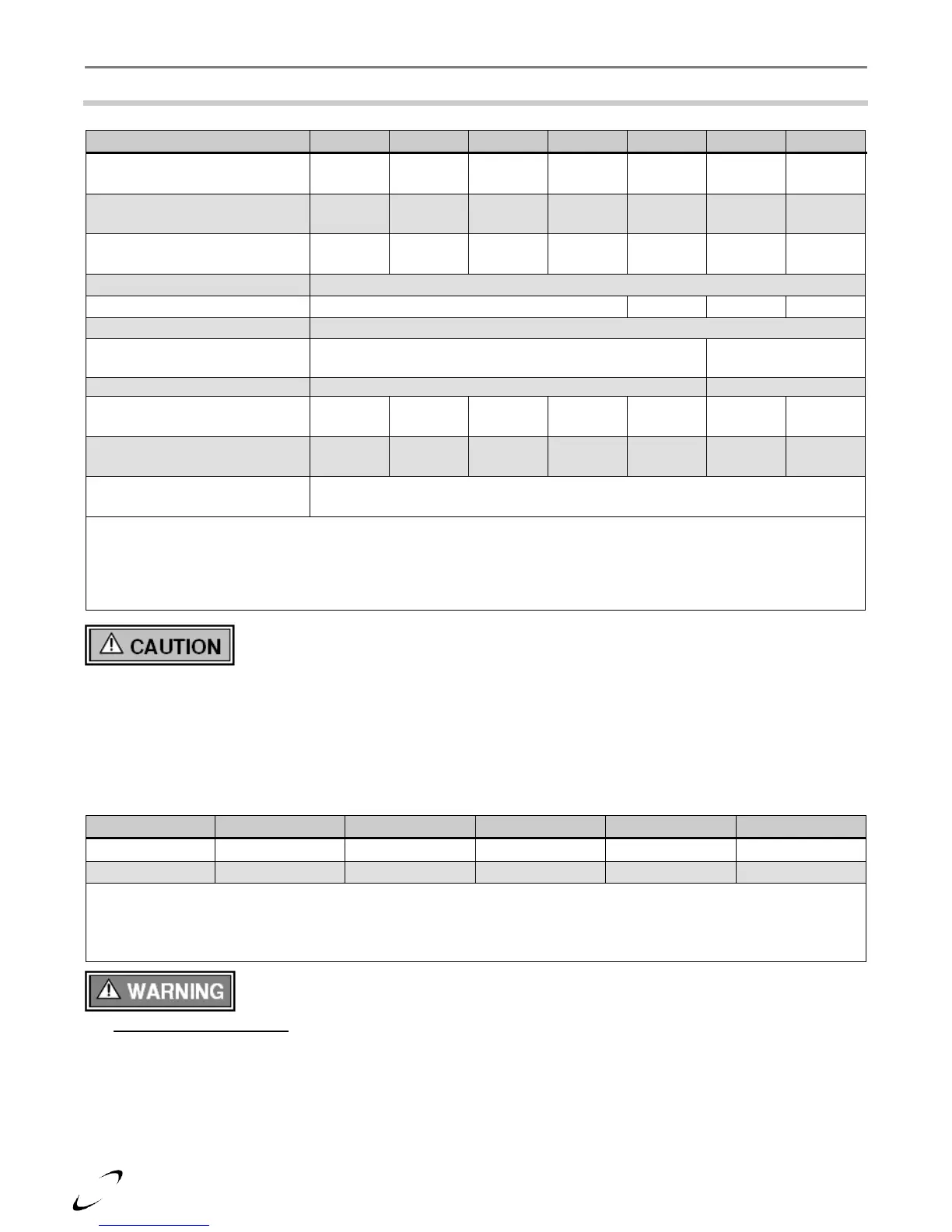
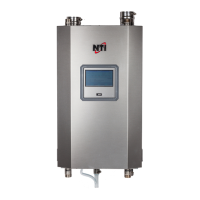
Table 2-1 Trinity Tx Specifications
CSA Input Modulation
1
[MBH]
DOE Heating Capacity
1,2
[MBH]
Net I=B=R Rating
1,2
[MBH]
Water Connections – NPT [in.]
Gas Connection - NPT, in.
Vent/Air-inlet
Pipe
Diameter
[in.]
3
Dimensions H x W x D [in.]
Approx. Boiler Weight
with Water [lbs.]
Approx. Boiler Water Content
[Gallons]
120V/1Ph/60Hz/less than 12A
Notes:
1
Listed Input and Output ratings are at minimum vent lengths at an altitude of 0-2000 ft. Numbers will be lower with
longer venting and/or altitudes greater than 2000 ft.
2
Ratings based on standard test procedures prescribed by the U.S. Department of Energy.
3
Trinity Tx requires a special venting system, use only vent materials and methods detailed in these instructions.
Wall mounting of unit requires two people to lift the boiler into place. Failure to follow
these instructions may result in property damage or personal injury.
High Altitude Operation
The Trinity is designed to operate at its maximum listed capacity in installations located at 0-2000ft above Sea
Level. Since the density of air decreases as elevation increases, maximum specified capacity should be de-rated
for elevations above 2000 ft [610 m] in accordance with Table 2-2.
Table 2-2 De-rate % for High Altitudes
Notes:
1
Canada: Altitudes between 2000-4500 ft [610-1372 m], de-rate by 10%. Consult local authorities for de-rating for
altitudes above 4500 ft [1372 m].
2
USA: De-rate capacity by 4% for every 1000 ft [305 m], if altitude is above 2000 ft [610 m].
Combustion – At elevations above 2000 feet, the combustion of the boiler must be
checked with a calibrated combustion analyzer to ensure safe and reliable operation. It is
the Installers responsibility to check the combustion and to adjust the combustion in accordance with
Section 9.0. Failure to follow these instructions may result in property damage, serious injury, or death.



 To Next Page