Oxitone 1000M
User Manual Rev. 1.
Page 6 of 39
2. OVERVIEW OF SYSTEM
2.1. DESCRIPTION OF DEVICE
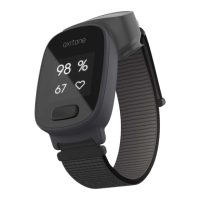
The Oxitone 1000M wrist worn pulse oximeter is a small, lightweight, portable device that non-
invasively monitors and displays numeric values of arterial blood functional oxygen saturation of
arterial Hemoglobin (%SPO
2
) and pulse rate (P.R.). It is intended for spot-checking on adult patients
(18 years and above) in the hospital, clinics, long-term care and home use. It is not provided sterile
nor can it be sterilized.
Auxilary measurement
The Oxitone 1000M direct mode skin temperature sensor is designed for use in routine continuous
monitoring of skin temperature when the other sensors which might better reflect core body
temperature are not available. The sensor is designed for placement on the surface of the wrist hand
skin.
Principles of operation
The Oxitone 1000M pulse oximeter uses a two-wavelength pulsatile system-red and infrared light-to
distinguish between oxygenated (O
2
Hb) and reduce (HHb) hemoglobin, each of which absorbs
different amounts of light emitted from the oximeter sensor. The system then calculates the relative
percentage of these two constituents and displays functional SpO
2
. The skin temperature sensor is
placed on the surface of the skin and is a part of the plastic enclosure that provides thermal
insulation (isolated from ambient temperature) for more accurate skin temperature measurement.
Important note:
Skin temperature:
Temperature of the skin of the PATIENT at a point on which the sensing device intended to measure
the temperature is placed [SOURCE: IEC60601-2-19:2009]. The Oxitone 1000M can measure skin
temperature as a relative indication of surface temperature. It is not intended to be used to
indicate core body temperature or to measure a fever.
Features and benefits
• Simple, intuitive operation
• Automatic self-test at start-up. After start-up, the monitor continuously performs background
self-tests.
• Compact, durable, lightweight, ergonomic hand wrist attached.
• Spot check tests results in up to 15 seconds.
• Recharge battery operation for approximately 24 hours.
• Easy-to-read OLED display in subdued lighting conditions.
• Battery status reporting.
• Vibration shaker (ERM) for On/Off, battery depletion and system error.
• The device requires no calibration or maintenance other than battery recharging.
Spot-on connectivity
• Easily integrates into most telemedical devices via BLE smart wireless technology (PC APP).


 To Next Page