34
200
240
300
SV changes
SV display 300
SV display 240
C
C
C
SV changes
Time
Temperature
C
C
200
240
300
C
C
C
Time
SV changes
SV changes
Temperature
SV display 240
C
SV display 300 C
200 (on the SV display) approaches 300
by the SV rise rate.
C C
200
240
300
SV changes
Temperature
C
C
C
SV display 240
C
SV display 300
C
200 (on the SV display) approaches
300 by the SV rise rate.
C
C
Time
SV changes
300 (on the SV display) approaches 240
by the SV fall rate.
C
C
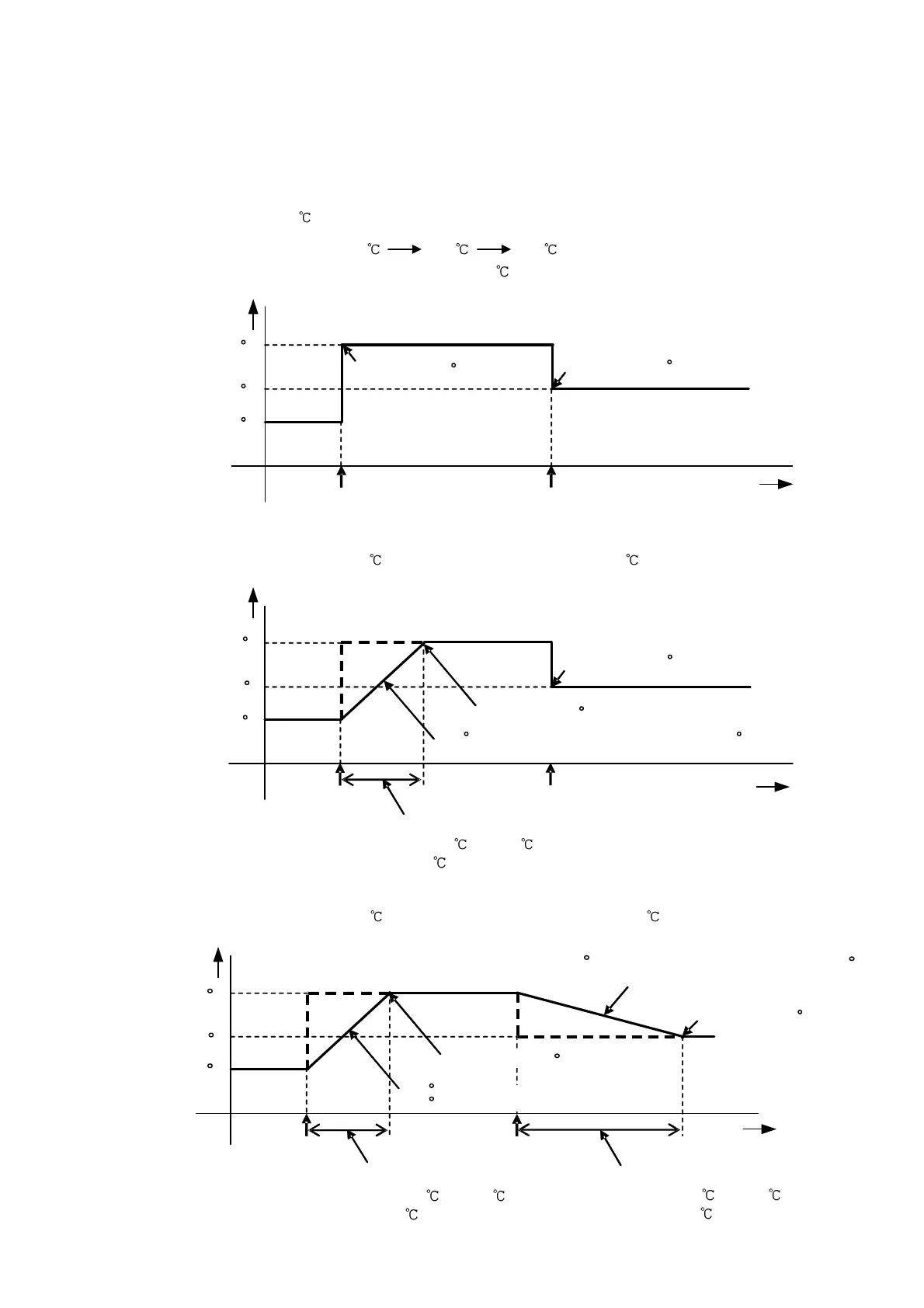
11.11 SV rise rate, SV fall rate setting action
[46] SV rise rate and [47] SV fall rate can be set in the Setup mode. (p.21)
When the SV is adjusted, it approaches the new SV by the preset SV rise rate or SV fall rate.
When SV is adjusted while SV is rising (or falling), SV at the given time becomes a starting point, and
approaches the new SV.
When power is turned on, from PV the SV approaches the new SV.
SV can be changed with keypad operation, Serial communication function and Set value memory external
selection function.
Not available when set to 0 /Min (0/Min).
(e.g.) When changing SV from 200 300 240
[When SV rise rate and SV fall rate are set to 0 /Min]
[When SV rise rate is set to 60 /Min, and SV fall rate is set to 0 /Min]
[When SV rise rate is set to 60 /Min, and SV fall rate are set to 30 /Min]
After SV has been changed,
SV rises from 200 to 300
by the rate of 1 /sec.
After SV has been changed,
SV rises from 200 to 300
by the rate of 1 /sec.
After SV has been changed,
SV falls from 300 to 240
by the rate of 0.5 /sec.


 To Next Page