MAINTENANCE 17
Air Filter 19
tnit Top Removal (Outdooro(oilSide) 19
[ndool Blowel and Motor 19
Outdoor (oil, Indoor (oil, and Condensate Drain Pan 20
Outdoor Fan .......................................................................................................... 21
Electrical Controls and Wiring ............................................................................................................................................................................... 21
Refrigerant Circuit .................................................................................................................................................................................................. 22
Indoor Airflow ........................................................................................................................................................................................................ 22
Metering Devices .................................................................................................................................................................................................... 22
Lubrication ................................................................................................................................................................................................................
Liquid Line Strainer ................................................................................................................................................................................................ 22
High Flow Valves ................................................................................................................................................................................................... 22
TROUBLESHOOTING ............................................................................................................................................................................................... 26
START-UP CHECKLIST ............................................................................................................................................................................................ 27
NOTE TO INSTALLE_Before installation, READ THESE INSTRUCTIONS CAREFULLY AND COMPLETELY. Also, make sure the
User's Manual and Replacement Guide are left with the unit after installation.
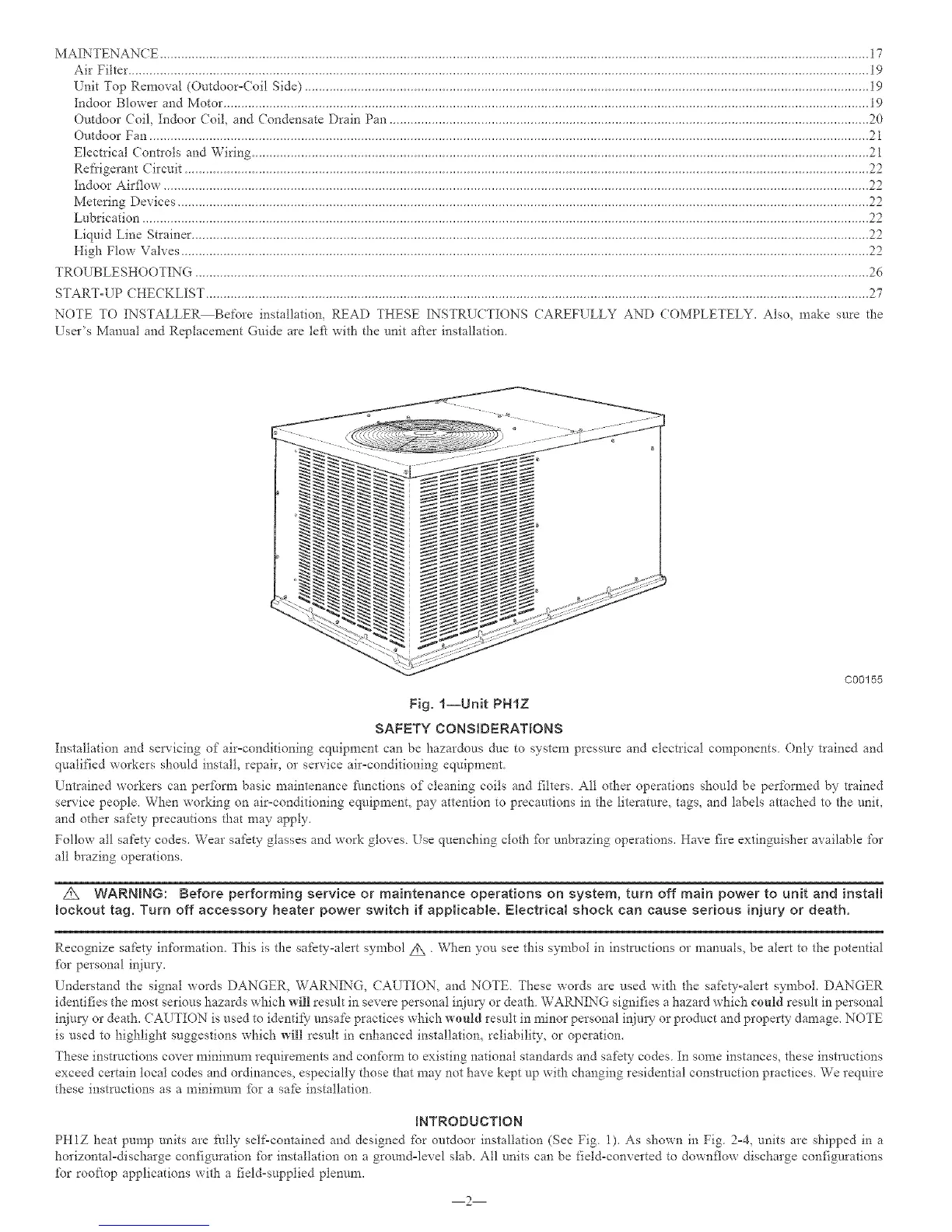
C00155
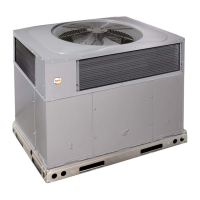
Fig. 1--Unit PHIZ
SAFETY CONSIDERATIONS
h_stallation and servicing of airoconditioning equipment can be hazardous due to system pressure and electrical components Only trained and
qualified workers should install, repair, or service air-conditioning equipment
Untrained workers can peribnn basic maintenance fkmctions of cleaning coils and filters. All other operations should be performed by trained
service people. When working on air-conditioning equipment, pay attention to precautions in the literature, tags, and labels attached to the unit,
and other sai)ty precautions that may apply.
Follow all safety codes. Wear safety glasses and work gloves. Use quenching cloth fbr unbrazing operations. Have fire extinguisher available for
all brazing operations.
z2x WARNmNG: Before performing service or maintenance operations on system, turn off main power to unit and install
lockout tag. Turn off accessory heater power switch if applicable. Electrical shock can cause serious injury or death.
Recognize sat)ty in%rmation. This is the sat_ty-alert symbol Z_. When you see this symbol in insm/ctions or manuals, be alert to the potential
fbr personal injury.
Understand the signal words DANGER, WARNING, CAUTION, and NOTE. These words are used with the safety-alert symbol. DANGER
identities the most serious hazards which will resuh in severe personal injuo' or death. WARNING signifies a hazard which could result in personal
injury or death. CAUTION is used to identit_ unsafe practices which would result in minor personal injury or product and property damage. NOTE
is used to highlight suggestions which will result in enhanced installation, reliability, or operation.
These instructions cover n_inin_tnn requirements and conIbrm to existing national standards and safety codes. In some instances, these instructions
exceed certain local codes and ordinances, especially those that may not have kept up with changing residential construction practices. We require
these instructions as a minimum for a safk installation.
BNTRODUGTmON
PH1Z heat pmnp units are fully self-contained and designed ibr outdoor installation (See Fig 1). As shown in Fig. 2°4, units are shipped in a
horizontalodischarge configuration fbr installation on a groundolevel slab. All units can be field-converted to downflow discharge configurations
for rooftop applications with a fieldosupplied plenum.
2



 To Next Page