EasyManua.ls Logo

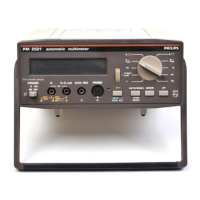
Philips pm2521 - 6.4.1.1. Direct voltage measurements (V.); DIRECT VOLTAGE MEASUREMENTS (STANDARD METHOD)

Philips pm2521
187 pages
Print Icon
To Next Page IconTo Next Page
To Previous Page IconTo Previous Page
Loading...
36
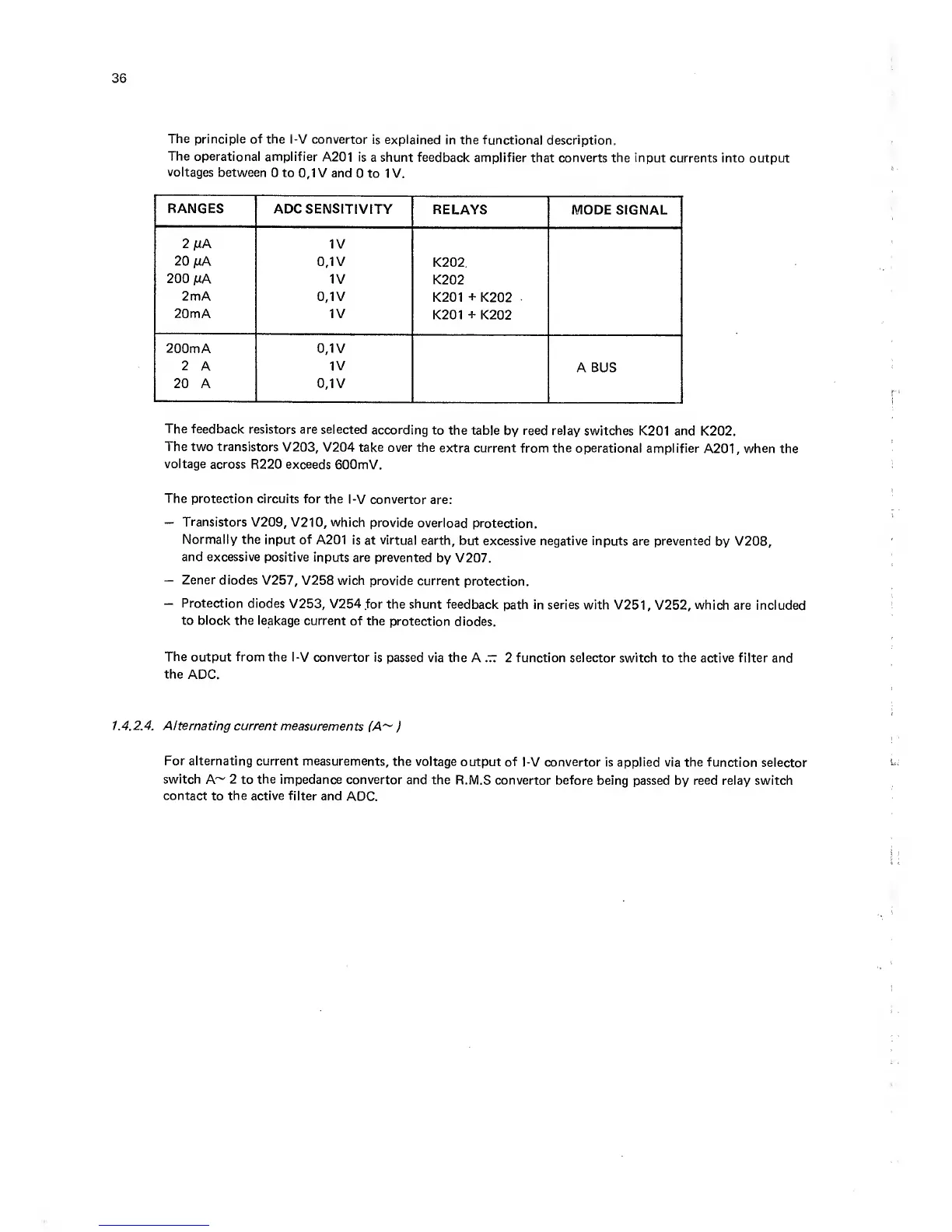
The
principle of the
l-V convertor
is explained
in the functional description.
The
operational amplifier
A201 is
a shunt feedback
amplifier that converts the input
currents into output
voltages
between
0 to
0,1
V and
0 to 1
V.
RANGES
ADC SENSITIVITY
RELAYS
MODE SIGNAL
2
aiA
IV
20
mA
0,1V
K202
200
mA
IV
K202
2mA
0,1V
K201
+
K202
20mA
IV
K201
+
K202
200mA 0,1V
2
A
IV
A BUS
20 A 0,1V
The
feedback
resistors are selected
according
to
the table
by
reed relay
switches K201 and K202.
The two transistors
V203, V204 take over
the extra
current from the operational
amplifier
A201,
when
the
voltage across
R220 exceeds
600mV.
The protection
circuits for
the
l-V convertor
are:
Transistors V209,
V210, which
provide
overload protection.
Normally the
input of
A201
is at
virtual
earth,
but excessive negative
inputs are prevented
by V208,
and excessive
positive inputs
are prevented
by
V207.
Zener diodes
V257,
V258 wich provide
current
protection.
Protection
diodes
V253, V254 for
the shunt feedback
path in series
with V251
,
V252,
which
are included
to block the leakage
current
of the protection
diodes.
The
output
from
the l-V convertor
is passed
via
the
A .rr 2 function selector switch
to
the active filter
and
the
ADC.
1.4. 2.4. Alternating
current
measurements
)
For alternating current
measurements,
the voltage
output of
l-V
convertor
is applied via the function
selector
switch
A~
2
to
the impedance
convertor
and the
R.M.S convertor before
being passed by
reed
relay switch
contact
to
the active filter
and
ADC.

Other manuals for Philips pm2521

Related product manuals