20 Motorcaravan - 09/21-0 - GLO-MJ22-00EN
The calculation of the payload from the difference between the maximum per-
missible gross weight in laden condition and the mass specified by the manu-
facturer in ready-to-drive condition is however only a theoretical value.
Only if the vehicle is weighed with full tanks (fuel and water), full gas bottles
and complete additional equipment on a public weighbridge, can the actual
payload be determined.
4.1.3 Loading the vehicle correctly
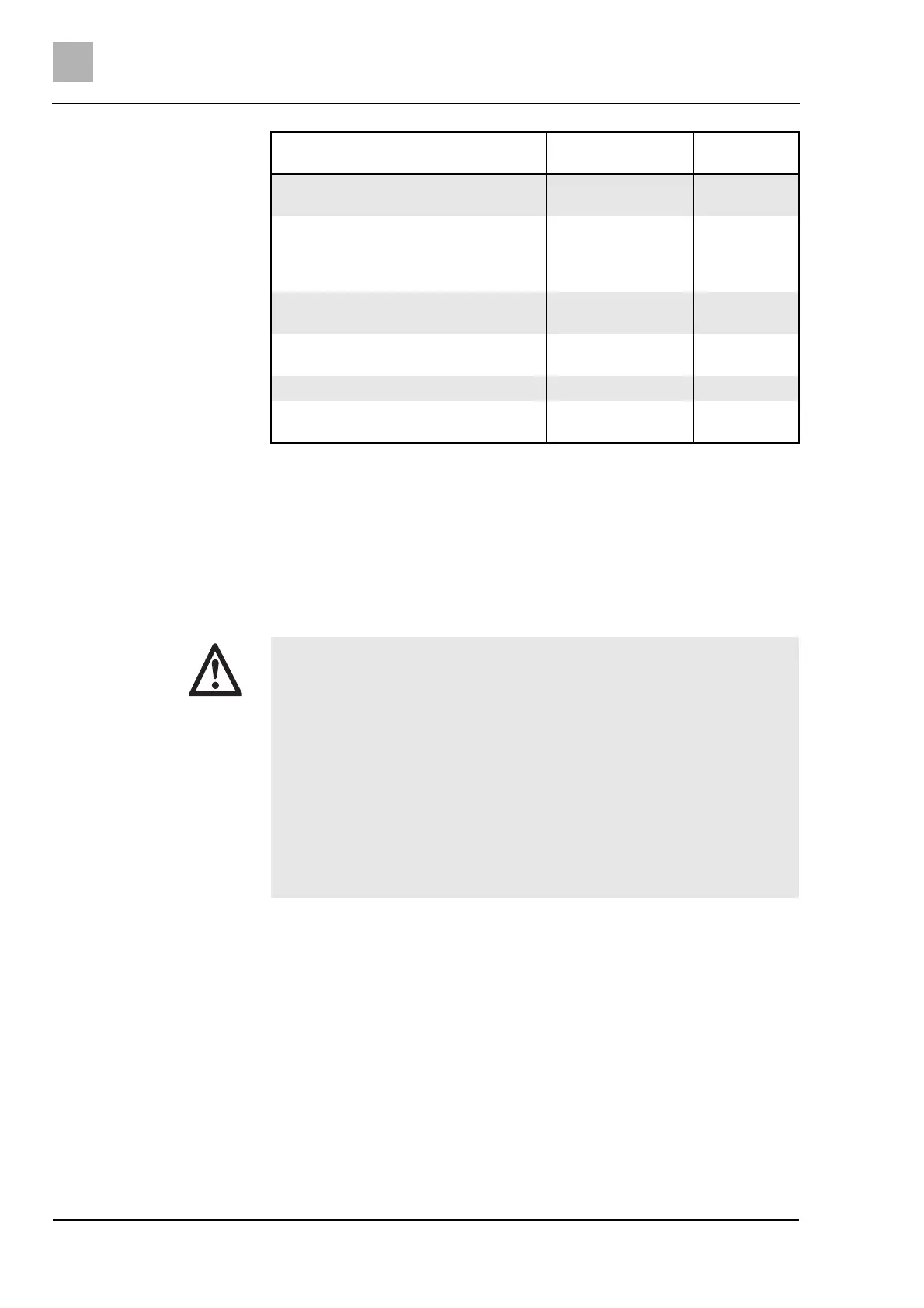
mass in kg to be
calculated
Calculation
Example for calculating the
payload
Maximum permissible gross weight ac-
cording to vehicle documents, Field F.1
3300
Vehicle mass in a ready-to-drive condi-
tion, including basic equipment according
to Certificate of Conformity (CoC) Point
13.2, actual weight
- 2720
This results in a permissible payload
of
580
Conventional load, e.g. 3 persons at 75
kg each
- 225
Additional equipment - 40
For the personal equipment this re-
sults in
= 315
To ensure safety never exceed the maximum permissible gross weight
in a laden condition.
Distribute the load evenly between the left-hand and right-hand sides of
the vehicle.
Distribute the load evenly between both axles. Observe the axle loads
specified in the vehicle documents. Additionally observe the permissible
load-carrying capacity of the tyres.
Securely store all the objects so that they cannot slide or slip.
Store heavy objects (awning, canned food, etc.) close to the axles. Low-
lying storage compartments whose doors do not open in the direction of
travel are particularly suited for storing heavy objects.
Store lighter objects (laundry) in the roof storage compartments.


 To Next Page