30
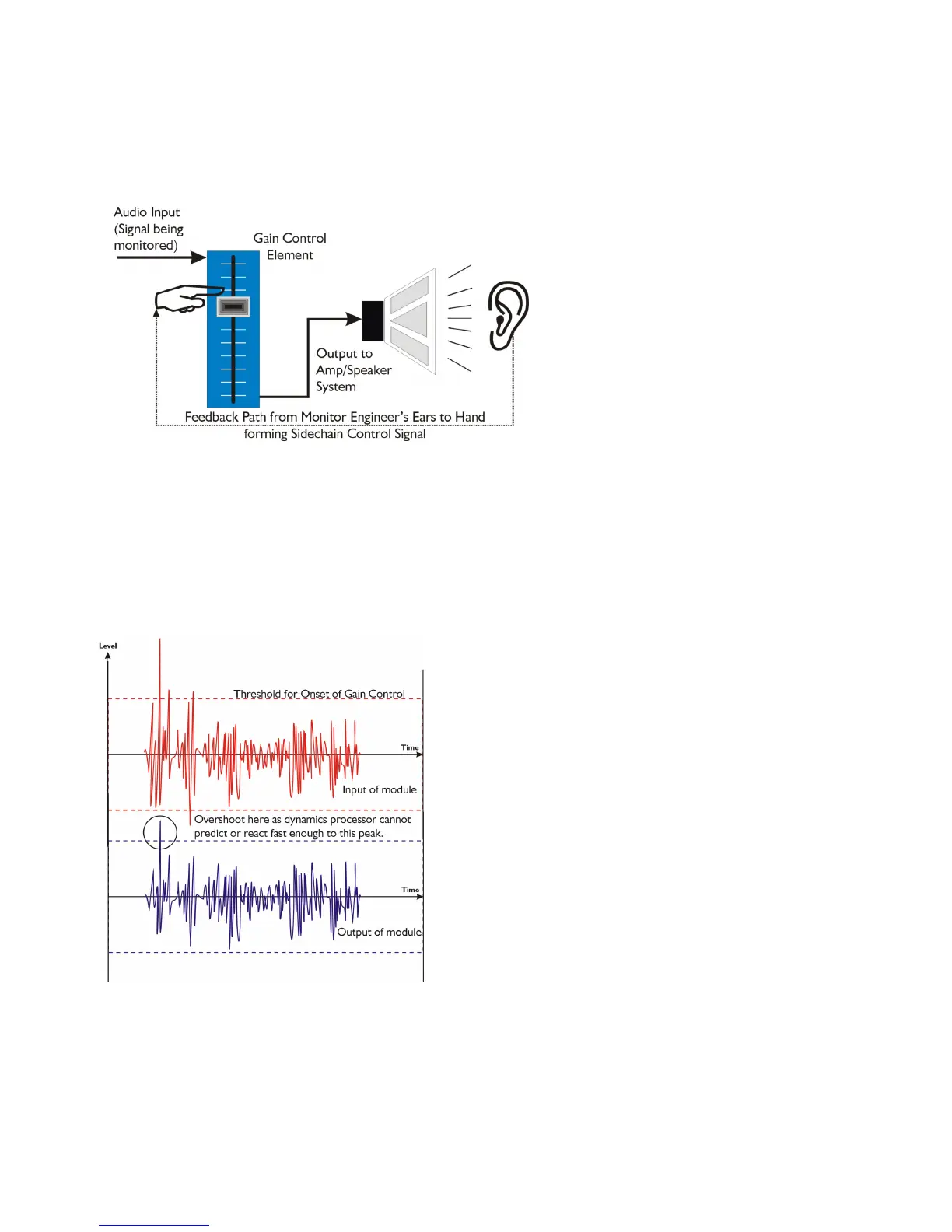
Considerthesituationofamonitorengineer listeningtoabandperform.Havingnoaccesstodynamics
processors,hehashadtoresorttomanually‘ridingthefaders’inanattempttokeepcontrolofthelevels.
Shouldthelevelofoneofthechannelsonhisdeskreachanunacceptablyhi
ghlevel,hewillturnitdown
appropriately.
Thereisahiddensidechaininoperatio neven
inthiscase.Themainsignalpathisfed
throughthemonitordeskandthegain
controlledbyadjustingthefader.The
sidechainisformedbythefeedbackpath
betweentheengine er’searscheckingthe
levelandhisbraininstr
uctinghishandto
turnthefaderdownifthevolumegoesover
thethresholdhehaschosen.
Inthiscase,thedelaybetweenthesignalactuallygoingoverthethreshold,theengineerre gisteringthe
situation,andthenturningthesignaldownwillbeintheorderofseveralhundredmillisecondsatbest.This
willonlybetrueifheisnotdistracted–inreality,itmaybeseveralsecondsbefo
reanygainreductionis
imposedonthesignaltobringitundercontrol.
Forananaloguedynamicsprocessor,thesituation is much
better.Controllingthegainelectronically,andnotrelyingon
ahumansidechainfeedbackmechanism,it canreactmuch
morequickly.
Theredwaveformrepresentsthei
nputtothedynamics
module,withthedottedlineshowingthethresholdforgain
controltooccur.Thereareseveralpeakstowardsthestart
ofthissignalthatareabovethethreshold,andsothe
dynamicsprocessingshouldreacttotheseasappropriate.
(Inthiscasereducethegai
n).
Thebluewaveformshowstheoutputofthedynamics
module.Thecircledpeakdemonstratesthattheprocessor
hasmissedthefirstpeakabovethethreshold(asitisvery
fastandshort),buthas‘caughtup’shortlyafterwards,
keepingallotherpeaksundercontrol.Asitisunableto
predictwh
atiscoming,thiswillalwaysbea failingwith
analoguedynamicsprocessing.



 To Next Page