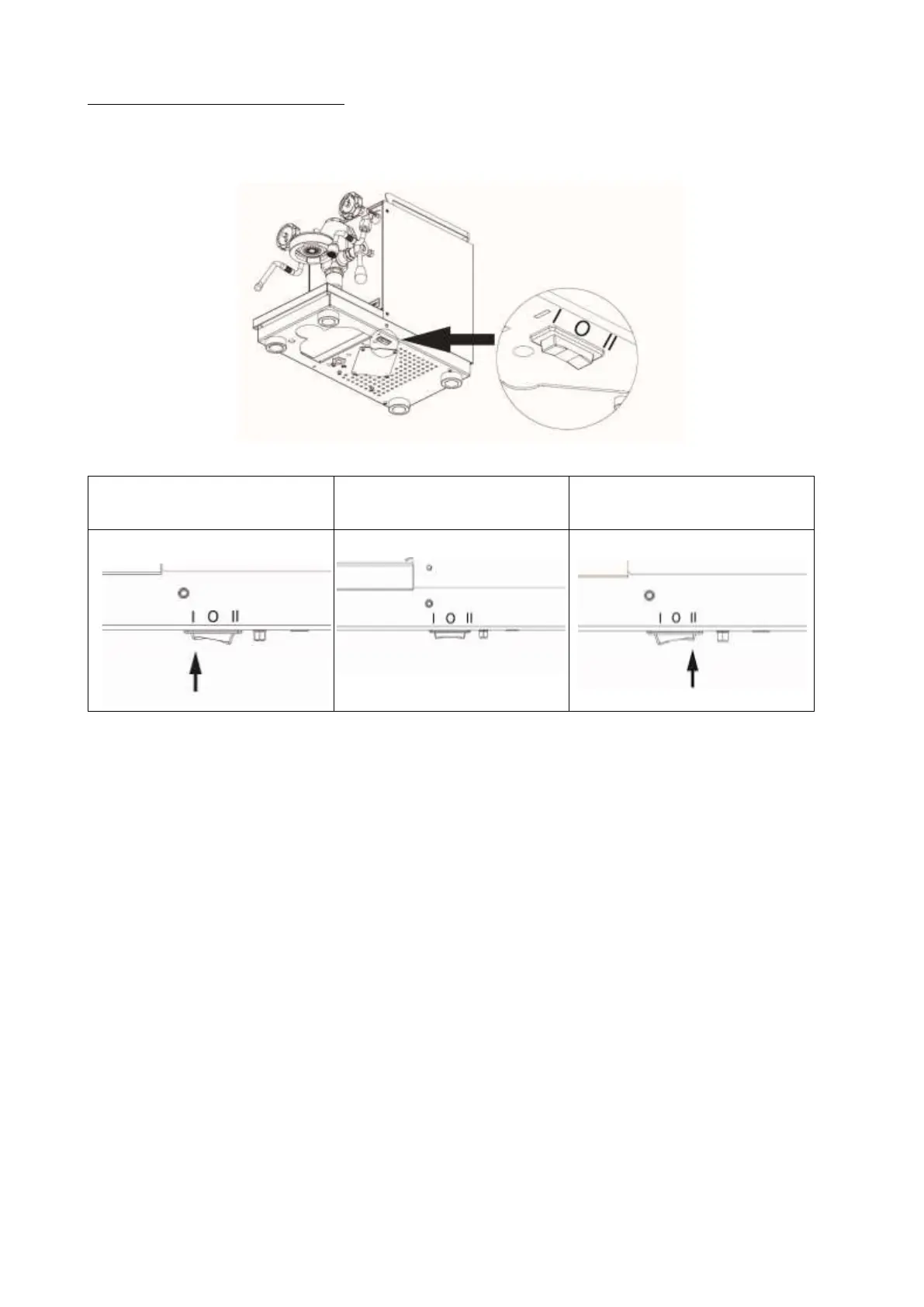
The preset values are 120°C (248°F), 124°C (255.2°F) and 128°C (262.4°F). For different coffee roasts or
compositions, it is advisable to adjust the temperature of the boiler.
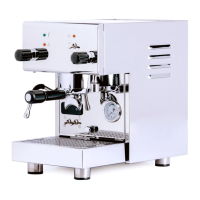
The PRO 400 is a two-circuit or heat exchanger espresso machine. In a heat exchanger, the brewing water
is heated indirectly by the boiler. After heat-up phase and a short flush*, the specified boiler
temperatures of the PRO 400 are approx. 90°C for switch position I, approx. 94°C for switch position 0 and
approx. 98°C for switch position II. The measured temperatures may vary slightly, as they depend, for
example, on the ambient temperature or the temperature in the water tank.
* During a flush, the portafilter is removed from the brew group and a so-called empty draw is made to
free the shower screen from adhering coffee particles and to remove excessively hot brewing water (this
can occur in a heat exchanger machine due to its design) from the heat exchanger. In our measurements,
the duration of the flush was two seconds in each case, to ensure comparability between the different
brews. It is advisable to adjust the flush duration based on what is seen and heard such as bubbling or
hissing. If the flush is made longer or shorter, this changes the brewing temperature.
For different coffee roasts or compositions, it is advisable to adjust the temperature of the boiler.
To achieve the best possible balance of flavor, it is advisable to adjust the brewing temperature to the
roasting depth. The darker the roast, the cooler the extraction temperature should be selected for the
most balanced flavor impression. This helps to reduce unwanted bitterness in the cup. If, on the other
hand, the coffee tastes too acidic, a balance can be achieved by selecting a higher extraction
temperature.
For the following description, we used 16.5g of a dark espresso roast and obtained it in a ratio of 1:2.5 with
a reference quantity of 45g. The water was blended with a filter to a total hardness of 4°dH.


 To Next Page