
 Need help?
Do you have a question about the Quorum Q150T S and is the answer not in the manual?
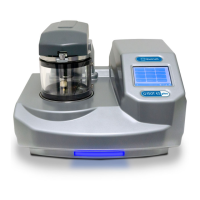
Overview of the Q150T system's capabilities and purpose.
Explains sputter coating, carbon coating, and metal evaporation applications.
Explains using the metal evaporation configuration for cleaning EM components.
Essential safety guidelines for operating and servicing the instrument.
Information on COSHH, WEEE compliance, and hazard signal definitions.
Details on CE marking, ISO certification, and intended laboratory use.
Covers site selection, environmental needs, and required utilities like gas and power.
Steps for unpacking, checking contents, and making essential gas, electrical, and vacuum connections.
Instructions for fitting the standard stage and details on optional connections.
Initial power-up procedure and familiarization with the standby screen.
Step-by-step guide to selecting and executing pre-defined operational profiles.
How to modify system parameters that override profile settings.
Procedures for modifying existing profiles and creating new ones.
Adding, editing, and deleting material entries for coating processes.
Detailed procedures for various sputter coating applications using Timed and FTM profiles.
Guidelines for metal, pulsed cord, controlled pulse cord, pulsed rod, and ramped carbon evaporation.
Using outgas source options and glow discharge for cleaning and surface modification.
Step-by-step guide for cleaning SEM/TEM apertures.
Navigating menus and configuring core instrument settings like network and sputter parameters.
Managing user privileges, access levels, and group configurations.
Setting up network connections, troubleshooting, and viewing process logs.
Guides for installing various stages (Sputter, Carbon Rod, Fibre, Metal Evaporation) and inserts.
Details on Glow Discharge, Rotacota, Slide, 102mm, Tilt stages, FTM, and cylinders.
Information on vacuum gauges, spigots, emergency stops, and spare parts.
Recommended tasks and frequencies for keeping the instrument in good working order.
Guidance on diagnosing problems and interpreting error messages.
Detailed parameters for various profiles and system override settings.
Instrument specifications and deposition rate graphs for common materials.
Guidelines for returning equipment, including safety declarations and despatch instructions.
 General
| Brand | Quorum |
|---|---|
| Model | Q150T S |
| Category | Laboratory Equipment |
| Language | English |

 To Next Page
