Introduction
10 Owner’s Guide – Redback Smart Hybrid System – v3.8
6.5 Batteries and Battery Enclosure
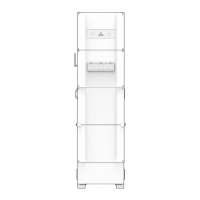
Your Redback system has a storage capacity of up to 23.6kWh using one or two
BE13200 enclosures and up to 28kWh using BE14000 enclosures. Each enclosure holds
up to four batteries—depending on battery model—and a second enclosure is always
required for five or more batteries.
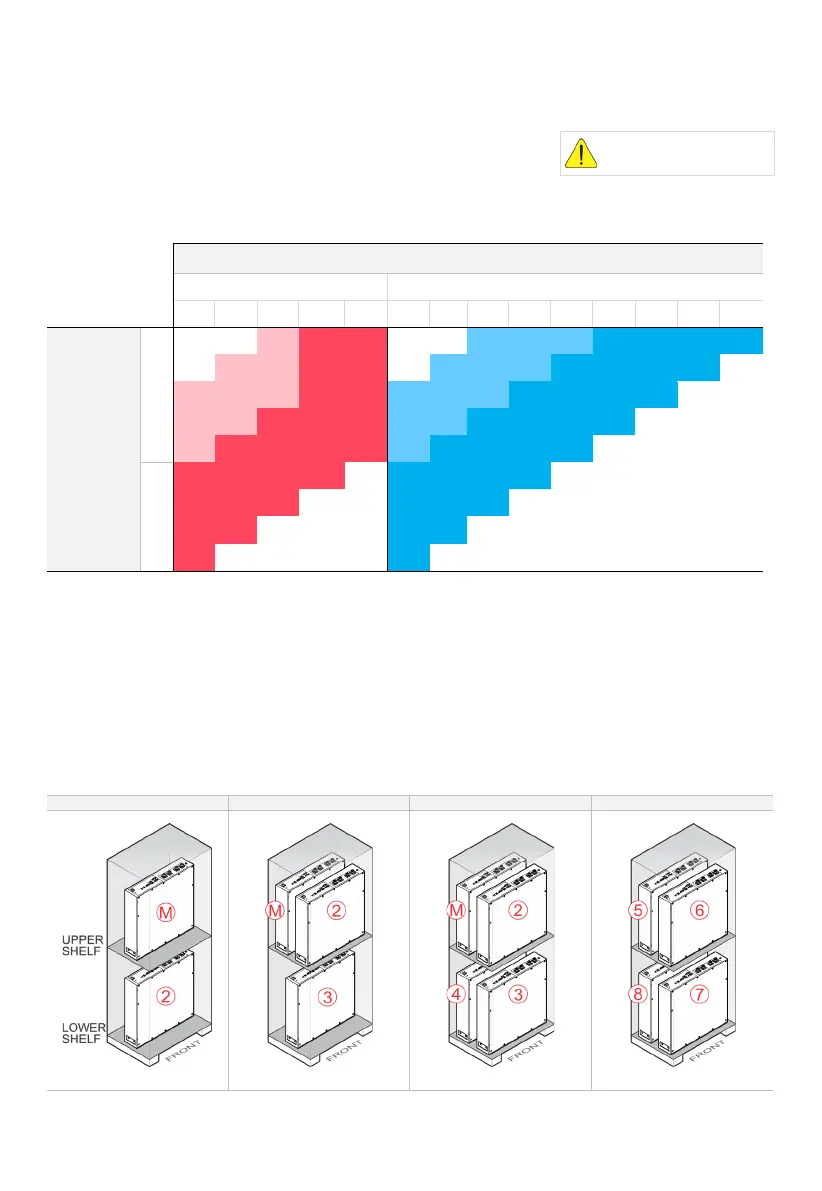
The allowable battery combinations and resultant storage capacity is shown below (in KWh).
Number of US3000 batteries @3.55kWh each
Number of
US2000
X
batteries @
2.4kWh each
(5 or more
require two
enclosures)
Usable capacity is typically 90% of total capacity Battery installations must include a minimum of two batteries of any listed model
Insufficient space in enclosure for this combination.
X
Pylontech US2000 or US2000Plus
Pylontech batteries use an integrated Battery Management System (BMS) to manage ultimate charge and discharge rates
(protecting the batteries from heat damage) and inform the Smart Hybrid System of status. The BMS also protects the batteries
from total discharge, assisting system reliability and longevity.
Your installer may identify batteries as Master, 1, 2, 3 etc up to 8. This refers to the position of individual batteries in the BMS
chain of command, where the first connected battery is the Master, which controls subsequent batteries.
The battery identity may also indicate the physical position of the battery within the enclosure, though this is an installer
preference. The diagram below indicates the BMS battery naming convention and recommended battery locations.
*Only one US3000 per shelf in BE13200. **Any combination of US2000, US2000 Plus, US3000 permitted in BE14000. ***If used, one of the
US3000 batteries must be the Master battery, in the 1
st
NOTE: US3000C batteries
are not supported.


 To Next Page