Suspend the sample material in a beaker containing the liquid intended for the wet sieving.
To reduce the surface tension and to facilitate the screenings of the material later on, a few
drops of surfactant may be added.
Moisten each test sieve with the liquid intended for wet sieving.
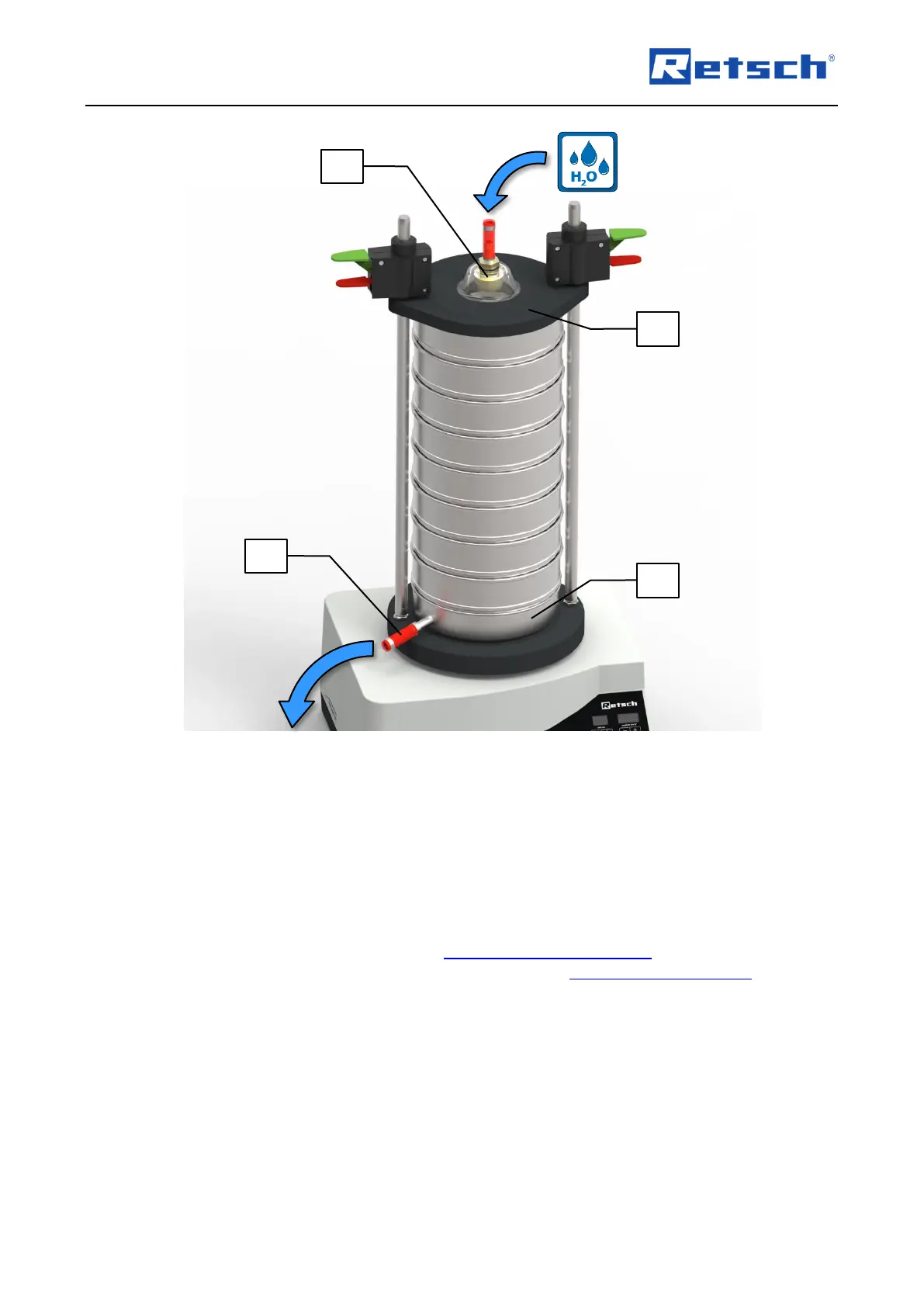
Place the sieve stack with increasing mesh size on the collecting pan with outlet.
Place venting rings (ER) between test sieves of mesh size < 100 µm to avoid air cushions.
Place the complete sieve stack centrally on the device.
Enter the sample suspension on the uppermost test sieve with the clamping lid open.
Clamp the sieve stack ( Chapter "Sieve Clamping Unit "comfort"").
Set the optimum amplitude value and sieving time ( recommended parameters).
Start the sieving process.
Turn on the liquid supply. The quantity of liquid applied should only be of such amount that
the sieve mesh area is completely sprayed. A flow rate of 200 to 300 ml per sieve surface in
dm
2
and minute is recommended (e.g. 0.5 to 1 litre per minute for sieve diameters of
200/203 mm).
The sieving process is considered as terminated when the exiting liquid shows no turbidity
anymore.



 To Next Page