91
ENGLISH
1. Freeze protection by glycol
About freeze protection by glycol
Adding glycol to the water lowers the freezing point of water.
b
WARNING
Ethylene glycol is toxic.
b
WARNING
'XHWRWKHSUHVHQFHRIJO\FROFRUURVLRQRIWKHV\VWHPLVSRVVLEOH8QLQKLELWHGJO\FROZLOOWXUQDFLGLFXQGHUWKHLQÀXHQFHRIR[\JHQ7KLVSURFHVVLV
accelerated by the presence of copper and high temperatures. The acidic uninhibited glycol attacks metal surfaces and forms galvanic corrosion
cells that cause severe damage to the system. Therefore it is important that.
WKHZDWHUWUHDWPHQW,VFRUUHFWO\H[HFXWHGE\DTXDOL¿HGZDWHUVSHFLDOLVW
a gliycol with corrosion inhibitors is selected to counteract acids formed by the oxidation of glycols,
no automotive gliycol is used because their corrosion inhibitors have a limited lifetime and contain silicates which can foul or plug the
system,
galvanized pipes are NOT used in gliycol systems since the presence may lead to the precipitation of certain components in the
glycol's corrosion inhibitor.
NOTE
*O\FRODEVRUEVZDWHUIURPLWVHQYLURQPHQW77KHUHIRUHGR127DGGJO\FROWKDWKDVEHHQH[SRVHGWRDLU/HDYLQJWKHFDSRႇWKHJO\FROFRQWDLQHU
causes the concentration of water to increase. The glycol concentration is then lower than assumed. As a result, the hydraulic components might
freeze up after all. Take preventive actions to ensure a minimal exposure of the glycol to air.
Types of glycol
The types of glycol that can be used depend on whether the system contains a domestic hot water tank.
If the system contains a domestic hot water tank, then only use propylene glycol*.
If the system does NOT contain a domestic hot water tank, then you can use either propylene glycol* or ethylene glycol.
3URS\OHQHJO\FROLQFOXGLQJWKHQHFHVVDU\LQKLELWRUVFODVVL¿HGDV&DWHJRU\,,,DFFRUGLQJWR(1
Required concentration of glycol
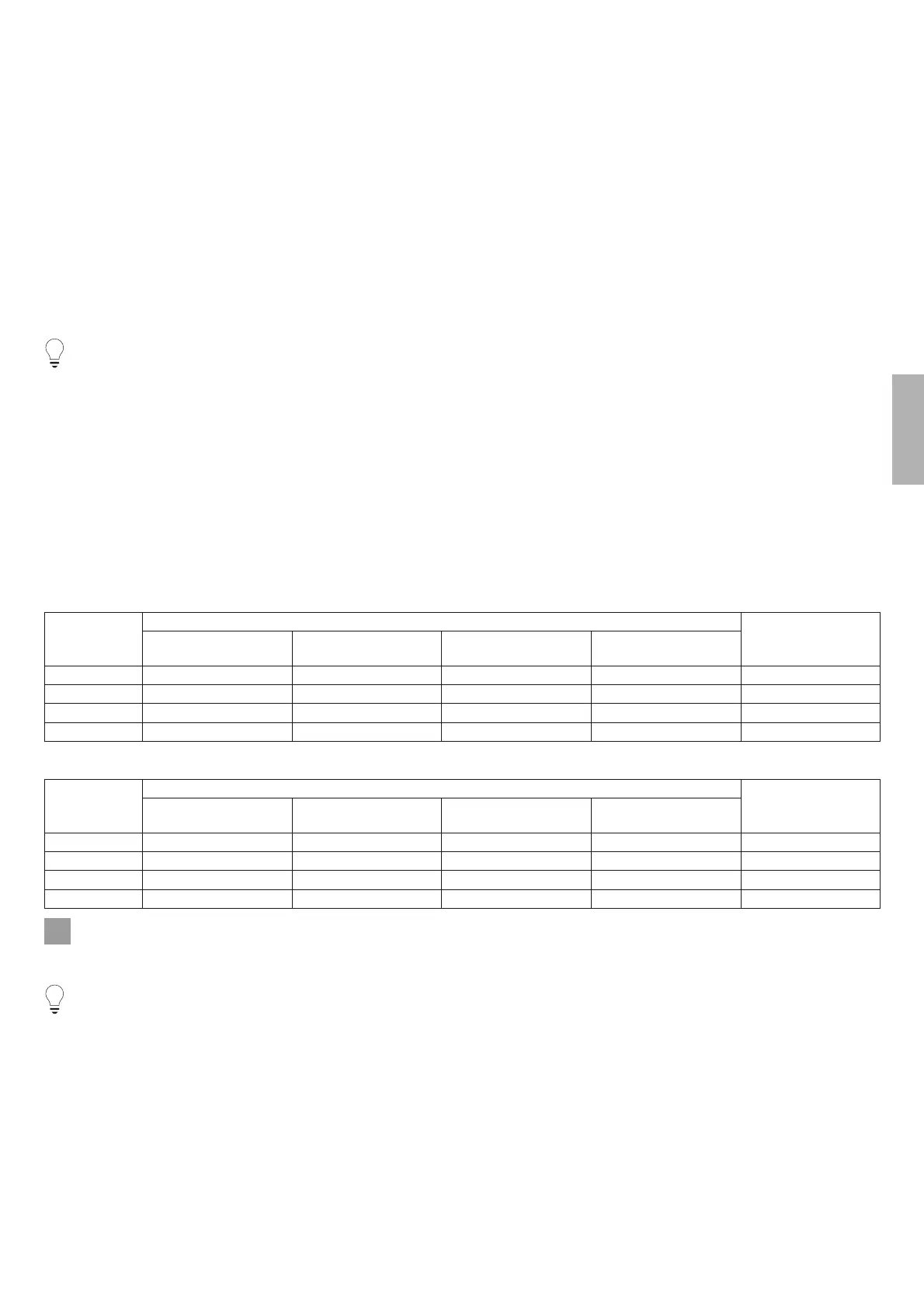
The required concentration of glycol depends on the lowest expected outdoor temperature, and on whether you want to protect the system from
bursting or from freezing. To prevent the system from freezing, more glycol is required.
Add glycol according to the table below:
Quality of
glycol
0RGL¿FDWLRQFRHႈFLHQW
Minimum outdoor
temperature
Cooling capacity
PRGL¿FDWLRQ
Power
PRGL¿FDWLRQ
Water
resistance
:DWHUÀRZ
PRGL¿FDWLRQ
0% 1,000 1,000 1,000 1,000 0°C
10% 0,984 0,998 1,118 1,019 -5°C
20% 0,973 0,995 1,268 1,051 -15°C
30% 0,965 0,992 1,482 1,092 -25°C
Ethylene Glycol
Quality of
glycol
0RGL¿FDWLRQFRHႈFLHQW
Minimum outdoor
temperature
Cooling capacity
PRGL¿FDWLRQ
Power
PRGL¿FDWLRQ
Water
resistance
:DWHUÀRZ
PRGL¿FDWLRQ
0% 1,000 1,000 1,000 1,000 0°C
10% 0,976 0,996 1,071 1,000 -4°C
20% 0,961 0,992 1,189 1,016 -12°C
30% 0,965 0,988 1,380 1,034 -20°C
Propylene Glycol
i
INFORMATION
Protection against bursting: the gliycol will prevent the piping from bursting, but NOT the liquid inside the piping from freezing.
Protection against freezing: the gliycol will prevent the liquid inside the piping from freezing.
NOTE
7KHUHTXLUHGFRQFHQWUDWLRQPLJKWGLႇHUGHSHQGLQJRQWKHW\SHRIJO\FRO$/:$<6FRPSDUHWKHUHTXLUHPHQWVIURPWKHWDEOHDERYHZLWK
WKHVSHFL¿FDWLRQVSURYLGHGE\WKHJO\FROPDQXIDFWXUHU,IQHFHVVDU\PHHWWKHUHTXLUHPHQWVVHWE\WKHJO\FROPDQXIDFWXUHU
lf the liquid in the system is frozen, the pump will NOT be able to start. Mind that if you only prevent the system from bursting, the liquid
inside might still freeze.
When water is at standstill inside the system, the system is very likely to freeze and get damaged.
2. Freeze protection by freeze protection valves
About freeze protection valves
When no glycol is added to the water, you can use freeze protection valves to drain the water from the system before it can freeze.
,QVWDOOIUHH]HSURWHFWLRQYDOYHV¿HOGVXSSO\DWDOOORZHVWSRLQWVRIWKH¿HOGSLSLQJ
1RUPDOO\FORVHGYDOYHVORFDWHGLQGRRUVQHDUWKHSLSLQJHQWU\H[LWSRLQWVFDQSUHYHQWWKDWDOOZDWHUIURPLQGRRUSLSLQJLVGUDLQHGZKHQ
the freeze protection valves open.





 To Next Page